Frozen Mango Price Outlook 2025–2032
From my experience working with frozen fruit buyers, frozen mango prices can vary significantly depending on mango variety, origin, harvest season, cut specification, Brix level, processing method, certification, packing and order volume. IQF mango dice, sticks and cheeks generally have different cost structures because each format requires different levels of trimming, cutting and processing.
Price movements are also closely linked to fresh mango supply. During periods of limited raw-material availability, processors may face higher purchasing costs, while strong harvests can create more competitive export offers. Energy costs, cold storage, packaging and refrigerated logistics also influence the final price paid by international buyers.
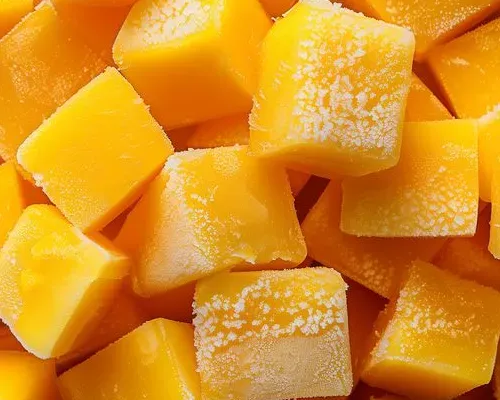
For importers, I would therefore avoid comparing suppliers only on the quoted FOB price. A more useful comparison includes product yield, cut consistency, Brix, defect tolerance, packing specification, cold-chain reliability and freight cost. Two frozen mango offers at similar prices may deliver very different commercial value once these factors are considered.
Explore HAVIGO Vietnam frozen Mango
View available varieties, fruit sizes, specifications, packing options, and export support details before requesting your quotation.
The frozen mango market is moving beyond a seasonal frozen-fruit category and becoming an increasingly important ingredient market for beverage manufacturers, food processors, restaurants, retailers and private-label brands.
Growing demand for convenient fruit products, expansion of frozen-food retail, stronger cold-chain infrastructure and the popularity of smoothies and tropical beverages are supporting the market worldwide.
According to Data Bridge Market Research, the global frozen mango market was valued at approximately USD 693.89 million in 2024 and is projected to reach USD 1.04 billion by 2032, representing a compound annual growth rate of about 5.20% during 2025–2032.
This represents roughly 50% total market-value growth between 2024 and 2032.
For mango-producing countries such as Vietnam, this expanding market creates opportunities not only for frozen-fruit exporters but also for manufacturers supplying IQF mango as an industrial ingredient.
Frozen Mango Market at a Glance
Global Frozen Mango Market Snapshot
Key figures shaping the industry’s growth toward 2032
What Is Driving Growth in the Frozen Mango Market?
Convenience is one of the strongest forces shaping demand.
Fresh mango requires washing, peeling, stone removal, trimming and cutting before it can enter a food-production process. Frozen mango reduces much of this preparation and gives commercial users greater flexibility in inventory planning.
Data Bridge Market Research identifies the increasing demand for convenient and ready-to-eat foods as an important market driver. Frozen mango can also provide access to mango outside the main fresh-fruit season, particularly in markets where domestic mango production is limited.
This makes the product particularly relevant for smoothie manufacturers, cafés, bakery companies, dairy processors, dessert producers and foodservice operators.
The expansion of supermarkets, frozen-food departments and online grocery platforms is another factor increasing product availability.
At the same time, IQF frozen mango allows individual fruit pieces to remain separated during frozen storage, which facilitates portion control and industrial processing.
Diced Frozen Mango Leads the Product Segment in Frozen Mango Market
The market is divided into several product formats, including whole frozen mango, slices, diced mango, puree or pulp and other processed forms.
According to Data Bridge Market Research, diced frozen mango represented approximately 38.6% of market revenue in 2024, making it the largest product segment.
Its popularity is understandable from a processing perspective.
Diced mango can move directly into applications such as smoothies, yogurt, bakery products, fruit preparations, desserts and frozen fruit mixes without requiring significant additional cutting.
The puree and pulp category, meanwhile, is expected to develop rapidly as beverage companies expand their use of mango in juices, nectars, dairy products and other formulated drinks.
Frozen Mango Market Segmentation
| Market Category | Leading Segment | 2024 Share | Market Outlook |
|---|---|---|---|
| Product Type | Diced Frozen Mango | 38.6% | Strong demand from smoothies, yogurt, desserts and bakery applications |
| End Use | Food Processing | 41.2% | Beverages are expected to become an increasingly important application |
| Distribution | Supermarkets & Hypermarkets | 46.5% | Online frozen-food retail is developing rapidly |
| Region | North America | 41.85% | Strong retail, foodservice and frozen beverage demand |
Food Processing Remains the Largest End-Use Market
Food processing accounted for approximately 41.2% of frozen mango revenue in 2024, according to the same market study.
This category includes applications in bakery, confectionery, dairy products, ice cream, sauces, fruit preparations and packaged foods.
For manufacturers, frozen mango is not simply an alternative to fresh fruit. It can function as a standardized industrial ingredient.
Consistent cut size, controlled Brix, colour, microbiological specifications and packing configuration can be more important to industrial buyers than the appearance of whole fresh fruit.
The beverage segment is also expected to become increasingly important as mango is incorporated into smoothies, juices, functional beverages and tropical drink formulations.
This trend is particularly relevant to the IQF frozen mango market, where both diced fruit and larger frozen pieces can be used as beverage ingredients.
Supermarkets Still Dominate, but Online Frozen Food Is Expanding
Supermarkets and hypermarkets represented approximately 46.5% of frozen mango distribution revenue in 2024, making them the largest distribution channel in the Data Bridge analysis.
Large retailers benefit from established frozen-storage facilities and the ability to offer multiple frozen-fruit formats, from single-fruit bags to tropical fruit mixes and smoothie packs.
However, online grocery is becoming increasingly relevant.
Improvement in last-mile refrigerated and frozen logistics allows consumers to purchase products that previously depended heavily on physical supermarket freezer sections.
For suppliers, this can create additional opportunities for retail packs, private-label products and frozen fruit mixes alongside traditional bulk B2B shipments.
Which Region Leads the Global Frozen Mango Market?
North America represented the largest regional market in the Data Bridge analysis, with approximately 41.85% of global frozen mango revenue in 2024.
The region benefits from a mature frozen-food retail sector as well as significant consumption of smoothies, desserts, ready-to-eat fruit and tropical beverages.
Europe represents another important market.
Frozen mango is increasingly used by European food processors, bakeries, beverage companies, retailers and foodservice operators. Demand is also supported by established cold-chain systems and broad consumer access to imported tropical fruit.
Asia-Pacific is important from both the demand and supply sides.
India, Vietnam and Thailand are among the mango-producing countries specifically highlighted by Data Bridge as part of the region’s production base.
Visual Market Share Infographic
Key Frozen Mango Market Trends Through 2032
Several structural changes are shaping frozen mango market trends rather than growth being driven by one single factor.
The first is the movement toward ready-to-use fruit. Food manufacturers and foodservice operators increasingly prefer ingredients that require less preparation and can be incorporated quickly into production.
The second is broader demand for mango in beverages. Smoothies, fruit teas, juice blends, dairy drinks and tropical beverages provide multiple applications for mango dice, chunks and puree.
The third is the expansion of private-label frozen fruit. Retailers can sell mango individually or combine it with pineapple, dragon fruit, berries and other fruits in frozen mixes.
Another development is increasingly sophisticated product specification. B2B buyers may require precise dimensions, Brix ranges, colour standards, microbiological parameters, packaging formats and certification requirements.
As a result, frozen mango is gradually becoming a more standardized food ingredient rather than simply frozen fresh fruit.
Why IQF Technology Matters
IQF, or Individual Quick Freezing, is particularly relevant for mango pieces.
Rather than freezing fruit into a single solid block, the process freezes pieces individually, making them easier to portion during subsequent use.
This characteristic is valuable for applications such as smoothie production, yogurt, bakery fillings, foodservice and retail frozen-fruit packs.
Temperature control remains critical throughout storage and transportation.
The U.S. Food and Drug Administration recommends maintaining freezer temperatures at 0°F (-18°C). The FDA also notes that freezing stops most bacterial growth but does not necessarily eliminate bacteria that may already be present.
For international frozen-fruit trade, this makes reliable cold-chain management essential from processing through container transport and final distribution.
What Could Limit Frozen Mango Market Growth?
Despite the positive outlook, the frozen mango industry faces several operational challenges.
Mango production remains agricultural and seasonal, meaning yields can be affected by weather conditions, rainfall, temperature and crop quality.
Frozen processing also requires more infrastructure than conventional fresh-fruit handling.
Processors need freezing equipment, cold storage and consistent temperature control. International suppliers must then maintain the cold chain during inland transportation, port handling, ocean freight and destination storage.
Data Bridge identifies seasonal supply, cold-chain limitations, logistics costs and quality maintenance as important challenges for the industry.
For importers, supplier selection therefore involves more than simply comparing FOB prices.
Consistency between shipments, production capacity, processing controls, product specification and documentation can all influence the actual purchasing risk.
What Does Market Growth Mean for Frozen Mango Buyers?
For importers and food manufacturers, the forecast expansion of the global frozen mango market points to increasing competition for reliable processing capacity and suitable raw material.
Large buyers may therefore benefit from planning supply programs around mango harvest periods rather than purchasing entirely on a spot basis.
Product format also matters.
A beverage factory may prioritize mango dice or puree, while a restaurant supplier may prefer larger pieces. Retail frozen-fruit brands may require very specific dice dimensions and visual consistency.
Buyers should therefore determine the intended application before finalizing specifications with a supplier.
Price alone does not determine whether one frozen mango product is equivalent to another.
Variety, Brix, colour, cut dimensions, defects, microbiological standards, packaging and processing method can all influence the final cost.
Vietnam’s Opportunity in the Frozen Mango Industry
Vietnam is well positioned geographically within Asia’s tropical-fruit supply chain and is specifically identified alongside India and Thailand as an important mango production base in the Asia-Pacific market analysis.
For Vietnamese exporters, the opportunity is increasingly moving from agricultural production alone toward value-added processing.
Instead of exporting only fresh mango, processors can supply frozen formats suitable for industrial customers that require longer storage, easier portioning and year-round production planning.
IQF mango can serve customers in several industries, including beverages, bakery, dairy, frozen desserts, hospitality and private-label retail.
For HAVIGO, this creates an opportunity to connect Vietnamese mango production with international importers looking for IQF mango dice, mango sticks and mango cheeks for different commercial applications.
A Note on the Asia-Pacific Growth Figure
There is one point in the Data Bridge report that I would not copy mechanically.
The source lists the global CAGR at 5.20% and describes Asia-Pacific as the “fastest-growing” region, while also giving an APAC CAGR of 4.36%. Those figures are not fully consistent if they use the same methodology and forecast period.
For that reason, I have not used the 4.36% figure in the infographic or as a headline statistic. If I use an Asia-Pacific growth rate later in a sales presentation or market report, I would verify it against another source first.
From a sourcing perspective, this kind of cross-check matters because market reports should support purchasing decisions rather than simply repeat published figures.
Frozen Mango Market Outlook
The frozen mango market is expected to continue expanding as consumers, foodservice businesses and manufacturers seek convenient tropical-fruit ingredients with longer storage flexibility.
Data Bridge’s forecast suggests that market value could increase from approximately USD 693.89 million in 2024 to more than USD 1 billion by 2032.
Diced mango currently plays a particularly important role, while beverage applications, online distribution and broader adoption of frozen tropical fruit could create additional growth opportunities.
For importers, the trend reinforces the importance of finding suppliers capable of delivering not only competitive pricing but also consistent specifications, reliable frozen processing and stable international supply.
For Vietnam, growing international demand for processed tropical fruit provides a pathway to move further into value-added mango exports.
Sourcing IQF Frozen Mango from Vietnam
HAVIGO works with Vietnamese frozen mango for international B2B markets, with product formats designed for different foodservice and manufacturing requirements. Buyers comparing a broader range of products can also review HAVIGO’s frozen fruit portfolio.
Depending on the final application, buyers can consider mango dice for smoothies and food processing, mango sticks for foodservice and desserts, or larger mango cheeks for applications where the fruit remains visually identifiable.
Importers should evaluate the required variety, cut specification, Brix, packing, certification and destination-market requirements before confirming an order.
If you are sourcing IQF frozen mango from Vietnam, contact HAVIGO for current product specifications, available cuts, packing options and export quotations.