How many types of cashews are there? How to differentiate WW240, WW320 and WW450 cashews?
Key Takeaways
- A lower grade number means fewer kernels per pound and a larger average kernel size.
- WW240 is larger and often selected for premium retail presentation.
- WW320 offers a practical balance between appearance, availability, and cost.
- WW450 is a smaller whole grade suited to value-focused retail and food processing., product type, and buyer requirements.
- The grade number describes size, not nutrition, freshness, food safety, or overall shipment quality.
- Importers should compare moisture, defects, packing, documents, and Incoterms alongside the grade.
Explore HAVIGO Vietnam Cashew Nuts
View available cashew grades, specifications, packing options, and export support details before requesting your quotation.
Understanding WW240, WW320, and WW450 Cashews
Importers often receive quotations for WW240, WW320, and WW450 cashews without a clear explanation of what the codes mean. This can make price comparison difficult, especially when suppliers use different specifications, packing formats, or quality tolerances.
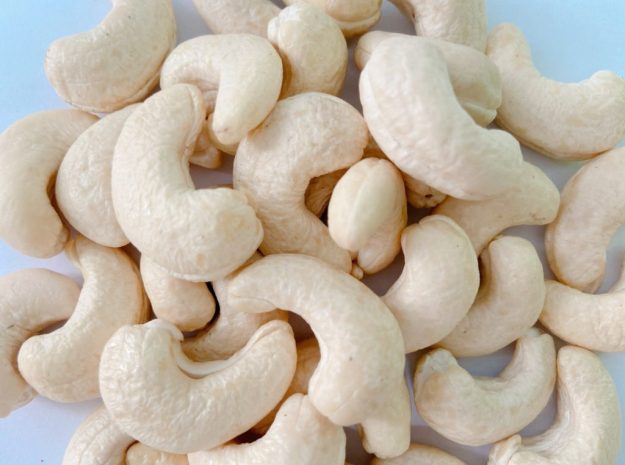
The main difference between these grades is kernel count. The number indicates how many whole kernels are expected in one pound, or approximately 454 grams.
Therefore, a lower number means larger kernels:
- WW240 contains fewer and larger kernels.
- WW320 contains more medium-sized kernels.
- WW450 contains more and smaller kernels.
The letters “WW” are commonly used in international cashew trade to mean “White Whole.” Some specifications use the shorter designations W240, W320, and W450. Both forms generally refer to white whole kernels within the stated size range.
According to the Association of Food Industries in its specifications adopted in 2023, size 240 contains 220–240 kernels per pound, size 320 contains 300–320 kernels, and size 450 contains 400–450 kernels.
However, the number does not describe the complete quality of the shipment. Buyers must also confirm color, moisture, broken percentage, defects, packing, crop condition, and food safety compliance.
W240 vs W320 vs W450 Cashews: Quick Comparison
| Grade | Kernels per Pound | Kernels per Kilogram | Relative Size | Typical Price Position | Common Applications |
|---|---|---|---|---|---|
| WW240 | 220–240 | 485–530 | Large | Higher | Premium retail packs, gifting, gourmet snacks, private label |
| WW320 | 300–320 | 660–706 | Medium | Mid-range | Mainstream retail, roasted snacks, wholesale, food service |
| WW450 | 400–450 | 880–990 | Smaller | More economical | Value packs, mixed nuts, ingredients, processing applications |
The price positions above are relative only. Actual quotations depend on origin, crop quality, specification, packing, order quantity, payment terms, shipment period, and destination port.
For current market references, read HAVIGO’s cashew nuts price update for 2026.
How many grades of cashew nuts are there?
The Vietnamese market has a total of 33 different grades of cashew nuts, but only 26 grades are commonly traded. Based on shape, size and color, cashew nuts will be classified as follows:
| No | Shape | Size | Color |
| 1 | Butt (B) | 160: 120 – 160 nuts/pound | White (W) |
| 2 | Blemish Butt (BB) | 180: 161 – 180 nuts/pound | Scorched (S) |
| 3 | Split (S) | 210: 200 – 210 nuts/pound | Second Scorched (SS) |
| 4 | Large Pieces (SP) | 240: 220 – 240 nuts/pound | Blemish (B) |
| 5 | Small Pieces (SP) | 320: 300 – 320 nuts/pound | Light Blemish (LB) |
| 6 | Baby – Bits (B – B) | 450: 400 – 450 nuts/pound | Dark Blemish (DB) |
What is WW240 cashew nuts grade?
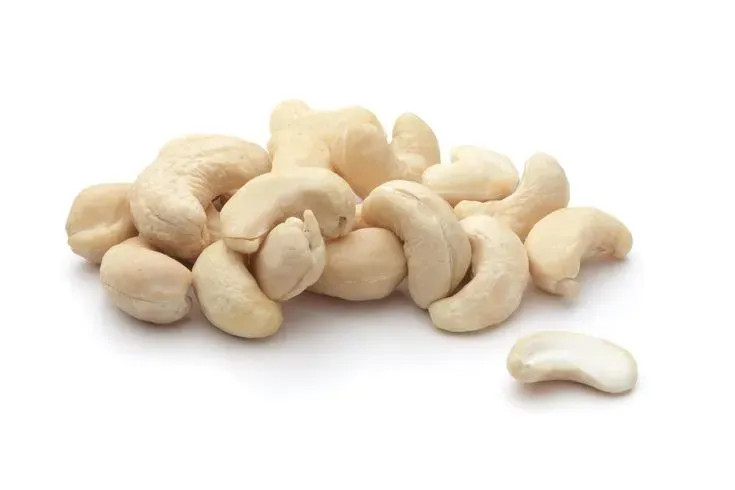
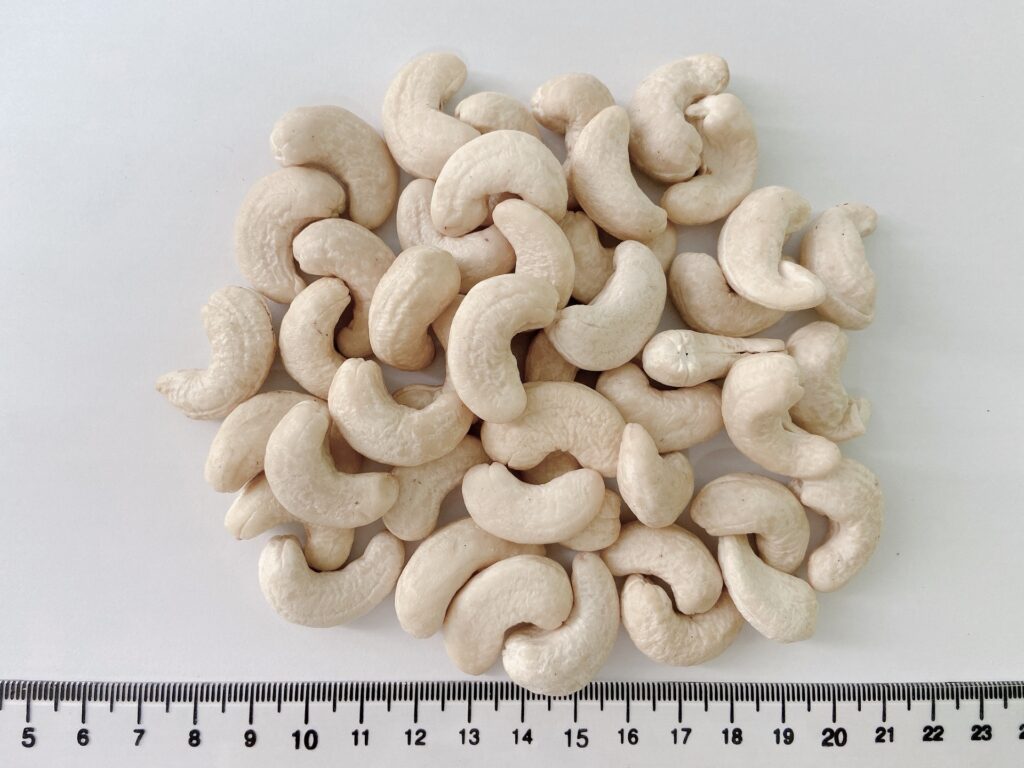
WW240 cashew nuts are large white whole kernels with a count of 220–240 pieces per pound. Their larger appearance gives them a strong visual advantage in transparent retail packs, premium tins, gift boxes, and high-end snack products.
Buyers often choose WW240 when product presentation has a direct effect on retail positioning. The larger kernel size can help a brand create a more premium shelf impression.
Common WW240 applications include:
- Premium roasted and salted cashews
- Luxury nut mixes
- Gift boxes and festive packs
- Chocolate-coated cashews
- Gourmet retail products
- Premium private-label programs
WW240 is usually priced above WW320 and WW450 when the origin, quality standard, packing, and shipment terms are the same. However, the larger size does not automatically mean better food safety or higher nutritional value per 100 grams.
An importer should still check moisture, defects, color consistency, roast performance, packaging integrity, and product documents.
Read more about WW240 cashew nuts.
What is WW320 cashew nuts grade?
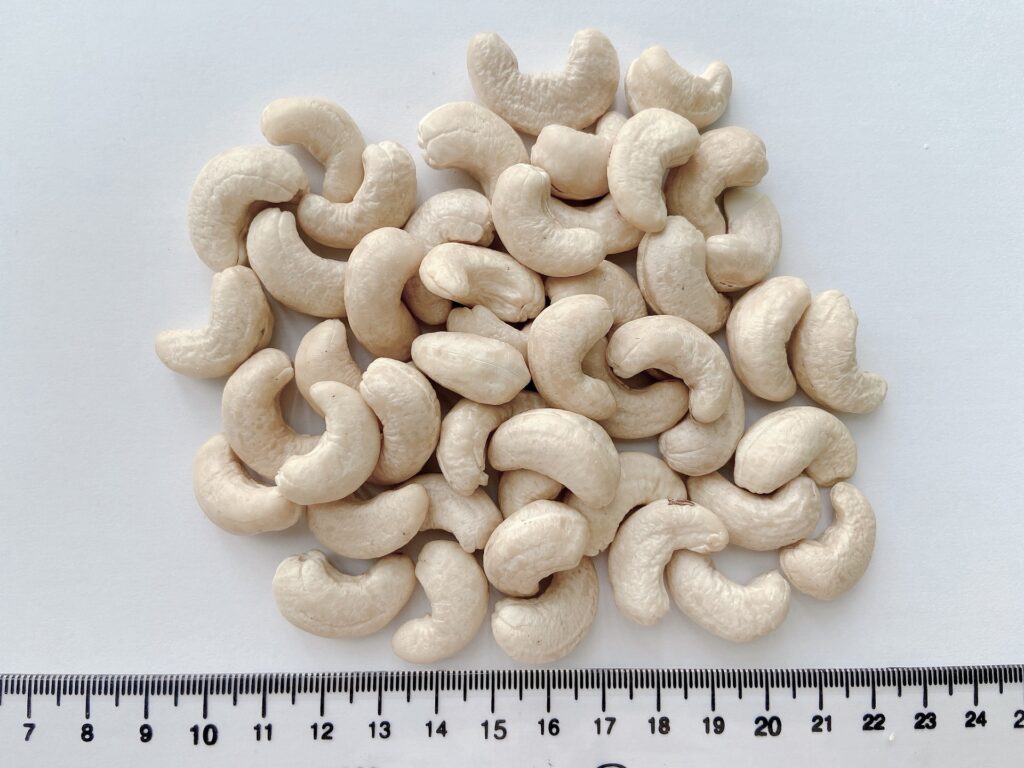
WW320 cashew nuts are white whole kernels with a count of 300–320 pieces per pound. They are smaller than WW240 but larger than WW450.
This grade is frequently selected because it offers a practical balance between kernel appearance and purchasing cost. It can work across retail, wholesale, food service, snack manufacturing, and private-label programs.
Common WW320 applications include:
- Roasted or flavored snack packs
- Supermarket retail products
- Mixed nut products
- Confectionery
- Bakery products
- Cashew butter and plant-based foods
- Food-service and wholesale distribution
In our export discussions, WW320 is often the first grade buyers request when they need a versatile whole kernel without paying the premium associated with larger grades.
Still, importers should not assume that every WW320 offer is equivalent. Two suppliers may quote the same grade but provide different tolerances for color, defects, moisture, broken kernels, or lower-size kernels.
Read HAVIGO’s guide to WW320 cashew nuts.
What is WW450 cashew nuts grade?
WW450 cashew nuts are smaller white whole kernels with a count of 400–450 pieces per pound. Although they are smaller than WW240 and WW320, they still retain the characteristic whole-kernel shape.
This grade is suitable when buyers need whole cashews but do not require a large premium appearance. WW450 can provide better cost efficiency for price-sensitive retail products and industrial applications.
Common uses include:
- Economical retail packs
- Mixed nut products
- Flavored cashew snacks
- Bakery and confectionery
- Ingredient supply
- Food-service products
- Processing applications where kernel size is less important
WW450 should not be confused with broken grades. It is still a whole kernel grade. The difference lies in the higher number of smaller kernels per pound.
For many food manufacturers, WW450 can be more practical than WW240 because the final product may not benefit from paying for a larger kernel.
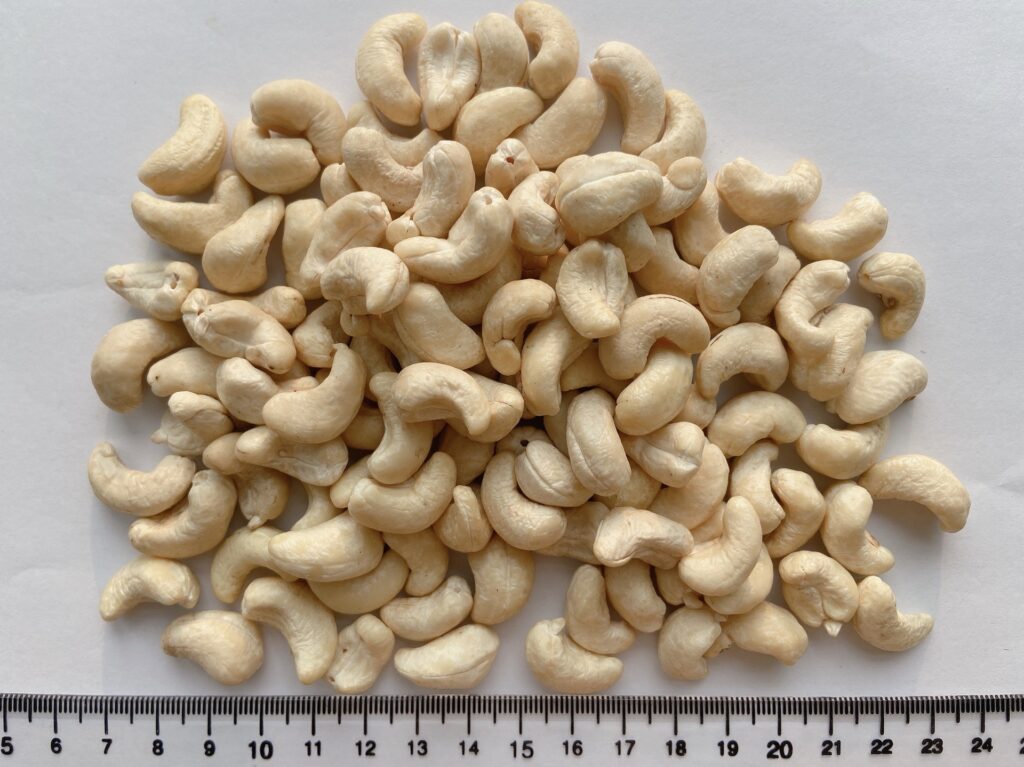
Just like WW320 cashews, WW450 cashews are very popular for use in producing cashew snacks.
What is the difference between cashew W240, WW320 and WW450?
The most basic and obvious difference between these three grades of cashews is how big they are. From cashew W240 and W320 to WW450, respectively, the sizes of the three grades will gradually decrease from large to small. Therefore, the weight of these three grades of cashew nuts will also be different.
| Buyer Requirement | Recommended Grade | Reason |
|---|---|---|
| Premium visual presentation | WW240 | Larger kernels create a stronger premium appearance |
| Balanced retail specification | WW320 | Combines whole-kernel appearance with a more moderate price |
| Value-focused whole cashews | WW450 | Provides whole kernels at a more economical price position |
| Premium gift packs | WW240 | Large and uniform kernels support high-end packaging |
| Mainstream roasted snacks | WW320 | Suitable for broad retail and wholesale distribution |
| Food processing or mixed nuts | WW320 or WW450 | Kernel function and cost may matter more than maximum size |
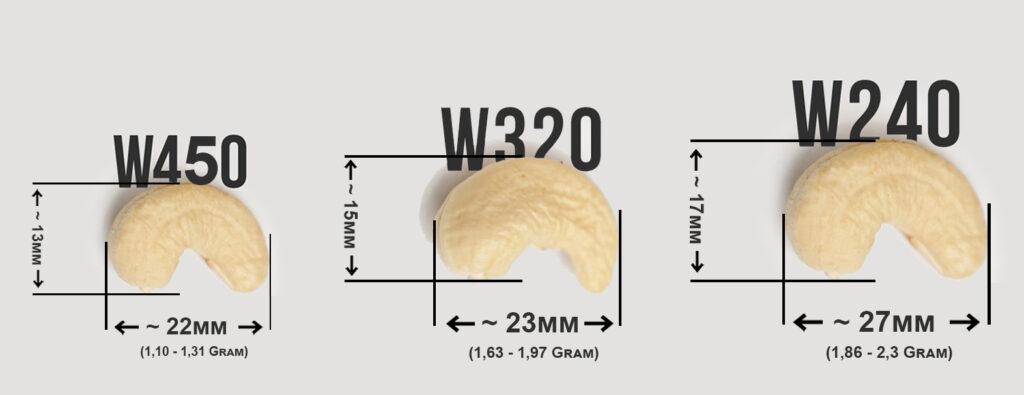
In the cashew nut classification system, the larger the nut, the more nutrients it will contain, so the flavor will be richer and have more nutrition. Because of that, large-sized cashews like WW240 have great value and are considered as Premium Large Nuts.
However, w320 cashew nuts and w450 cashew nuts are also very popular because the size is just slightly different from w240. The price is also more economical than the premium w240 cashew nuts.
In summary, each grade of cashew nut has its own advantages. Therefore, no matter which grade of cashew you choose, you will definitely enjoy the full deliciousness of cashews!
A buyer should start with the intended application rather than asking for the cheapest grade.
For example, w240 may justify its higher cost in a clear premium retail pack. However, the same size advantage may add limited value when the kernels will be chopped, coated, blended, or processed. Sneak peak at cashew nuts price 2026
Pro tip!
A buyer should start with the intended application rather than asking for the cheapest grade. For example, WW240 may justify its higher cost in a clear premium retail pack. However, the same size advantage may add limited value when the kernels will be chopped, coated, blended, or processed.
Grade Number Does Not Define Overall Quality
A common purchasing mistake is treating the 240, 320, and 450 classifications as complete quality rankings.
These numbers primarily indicate the approximate number of whole kernels in one pound. They describe average kernel size, but they do not independently confirm:
- Moisture level
- Freshness
- Flavor and aroma
- Crop condition
- Defect tolerance
- Broken-kernel percentage
- Color consistency
- Aflatoxin compliance
- Pesticide residue compliance
- Microbiological safety
- Packing quality
- Shelf life
- Traceability
A properly processed smaller whole grade may be more suitable than a poorly controlled premium-size shipment. Importers should therefore compare the complete product specification rather than relying only on kernel count.
Larger kernels should not automatically be considered more nutritious. Cashew grading classifies physical size and appearance, not nutritional superiority. Procurement teams should base their decisions on application, quality requirements, packing, food safety, and landed cost.
Quality Specifications Importers Should Check
According to the Association of Food Industries in 2023, cashew kernel moisture should generally remain between 3% and 5%. Its specifications also limit lower-size whole kernels and broken pieces in whole grades to defined tolerances.
The same standard describes first-quality kernels as having a reasonably uniform white, pale ivory, or light-yellow appearance. Products should be free from live infestation, abnormal flavors, unusual odors, hard foreign matter, and visible food safety hazards.
| Quality Point | Why It Matters | What Buyers Should Confirm |
|---|---|---|
| Kernel count | Confirms whether the shipment matches the declared size grade | Count per pound or kilogram |
| Moisture | Affects texture, shelf stability, and blocking risk | Maximum level and test method |
| Broken kernels | Influences appearance and retail acceptance | Maximum percentage stated in the contract |
| Lower-size kernels | Affects size uniformity across the shipment | Allowed next-lower-size tolerance |
| Color | Influences presentation and roasting consistency | White, pale ivory, or another agreed range |
| Physical defects | Can lead to visual quality complaints | Limits for scorching, blemishes, testa, spots, and shriveled kernels |
| Flavor and aroma | May reveal rancidity, fermentation, or poor storage | No rancid, fermented, chemical, or abnormal odor |
| Food safety | Supports destination compliance and buyer approval | Microbiology, aflatoxin, pesticide, and heavy-metal limits |
Pro tip!
The sales contract should clearly identify the agreed quality standard and tolerance levels. A grade name alone is not enough to define shipment quality.
What Importers Often Get Wrong
Comparing Offers with Different Specifications
A quotation based on AFI specifications should not be compared directly with a looser commercial offer.
Both suppliers may use the same size code, but their limits for defects, broken kernels, moisture, color, and lower-size pieces may differ. Buyers should request the complete specification before comparing prices.
Assuming a Sample Represents the Entire Shipment
A sample can help buyers assess size, color, taste, and general appearance. However, one sample cannot guarantee that every carton in a full container will be identical.
The approved specification, purchase contract, production controls, and inspection plan remain essential for managing shipment quality.
Ignoring Packing Differences
Packing can significantly affect both product protection and final cost.
Vacuum bags, flexi packs, tins, bulk cartons, gas flushing, palletization, and private-label requirements may create different quotation levels. Buyers should compare offers using the same inner packing, net weight, carton structure, and labeling requirement.
Comparing FOB with CIF
An FOB quotation covers the product and delivery to the named loading port. It does not include international freight and marine insurance.
A CIF quotation includes additional transport and insurance costs to the named destination port. Importers should compare offers under the same Incoterm and confirm freight validity before placing an order.
Choosing the Largest Grade Without Checking the Application
Larger whole kernels may support premium presentation, but they are not always the most cost-effective choice.
Medium and smaller whole grades may perform equally well in bakery, confectionery, mixed nuts, food service, or industrial processing. Buyers should select the grade according to the final product rather than size alone.
Packing Options for White Whole Cashew Grades
Export packing should protect cashew kernels from moisture, oxygen, contamination, crushing, and odor transfer during transportation and storage.
Common packing formats include:
- Vacuum bags packed in cartons
- Flexi packs
- Tin packing
- Bulk cartons
- Retail-ready packs
- OEM and private-label packaging
According to the Association of Food Industries in 2023, cashews should be packed in new, clean, dry, and leakproof containers with an airtight seal. The packaging should also be strong enough to protect the kernels during normal handling, transport, and storage.
Before confirming an order, buyers should check:
- Net weight per carton
- Gross weight per carton
- Inner packing material
- Vacuum or gas-flushing requirement
- Carton dimensions
- Pallet requirements
- Label language
- Lot and production codes
- Country-of-origin marking
- Private-label artwork
Export Documents Buyers May Need
The required document package depends on the destination country, customs rules, product specifications, and buyer requirements.
Common export documents may include:
- Commercial Invoice
- Packing List
- Bill of Lading
- Certificate of Origin
- Phytosanitary Certificate
- Health Certificate
- Fumigation Certificate
- Certificate of Analysis
- Product Specification
- Food safety certificates
- Third-party inspection report
Document requirements vary by destination market. Importers should confirm final requirements with their customs broker or competent authority before shipment.
Buyers may also review HAVIGO’s certification and quality information when evaluating product and document requirements.
Stay Connected with Havigo: Your Source for High-Quality Cashew Nuts
Explore HAVIGO Vietnam Cashew Nuts
View available cashew grades, specifications, packing options, and export support details before requesting your quotation.
Havigo Company Limited is your reliable agricultural export partner in Vietnam. We specialize in supplying and delivering high-quality Vietnamese agricultural products, including spices, rice, beans, and fruits, to the global market.
We aim to build long-lasting partnerships by guaranteeing the following core elements:
- Superior Quality Assurance: We are confident in our ability to consistently deliver products that meet the highest international quality standards required by the global market.
- The Best Competitive Pricing: We provide high-quality goods at the most competitive prices in the market, helping to optimize the profitability of your import operations.
- Prompt & Dedicated Support: Our team is committed to offering fast, enthusiastic, and professional customer support throughout our entire partnership journey.
If you are interested in importing cashew nuts from Vietnam, please contact us immediately for the best support!
Contact Us Today:
To receive a quotation and detailed assistance, please reach out directly via WhatsApp: +84 979 58 58 56 or LinkedIn: HAVIGO COMPANY LIMITED. We look forward to partnering with you!