This article examines whether Côte d’Ivoire’s rapid growth in raw cashew production and domestic processing is enough to displace Vietnam in premium cashew kernel export by 2030. I will separate headline capacity from actual export capability, then compare processing yield, certification maturity, buyer relationships, logistics reliability, and premium-grade market access. By the end, buyers will have a clearer framework for building a dual-source cashew strategy across W210, W240, W320, W450, and broken grades.
According to Reuters in 2025, Côte d’Ivoire raised its projected raw cashew nut output from 1.15 million to 1.3 million metric tonnes. The current cashew industry narrative sounds clear: Côte d’Ivoire is producing more than one million tonnes of raw cashew nut per year, expanding domestic processing capacity, and growing kernel exports fast.
The conclusion many people draw is also clear: Vietnam’s dominance in cashew kernel export is ending, and the crossover may happen by 2030 or earlier.
I accept the pressure behind that view. Côte d’Ivoire has the raw cashew nut base. It has policy support. It has a clear national direction to process more kernels locally.
But I disagree with the simple conclusion.
In my view, Côte d’Ivoire can overtake Vietnam in raw cashew nut origin and still take longer to replace Vietnam in premium cashew kernel export. These are related markets, but they are not the same market.
Key Takeaways
- Côte d’Ivoire is already winning the raw cashew nut volume story.
- Raw nut origin and premium kernel export are two different markets.
- Vietnam’s advantage is not farm volume. It is processing maturity, audit depth, and buyer trust.
- Côte d’Ivoire may close the gap faster in W320, W450, and broken grades.
- Premium cashew kernel buyers may still use Vietnam for audit-heavy and specification-sensitive programs.
The Big Cashew Narrative Is Too Simple
The current cashew industry narrative sounds clear: Côte d’Ivoire is producing more than one million tonnes of raw cashew nut per year, expanding domestic processing capacity, and growing kernel exports fast.
The conclusion many people draw is also clear: Vietnam’s dominance in cashew kernel export is ending, and the crossover may happen by 2030 or earlier.
I accept the pressure behind that view. Côte d’Ivoire has the raw cashew nut base. It has policy support. It has a clear national direction to process more kernels locally.
But I disagree with the simple conclusion.
In my view, Côte d’Ivoire can overtake Vietnam in raw cashew nut origin and still take longer to replace Vietnam in premium cashew kernel export. These are related markets, but they are not the same market.
Raw Cashew Nut Volume Has Already Shifted
Vietnam will not remain the dominant origin for raw cashew nut volume. That point is already settled.
Côte d’Ivoire has a much larger domestic raw cashew nut base. Vietnam, by contrast, has been a major importer of raw cashew nut for years. Vietnamese processors need imported raw material to keep factories running.
That structural difference matters. It gives West Africa a long-term raw material advantage.
| Market Point | Côte d’Ivoire | Vietnam | Strategic Meaning |
|---|---|---|---|
| Raw cashew nut position | Large domestic producer | Major raw cashew nut importer | Côte d’Ivoire has the stronger raw material base |
| Processing direction | Expanding local processing | Mature processing ecosystem | One side is scaling; the other is optimized |
| Export strength | Rising kernel exporter | Established kernel export hub | The competition is moving from raw nuts to processed kernels |
| Buyer challenge | Building premium market trust | Defending premium buyer relationships | Premium export rotation may take longer than raw volume shift |
The real question is not whether Côte d’Ivoire will become more important. It will.
The better question is this: how fast will premium kernel export rotate from Vietnam to Côte d’Ivoire?
My answer is: slower than the headline numbers suggest.
Reason 1: Processing Capacity Is Not Kernel Yield
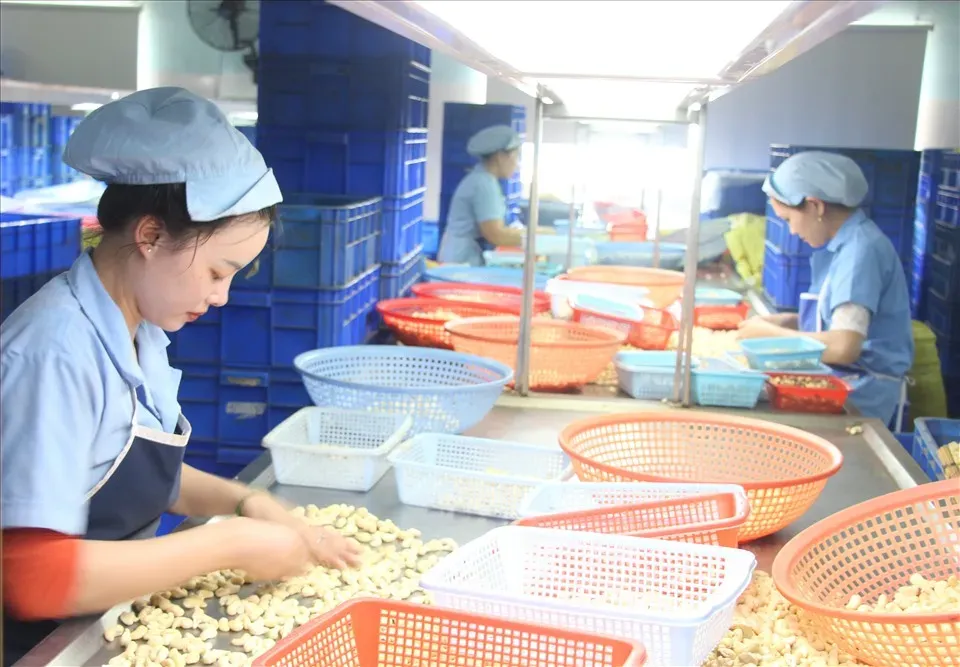
Installed processing capacity is a useful headline number. It is not the same as delivered first-grade kernel yield.
Cashew kernel yield depends on equipment quality, operator skill, raw nut calibration, peeling performance, grading discipline, line maintenance, and final quality control. These are not built overnight.
Vietnam’s cashew processing sector has worked through this curve for more than two decades. Factories have improved steaming, shelling, peeling, sorting, grading, and packing across many crop cycles.
Côte d’Ivoire’s processing growth is impressive. But a sector that triples processing volume in a few years has a different learning curve from a sector that has processed at scale for a generation.
Some of the yield gap can close quickly. Not all of it closes by 2030.
Reason 2: Premium Buyers Need Cert Ecosystem Depth
Premium buyers do not only buy cashew kernels. They buy risk control.
A buyer in Germany, the Netherlands, Japan, the UK, the US, or the Gulf may need BRCGS, IFS Food, FSSC 22000, EU Organic, JAS Organic, FSMA registration, Sedex platform records, third-party audits, and detailed traceability documents.
This is where Vietnam still has an advantage.
Vietnamese cashew processors have built certification density over many years. More importantly, many facilities have audit history. For a serious buyer, audit history matters as much as the certificate itself.
A certificate answers one question: can this factory pass a standard?
Audit history answers another question: can this supplier keep passing, correcting, documenting, and shipping consistently over time?
Côte d’Ivoire’s certification ecosystem is improving. I do not doubt that. But the gap in facility-level audit maturity is real.
Reason 3: Buyer Relationships Are Operational Assets
Premium cashew kernel export is not only about price. It is also about trust accumulated through repeated shipments.
Vietnamese processors have shipped thousands of FCLs to premium destination markets. Buyers know the communication rhythm, document format, claim handling process, and corrective action history.
That operational memory is valuable.
When a buyer has worked with a processor for several years, they know how that supplier responds when something goes wrong. They know how fast the supplier can send traceability documents. They know whether QC photos match shipment reality. They know whether the supplier can hold specifications across repeat orders.
A new origin can win trials. It can win cost-sensitive programs. But shifting a meaningful annual allocation is a bigger decision.
This is why I think Côte d’Ivoire’s premium kernel export book will grow, but not instantly replace Vietnam in audit-heavy buyer programs.
Explore HAVIGO Vietnam Cashew Nuts
View available cashew grades, specifications, packing options, and export support details before requesting your quotation.
Reason 4: Lead Time Predictability Still Has Value
For cashew importers, freight cost is only one part of the logistics equation. Lead time variance also matters.
A buyer running retail promotions, food factory production, or private label programs needs predictable arrival windows. If the shipment arrives too early, warehousing cost rises. If it arrives too late, production or retail allocation suffers.
Vietnam has long-established FCL shipment flows from Ho Chi Minh City to major destinations. The route is not perfect, especially during freight volatility, but many buyers understand the rhythm.
Côte d’Ivoire’s logistics position is improving. Abidjan is important and capable. Still, some buyers may see higher planning uncertainty, depending on route, shipping line, destination, congestion, and transshipment pattern.
For workhorse grades, buyers may accept more variance if the cost advantage is strong. For premium programs, predictability has a higher value.
Reason 5: The Trade Pattern Matters More Than the Export Number
Côte d’Ivoire’s cashew kernel export growth is important. But not all kernel export growth means the same thing.
There is a difference between workhorse kernel growth and premium kernel replacement.
W320, W450, split, broken grades, and ingredient-grade kernels can move faster when cost advantage is clear. These grades serve factories, food service, snack processors, and industrial users.
Premium grades move differently.
W210 and W240 for specialty retail, Japanese buyer programs, US premium private label, and EU specialty channels require tighter alignment. Buyers look at size consistency, color, defect control, packing, audit record, food safety documentation, and supplier communication.
That is why I do not read the headline kernel export number as proof of complete premium-market rotation.
Trade patterns usually shift first where cost advantage is strongest. Premium segments follow on a longer time curve.
My 2027–2030 View
By 2027, Côte d’Ivoire’s raw cashew nut advantage will be even more visible. In many ways, it is already visible now.
By 2028 to 2030, I expect Côte d’Ivoire to close much of the gap in workhorse and ingredient-grade cashew kernel export. W320, W450, split kernels, and broken grades are the natural first battlegrounds.
But I do not expect premium cashew kernel export to rotate completely away from Vietnam by 2030.
| Segment | Likely Shift by 2030 | Why | Buyer Strategy |
|---|---|---|---|
| Raw cashew nut origin | Strong shift toward Côte d’Ivoire | Large domestic production base | Track African raw nut policies closely |
| W320 and W450 | Fast competitive shift | Cost advantage matters strongly | Compare Côte d’Ivoire and Vietnam offers |
| Broken and ingredient grades | Fast to moderate shift | Industrial buyers prioritize cost and stable supply | Use dual-source planning |
| W210 and W240 premium grades | Slower shift | Audit history, appearance, and consistency matter more | Keep Vietnam in the supplier mix |
| EU, Japan, and US premium private label | Selective shift | Compliance, traceability, and trust slow replacement | Qualify new origins gradually |
The smart buyer position is not “Vietnam forever.” That would be wrong.
It is also not “Africa is taking over everything.” That is too simple.
The smarter view is dual-source planning.
Use Côte d’Ivoire where raw material advantage and processing growth create cost-efficient opportunities. Use Vietnam where premium specification, audit history, export documentation, and long-term buyer relationships still carry weight.
What Importers Should Do Now
If I were building a 2027–2030 cashew sourcing plan, I would not wait for a single winner.
I would split the sourcing strategy by grade and buyer risk.
For W320, W450, split, and broken grades, I would qualify Côte d’Ivoire suppliers early. The cost and raw material logic is too strong to ignore.
For W210, W240, premium retail, Japanese specialty, EU specialty, and US private label programs, I would keep Vietnam as a serious supply base. I would add alternative origins gradually, but I would not move too fast without audit proof, shipment history, and specification consistency.
That is the nuance many headline narratives miss.
Raw cashew nut leadership can change quickly. Premium cashew kernel export changes more slowly because buyers are not only buying kernels. They are buying certainty.
Conclusion
Côte d’Ivoire is rising fast in the cashew industry. That rise is real, structural, and important.
Vietnam’s raw cashew nut weakness is also real. Vietnamese processors rely heavily on imported raw nuts, and that creates exposure to African policy changes, raw material price movement, and freight risk.
But Vietnam’s premium cashew kernel export position is built on more than raw material. It is built on processing know-how, certification depth, audit history, buyer relationships, QC familiarity, and document reliability.
My view is simple: Côte d’Ivoire will gain share, especially in workhorse and ingredient-grade kernels. Vietnam will remain harder to replace in premium cashew kernel export than many 2030 forecasts suggest.
For importers, the best strategy is not to choose a slogan. Build a dual-source plan by grade, market, and buyer requirement.
If your cashew sourcing plan for 2027–2030 treats every kernel grade the same, it is probably too simple.
If you are comparing Vietnam cashew suppliers, start with grade, packing, documents, shipment terms, and destination requirements. HAVIGO can support buyers with cashew specifications, FOB or CIF quotation, export documents, and sourcing discussion for your target market.
Explore HAVIGO Vietnam Cashew Nuts
View available cashew grades, specifications, packing options, and export support details before requesting your quotation.
FAQ: Vietnam vs Côte d’Ivoire in Cashew Kernel Export
1. Is Côte d’Ivoire overtaking Vietnam in cashew?
Côte d’Ivoire is stronger in raw cashew nut production. However, premium cashew kernel export depends on processing, audits, buyer trust, and quality consistency, not only raw nut volume.
2. Why does Vietnam still matter in cashew kernel export?
Vietnam still matters because it has a mature processing ecosystem, strong export experience, certification depth, and long-standing buyer relationships in premium markets.
3. Which cashew grades may shift faster to Côte d’Ivoire?
W320, W450, split kernels, and broken grades may shift faster because cost advantage and raw material access matter strongly in these segments.
4. Which cashew grades may stay more dependent on Vietnam?
Premium W210 and W240 programs may stay more dependent on Vietnam where buyers require strong audit history, consistent appearance, traceability, and reliable export documentation.
5. What is the best sourcing strategy for 2027–2030?
The best strategy is dual-source planning. Buyers can test Côte d’Ivoire for cost-efficient grades while keeping Vietnam for premium, specification-sensitive, and audit-heavy programs.
Sourcing Premium Cashew Kernel from Vietnam? HAVIGO is here to help you out!
If you are looking for a Vietnamese Premium Cashew Kernel partner, request a detailed quotation that includes product specifications, packing options, available certifications, and the applicable Incoterm. Contact HAVIGO to request the latest cashew nuts price quotation for your destination market.