
Learning how to make mango salsa is surprisingly simple. With ripe mango, lime juice, red onion, chilli and a few fresh ingredients, you can prepare a colourful salsa that combines sweetness, acidity and a little heat.
Mango salsa works well with tortilla chips, seafood, grilled chicken, tacos, rice bowls and salads. Better still, you can make it with either fresh mango or properly thawed frozen mango.
This guide provides an easy mango salsa recipe, explains which ingredients work best, and shows how to make mango salsa with frozen mango without ending up with a watery texture. Explore more recipe here!
Key Takeaways
- Mango salsa combines sweet mango with acidic, spicy and savoury ingredients.
- Both fresh and frozen mango can be used.
- Mango dice are the most convenient cut for frozen mango salsa.
- Lime juice, red onion, chilli and cilantro create a simple base recipe.
- Frozen mango should be thawed and drained before mixing.
- Mango salsa pairs particularly well with seafood, tacos, grilled foods and rice dishes.
What Is Mango Salsa?
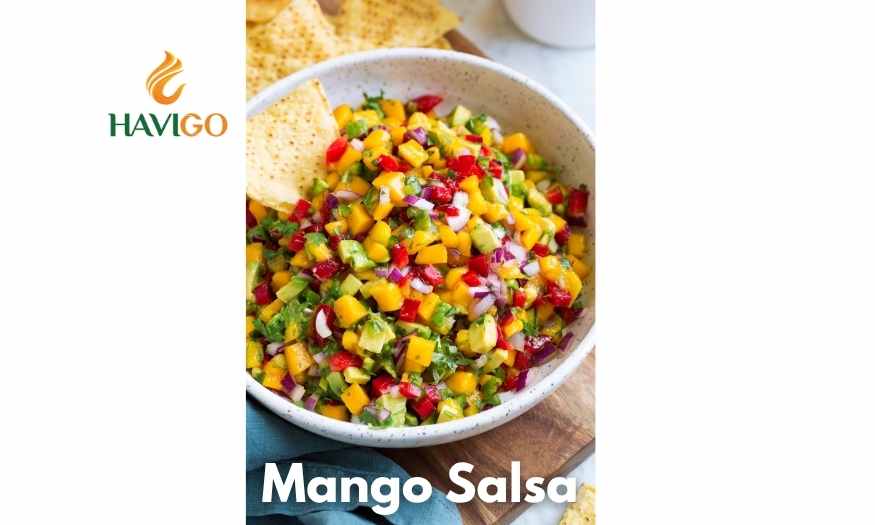
Mango salsa is a fresh fruit-based salsa that combines diced mango with ingredients such as onion, lime juice, chilli and herbs.
Unlike traditional tomato salsa, mango provides a noticeable natural sweetness. Lime adds acidity, chilli brings heat, and onion gives the mixture a sharper savoury flavour.
There is no single fixed mango salsa recipe.
The National Mango Board features several variations, ranging from a simple five-ingredient mango salsa to versions containing tomato, black pepper, chipotle and tomatillo. This illustrates how easily the basic recipe can be adjusted for different dishes.
For a basic version, however, simplicity works well.
Mango Salsa Ingredients
You only need a few ingredients for this easy mango salsa recipe.
Basic Ingredients
2 cups diced mango
Use ripe but firm fresh mango or thawed frozen mango dice.
1/3 cup finely diced red onion
Red onion adds a crisp texture and slightly sharp flavour that balances the sweetness of mango.
1/2 red bell pepper, finely diced
Bell pepper adds colour, crunch and mild sweetness.
1 small jalapeño or chilli, finely chopped
Adjust the amount according to the required heat level. Remove the seeds for a milder salsa.
1/3 cup fresh cilantro, chopped
Cilantro gives the salsa its characteristic fresh herbal flavour.
2 tablespoons fresh lime juice
Lime juice provides acidity and balances the sweetness of the mango.
Salt to taste
A small amount helps bring the flavours together.
Optional Ingredients
Depending on the application, you can also add:
- Avocado
- Tomato
- Cucumber
- Sweet corn
- Black beans
- Green onion
- Mint
- Pineapple
- Ground cumin
- Black pepper
- Chilli flakes
The National Mango Board also combines mango with ingredients such as kiwi, avocado, red onion, jalapeño, cilantro and lime in some of its salsa recipes, showing how adaptable mango is in savoury preparations.
How to Make Mango Salsa Step by Step
Once the ingredients are prepared, how to make mango salsa comes down to a few simple steps.
Step 1: Prepare the Mango
If using fresh mango, choose fruit that is ripe enough to be sweet but still firm enough to hold its shape after cutting.
Peel the mango and cut the flesh into relatively even dice.
If using frozen mango, thaw it first and remove excess liquid before combining it with the other ingredients.
Avoid aggressively squeezing the mango. The objective is to remove surface moisture while keeping the pieces intact.
Step 2: Prepare the Onion
Finely dice the red onion.
If you prefer a milder onion flavour, combine the onion with part of the lime juice and allow it to sit briefly before adding the remaining ingredients.
This technique is also used in a National Mango Board salsa recipe, where diced onion rests in lime juice before being combined with mango and other ingredients.
Step 3: Chop the Remaining Ingredients
Finely dice the bell pepper and chilli.
Chop the cilantro.
Try to keep the vegetables relatively uniform in size. This creates a better balance of mango, onion and pepper in each spoonful.
Step 4: Combine Everything
Add the mango, onion, bell pepper, chilli and cilantro to a large bowl.
Pour the lime juice over the ingredients.
Add a small amount of salt.
Step 5: Mix Gently
Fold the ingredients together rather than stirring aggressively.
This is particularly important when preparing frozen mango salsa, as thawed mango can be softer than freshly cut fruit.
The goal is to coat the ingredients evenly without crushing the mango.
Step 6: Taste and Adjust
Taste the salsa before serving.
You can adjust:
- Lime for more acidity
- Chilli for more heat
- Salt for seasoning
- Mango for additional sweetness
- Cilantro for a stronger herbal note
There is no need to make the flavour excessively complicated. A good mango salsa should still allow mango to remain the main ingredient.
How to Make Mango Salsa With Frozen Mango
Yes, frozen mango can be used for salsa.
However, how to make mango salsa with frozen mango is slightly different from using fresh fruit because freezing and thawing affect fruit texture.
The most important step is managing excess moisture.
1. Choose Mango Dice
For salsa, IQF mango dice are more convenient than mango sticks or cheeks because they already have a shape suitable for mixing with vegetables and herbs.
2. Thaw the Mango Gradually
Allow the required quantity to thaw under appropriate refrigerated conditions according to the product’s handling instructions.
Avoid exposing the entire package to unnecessary temperature changes when only a portion is required.
3. Drain Excess Liquid
Once thawed, drain any excess liquid.
If necessary, gently pat the mango pieces with a clean paper towel.
This helps prevent watery salsa.
4. Add Mango Last
Prepare the onion, pepper, chilli, cilantro and lime first.
Then gently fold in the thawed mango.
Adding the softer fruit toward the end helps maintain identifiable mango pieces.
5. Serve Chilled
Once combined, keep the salsa refrigerated until serving.
For foodservice operations using commercial IQF frozen mango, always follow the manufacturer’s storage and thawing specifications.
Fresh Mango vs Frozen Mango for Salsa
Both can work, but they offer different advantages.
Fresh Mango
Fresh mango is generally preferable when:
- Firm texture is particularly important
- Large visible pieces are required
- Mango is readily available at the desired ripeness
- The salsa will be presented immediately after preparation
A firm-ripe mango usually holds its shape better than very soft, fully ripe fruit.
Frozen Mango
Frozen mango can be particularly useful when:
- Fresh mango is out of season
- Pre-cut fruit is preferred
- Consistent portioning is important
- Preparation time needs to be reduced
- A restaurant or processor requires frozen inventory
The main consideration is texture.
Thawed mango may be softer and release more liquid than fresh fruit. For this reason, proper thawing and draining are particularly important when making frozen mango salsa.
What Mango Is Best for Mango Salsa?
The best mango is sweet, flavourful and firm enough to remain identifiable after mixing.
Overripe mango can be delicious, but its soft texture may turn the salsa into something closer to a sauce or puree.
Underripe mango has the opposite problem. It may be very firm but lack the sweetness expected from a classic mango salsa.
The ideal fruit therefore needs a balance between:
Sweetness + flavour + firmness
For commercial buyers using frozen fruit, other specifications may also matter, including:
- Mango variety
- Brix
- Ripeness
- Colour
- Dice size
- Texture
- Packing format
These specifications become increasingly important when the same mango salsa recipe needs to be reproduced consistently across multiple production batches.
How Spicy Should Mango Salsa Be?
There is no fixed level.
A mild salsa may contain only a small quantity of deseeded jalapeño.
For medium heat, increase the chilli while retaining some seeds and internal membrane.
For a noticeably spicy salsa, stronger chilli varieties can be used.
The important point is balance.
Mango salsa should normally provide a combination of:
Sweet + Sour + Salty + Spicy + Fresh
Too much chilli can overpower the mango.
Too much lime can make the salsa excessively acidic.
Too much onion can hide the natural fruit flavour.
Start conservatively and adjust after tasting.
Mango Salsa Variations
Once you know how to make mango salsa, the basic recipe can be modified for many different applications.
Mango Avocado Salsa
Add diced avocado for a creamier texture.
This version works well with tacos, grilled shrimp and fish.
Add the avocado near the end and fold gently so the pieces do not break apart.
Mango Tomato Salsa
Combine mango with diced tomato for a version closer to traditional fresh salsa.
The National Mango Board also features mango salsa variations combining mango and tomato.
This version is suitable for tortilla chips and Mexican-inspired dishes.
Spicy Mango Salsa
Increase the quantity of jalapeño or use a stronger chilli.
A little chilli powder or cumin can also create a deeper savoury flavour.
Mango Cucumber Salsa
Add diced cucumber for extra freshness and crunch.
This variation pairs particularly well with seafood and summer dishes.
Mango Corn and Black Bean Salsa
For a more substantial salsa, combine mango with sweet corn and black beans.
The National Mango Board uses mango, beans, corn, bell pepper, tomatoes, onion, jalapeño and cilantro in its Mango Cowboy Caviar variation.
This version can function as both a dip and a side dish.
What to Serve With Mango Salsa
One reason mango salsa is so versatile is that it works with many savoury dishes.
Fish
Mango, lime and chilli pair particularly well with grilled or pan-seared fish.
Try the salsa with:
- White fish
- Salmon
- Tuna
- Fish tacos
Shrimp and Seafood
Sweet mango can balance salty and savoury seafood flavours.
It works especially well with grilled shrimp and seafood tacos.
Chicken
Serve mango salsa alongside:
- Grilled chicken
- Chicken tacos
- Chicken wraps
- Rice bowls
Tacos
Mango salsa can add sweetness, acidity and freshness to tacos containing fish, shrimp, chicken or pork.
Rice Bowls
Add the salsa to rice with grilled protein, avocado and vegetables for a tropical-style bowl.
Tortilla Chips
The simplest option is to serve this easy mango salsa recipe as a dip.
The National Mango Board also recommends mango salsa for dipping as well as topping savoury dishes.
Common Mistakes When Making Mango Salsa
Understanding how to make mango salsa also means knowing what can go wrong.
Using Mango That Is Too Soft
Very ripe mango can break apart during mixing.
Choose firmer fruit when visible dice are important.
Not Draining Frozen Mango
This is one of the biggest problems when making frozen mango salsa.
Excess thawing liquid can dilute the lime juice and seasonings and make the final mixture watery.
Cutting Ingredients Too Large
Large pieces of raw onion or chilli can dominate each bite.
Dice these ingredients more finely than the mango.
Adding Too Much Lime
Lime should balance the mango rather than overpower it.
Start with a moderate quantity and adjust after tasting.
Mixing Too Aggressively
Fold the ingredients gently.
This helps preserve the mango pieces, especially when thawed fruit is used.
Adding Too Many Ingredients
Mango salsa is adaptable, but more ingredients do not automatically produce a better result.
Keep mango as the dominant flavour.
How to Store Mango Salsa Safely
Because mango salsa contains cut fruit, vegetables and fresh herbs, it should be handled as a perishable food.
The FDA advises keeping perishable fresh fruits and vegetables refrigerated at 40°F (approximately 4°C) or below. It also recommends washing fresh produce thoroughly under running water and keeping produce separate from raw meat, poultry and seafood during preparation.
For fresh ingredients, the FDA specifically recommends washing produce before peeling or cutting to reduce the possibility of transferring dirt or bacteria from the surface to the inside. Soap or detergent should not be used to wash fruits and vegetables.
For best eating quality, prepare only the amount of salsa likely to be consumed within a short period and keep it refrigerated in a clean, covered container.
When commercially frozen mango is used, follow the supplier’s specific thawing and storage instructions.
Can You Prepare Mango Salsa in Advance?
Yes, but timing matters.
Preparing the onion, pepper and chilli ahead of time is relatively straightforward.
The mango is better added closer to serving, particularly when using very ripe fresh mango or thawed frozen mango.
This helps maintain better piece definition.
If avocado is included, it should also be added relatively late because its appearance and texture change more quickly after cutting.
For restaurants or catering operations, another option is to prepare the vegetable base separately and combine it with mango in smaller batches according to demand.
Why IQF Mango Works for Foodservice Salsa
Commercial kitchens need more than a good mango salsa recipe. They also need repeatability.
Fresh mango preparation can involve:
- Washing
- Peeling
- Removing the stone
- Trimming
- Dicing
- Sorting fruit according to ripeness
Pre-cut IQF frozen mango can reduce some of these preparation steps.
Individual freezing also allows operators to portion the amount required for each production batch while the remaining product stays frozen.
For restaurants, hotels, catering businesses and food manufacturers, this can be useful when mango salsa is produced regularly or when fresh mango availability changes throughout the year.
Product specification still matters.
Commercial buyers should evaluate mango variety, sweetness, colour, cut size, texture after thawing and microbiological requirements according to the intended application.
FAQ About Making Mango Salsa
Can You Make Mango Salsa With Frozen Mango?
Yes. Frozen mango works particularly well when it is properly thawed, drained and gently mixed with the other ingredients.
Mango dice are usually the most convenient format.
Do You Have to Thaw Frozen Mango for Salsa?
Yes, for a traditional salsa texture.
Using completely frozen pieces would make the salsa difficult to eat and could release considerable liquid as the mango thaws after mixing.
What Onion Is Best for Mango Salsa?
Red onion is popular because it provides colour, crispness and a sharp flavour that contrasts with sweet mango.
White onion or green onion can also be used depending on the desired flavour profile.
Is Mango Salsa Supposed to Be Spicy?
Not necessarily.
The amount and type of chilli can be adjusted. Mango salsa can range from mild to very spicy.
How Do You Keep Mango Salsa From Becoming Watery?
Use firm mango, drain thawed frozen mango thoroughly and avoid adding excessive lime juice.
Watery ingredients such as tomatoes should also be drained if necessary.
Can Mango Salsa Be Used as More Than a Dip?
Absolutely.
It works as a topping, side dish or accompaniment for seafood, chicken, tacos, grilled foods, salads and rice bowls.
Conclusion: How to Make Mango Salsa Successfully
Once you understand how to make mango salsa, the recipe is easy to adapt.
Start with mango, red onion, chilli, cilantro and lime juice. Then adjust sweetness, acidity and heat according to the dish you plan to serve.
Fresh mango provides a firm and attractive texture, while frozen mango offers convenience and easier portioning. When preparing frozen mango salsa, thawing and draining the mango properly is the key to maintaining a good consistency.
From tortilla chips and tacos to seafood and rice bowls, this mango salsa recipe provides a simple way to bring mango’s tropical flavour into savoury dishes.