
Vietnam is a major cashew processing and export origin. However, importing Vietnamese cashew nuts is not only about price. Buyers should check grade, moisture, packing, documents, supplier reliability, and shipment terms first. At HAVIGO, we recommend confirming these details before requesting FOB or CIF quotations. This guide explains how to import cashew nuts from Vietnam with clearer specifications, fewer document issues, and better supplier alignment.
Key Takeaways
- Check key buying details first: Importers should confirm grade, packing, documents, and shipment terms before comparing prices.
- Understand common use cases: Vietnamese cashew nuts are widely used by wholesalers, distributors, food factories, and retailers.
- Monitor price movement: FOB and CIF prices can change daily due to raw material, freight, and market demand.
- Confirm import requirements: Import documents depend on the destination market, product type, and buyer requirements.
- Work with export-ready support: HAVIGO supports buyers with specifications, packing options, quotations, and export documents.
Why Import Vietnamese Cashew Nuts Matters for Importers
Importing Vietnamese cashew nuts matters because product decisions affect landed cost and repeat sales.
Buyers should review several commercial and technical points before booking.
- Product quality: Grade, color, breakage, moisture, and defect level affect market positioning.
- Stable supply: Buyers need consistent shipments for retail, wholesale, and food production.
- Landed cost: FOB price, freight, duty, clearance, and local charges affect final margin.
- Import compliance: Each market may request different documents and food safety checks.
- Packing condition: Vacuum bags, cartons, tins, and labels can affect shelf life and claims.
- Supplier reliability: Clear communication reduces errors before production and shipment.
For buyers, the main goal is simple.
They want a supplier who can quote clearly, prepare documents, and ship correctly.
Therefore, importers should evaluate both product and export execution.
What Cashew nuts Importers Often Get Wrong
Many buyers compare cashew suppliers too quickly. As a result, they may focus only on price and miss details that affect quality, documents, and final landed cost.
Before requesting a quotation, importers should check grade, packing, shipment terms, and destination requirements. These details help suppliers quote more accurately and reduce confusion before shipment.
1. Comparing price without checking grade
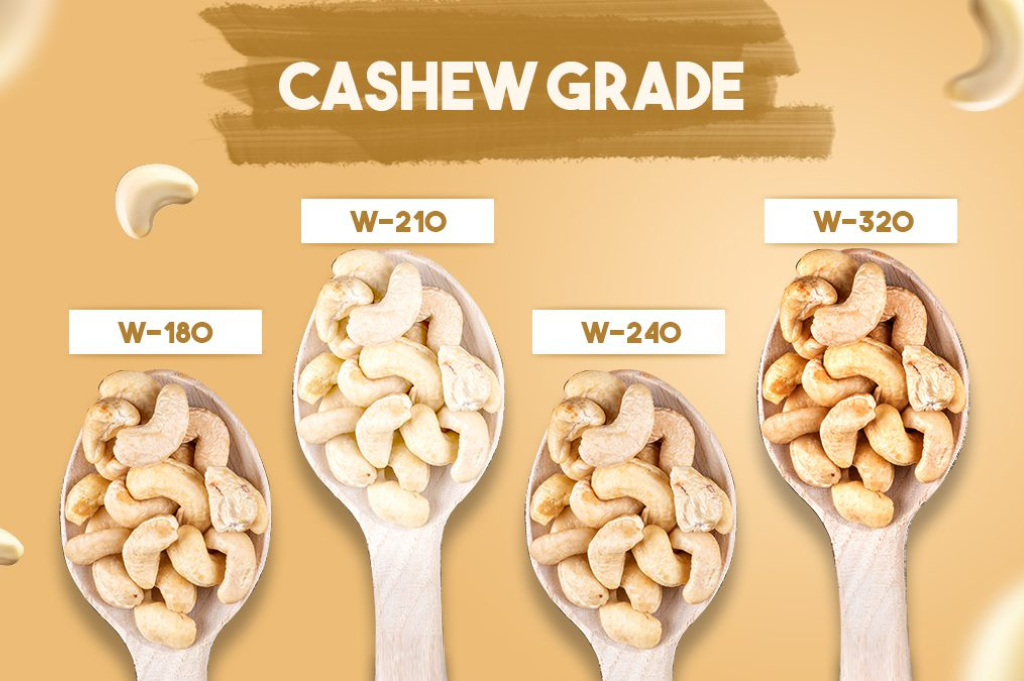
Cashew grades do not serve the same buyer segment. For example, WW180 is larger and usually priced higher, while WW320 often works better for wholesale, food service, and mainstream retail channels.
Therefore, buyers should confirm the exact grade before asking for price. This helps avoid unfair supplier comparisons and prevents later disputes about size, appearance, or final product use.
2. Ignoring packing details
Packing affects cost, shelf life, loading plan, and buyer presentation. For cashew nuts, buyers may request carton packing, vacuum bags, tins, or other retail-ready formats.
However, each packing option can change material cost and container loading arrangement. Therefore, buyers should confirm packing type, carton weight, inner bag format, and marking requirements before final quotation.
3. Asking for CIF price without destination details when import cashew nuts
A CIF quotation needs clear destination details. Buyers should provide the destination port, expected shipment month, and preferred shipping terms before requesting a price.
Freight rates can change before booking. Therefore, a CIF price without destination details may not reflect the real landed cost.
At HAVIGO, we usually ask buyers to confirm the port first. This helps us calculate a more accurate CIF quotation and avoid price changes later.
4. Assuming all suppliers follow the same quality standard
Not every supplier follows the same sorting, packing, and inspection process. As a result, the same cashew grade may still differ in appearance, broken rate, moisture, and packing condition.
Buyers should request product specifications, sample COA, packing photos, and loading details before confirming larger orders.
For higher-value shipments, third-party inspection can also help verify quality, quantity, marking, packing, and loading before shipment.
5. Forgetting local import requirements
Import duties, food safety rules, and document requirements vary by destination market. Therefore, importers should confirm local requirements before shipment.
Buyers should check required documents with their customs broker or local authority. This may include Certificate of Origin, Phytosanitary Certificate, Health Certificate, COA, or other market-specific documents.
This step is important because the exporter may not control customs clearance at the destination port. Clear requirements help both sides prepare documents correctly before cargo departure.
How to Import Vietnamese Cashew Nuts Step by Step
Importing Vietnamese cashew nuts becomes easier when buyers follow a clear process. Instead of asking for price first, importers should define product requirements, packing, documents, and shipment terms.
This framework helps buyers compare suppliers more accurately. It also reduces delays caused by unclear specifications or missing import documents.
Step 1: Define Your Target Product
Start with your market need. Different buyers require different grades, sizes, packing formats, and quality levels.
For example, food manufacturers may focus on broken rate, moisture, and processing suitability. Meanwhile, retail buyers may care more about appearance, uniform size, packaging, and shelf presentation.
Before requesting a quotation, buyers should confirm:
- Confirm your target customer group.
- Choose the suitable cashew grade.
- Define packing size and carton format.
- Confirm whether you need retail or bulk packing.
- Decide whether you need AFI quality or another standard.
Example:
A wholesaler may choose WW320 in bulk cartons.
However, a premium retail buyer may request larger kernels and stronger presentation.
What to check:
- Grade name
- Color
- Kernel size
- Broken level
- Moisture
- Packing format
Common mistake:
Buyers often ask only for “cashew price.”
However, suppliers need grade and packing before quoting correctly.
Step 2: Confirm Price Basis
Cashew prices can change daily.
Raw material prices, exchange rates, demand, and freight all affect quotations.
To compare suppliers, ask for the same pricing basis.
Common price terms include:
- FOB Ho Chi Minh City
- CIF destination port
- CNF destination port
- Ex Works, if applicable
For import cashew nuts price comparison, always confirm:
- Grade
- Quality standard
- Packing
- Quantity
- Incoterms
- Destination port
- Shipment month
- Payment terms
Pro tip!
FOB price does not show your full landed cost.
Therefore, buyers should calculate freight, duty, clearance, insurance, and local delivery.
Step 3: Check Supplier Capability
A reliable supplier should provide more than a price.
They should also explain product details, packing, shipment timing, and documents.
To evaluate a supplier, check:
- Export experience
- Product specification
- Available certifications
- Packing options
- Sample support
- Export document handling
- Communication speed
- Ability to quote FOB and CIF
For cashew nuts, supplier reliability directly affects repeat orders.
It also reduces claims after cargo arrival.
Evaluate Your Supplier Carefully!
Get detailed supplier information including certifications, export experience, and capability verification to ensure reliability.
Contact HAVIGO Export TeamStep 4: Request Samples and Specification
Samples help buyers check appearance, taste, size, and packing.
However, sample approval does not always represent every container.
Crop quality may vary by season, origin, and processing lot.
Therefore, buyers should approve samples and confirm full shipment specifications.
What to request:
- Product sample
- Product specification
- Sample COA, if available
- Packing photo
- Carton marking
- Shelf life information
- Storage instruction
Common mistake:
Some buyers approve a sample without confirming final shipment tolerance.
This can create disputes after loading.
Step 5: Confirm Import Documents
Document requirements depend on the destination market.
Importers should confirm these requirements with their broker.
Common export documents include:
- Commercial Invoice
- Packing List
- Bill of Lading
- Certificate of Origin
- Phytosanitary Certificate
- COA, if required
- Fumigation Certificate, if required
- Food safety certificates, if required
Document requirements vary by destination market.
Importers should confirm final requirements with their local broker or authority.
Step 6: Calculate Landed Cost
Landed cost gives buyers a realistic profit view.
It includes more than the import cashew Vietnam price.
Buyers should calculate:
- Product price
- Ocean freight
- Insurance
- Import duty
- Customs clearance
- Port charges
- Local trucking
- Storage cost
- Bank charges
- Inspection cost, if required
This step helps importers compare offers more accurately.
It also prevents confusion between FOB, CIF, and final warehouse cost.
Step 7: Confirm Shipment Schedule
Before placing an order, check production and shipping timing.
Cashew supply can depend on grade availability and packing workload.
Also, vessel schedules may change before booking.
To reduce risk, confirm:
- Production lead time
- Packing completion date
- ETD
- ETA
- Shipping line
- Transit time
- Required document dispatch timing
A clear schedule helps both sides avoid delays.
How HAVIGO Supports Importers
HAVIGO is a Vietnam-based agricultural product supplier and exporter.
For cashew buyers, HAVIGO supports both product and export coordination.
This includes:
- Product grade discussion
- Specification support
- Packing consultation
- FOB and CIF quotation support
- Sample arrangement
- Export document preparation
- Shipment coordination
- Third-party inspection support, if required
HAVIGO can support buyers who need export-ready documentation.
The company also works with agricultural products for different international markets.
Relevant compliance references may include BRC, ISO 22000:2018, FDA registration/compliance, and Sedex platform / SMETA audit.
The final document set depends on the product, shipment, and destination market.
Therefore, buyers should share their import requirements before order confirmation.
This helps HAVIGO align quotation, packing, and documents before shipment.
Ready to Import Cashew Nuts from Vietnam?
Contact HAVIGO to get product specifications, packing details, and the latest FOB/CIF quotation.
Contact HAVIGO Export TeamCommon Mistakes to Avoid When Import Cashew Nuts From Vietnam
Avoid these mistakes when you import Vietnamese cashew nuts.
Mistake 1: Buying only by lowest price
Low price may hide lower grade, weak packing, or unclear documents.
Fix it by comparing grade, packing, and supplier capability together.
Mistake 2: Not checking destination duty
Import duty on cashew nuts from Vietnam varies by country.
Fix it by asking your customs broker before confirming CIF cost.
Mistake 3: Confirming order without packing details
Packing affects shelf life, loading, and buyer presentation.
Fix it by approving packing photos and carton details.
Mistake 4: Ignoring document deadlines
Late documents can delay customs clearance.
Fix it by confirming document requirements before shipment.
Mistake 5: Assuming sample quality equals full shipment
Samples help, but full shipment quality needs clear standards.
Fix it by confirming tolerance and inspection requirements.
Mistake 6: Comparing FOB and CIF incorrectly
FOB excludes freight, while CIF includes ocean freight and insurance.
Fix it by comparing the same Incoterms.
Mistake 7: Not confirming shipment month
Prices and freight can change before booking.
Fix it by confirming order timing and vessel schedule early.
Conclusion
Importing cashew nuts from Vietnam can be a strong sourcing option for global buyers.
However, importers should avoid choosing suppliers by price alone.
Start with grade, specification, packing, documents, and landed cost.
Then compare supplier capability and shipment support.
This approach helps reduce claims, delays, and unexpected costs.
If you plan to import Vietnamese cashew nuts, HAVIGO can support your discussion.
Our team can help with product details, FOB/CIF quotation, packing options, and export documents.
Share your target grade, packing, quantity, and destination port to receive a suitable quotation.
The Best Coconut Flakes #1 Guide: Definitions, Nutrition Facts & Bulk Sourcing