Are you evaluating Vietnamese red dragon fruit for your market? HAVIGO supports product selection, packing discussions, documentation, and shipment coordination.
Explore Vietnamese Dragon FruitKey Takeaways
- Red dragon fruit has red, purple-red, or magenta flesh.
- Its flesh contains fibre, minerals, vitamin C, and betalain pigments.
- Major Vietnamese production areas include Lâm Đồng and Tiền Giang.
- Export orchards require traceability and suitable growing area codes.
- China remains the largest market, while India and the Middle East offer diversification.
What Is Red Dragon Fruit? Definition and Classification
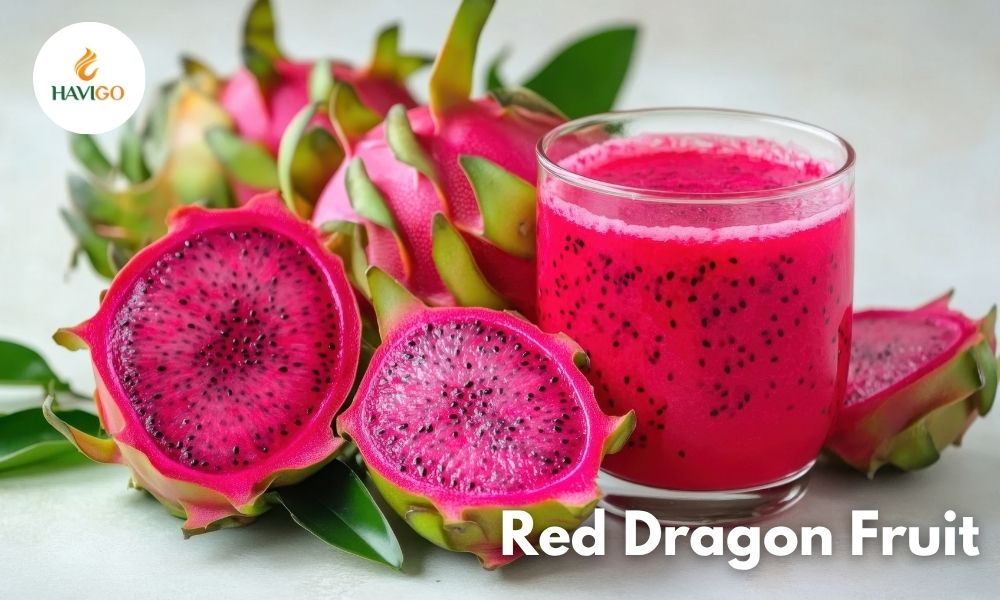
Red dragon fruit, as known as red pitahaya, red pitaya, or red flesh dragon fruit, is a tropical fruit produced by climbing cactus species. So what does the fruit look like?
Red dragon fruit usually has bright pink or dark-red skin. Green, leaf-shaped scales extend across its outer surface.
Inside, the flesh can appear red, crimson, purple-red, or magenta. The flesh contains numerous small black seeds. These seeds are edible and create a light crunch.
Red pitahaya usually offers a mildly sweet and refreshing flavour. Its texture remains soft, juicy, and slightly granular.
However, flavour varies by cultivar, maturity, season, and growing conditions.
Is Red Dragon Fruit Different From Red-Skinned Dragon Fruit?
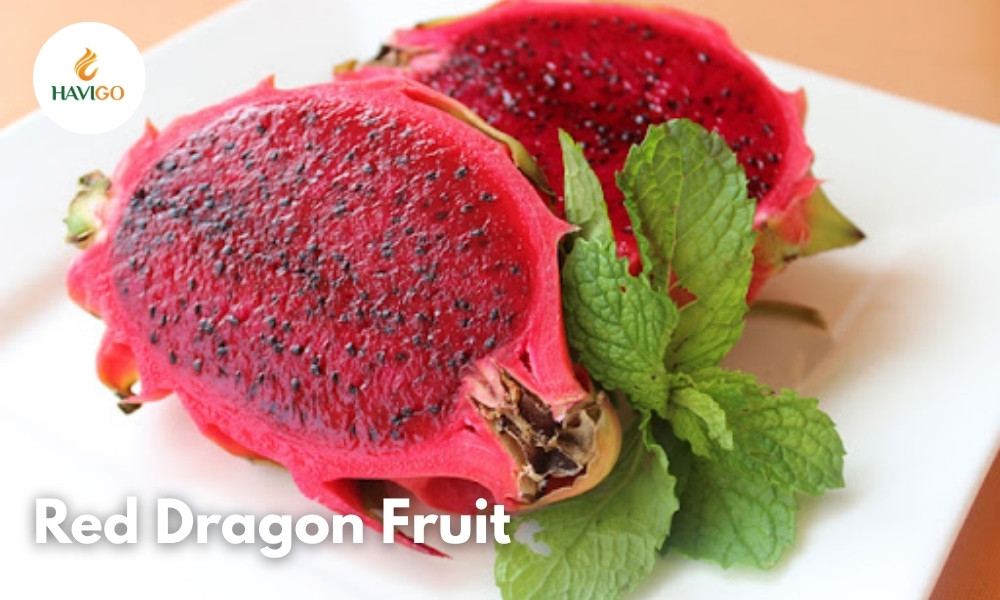
Yes. This distinction matters during commercial sourcing. Most dragon fruit varieties have pink or red skin.
However, their internal flesh may be white, red, purple, or magenta. Therefore, red skin does not always indicate red flesh.
An importer may request red dragon fruit but receive white-fleshed fruit. This problem often starts with an unclear purchasing specification.
Buyers should clearly state the required internal colour. A suitable specification could read: Pink-red skin with deep red flesh and evenly distributed black seeds. Buyers should also request cut-fruit photographs before approving an order.
Moreover, contracts should define whether magenta flesh remains acceptable.
What Are the Main Types of Dragon Fruit?
Vietnamese dragon fruit, locally known as thanh long, belongs to the cactus family. It has colourful skin, juicy flesh, and numerous edible black seeds.
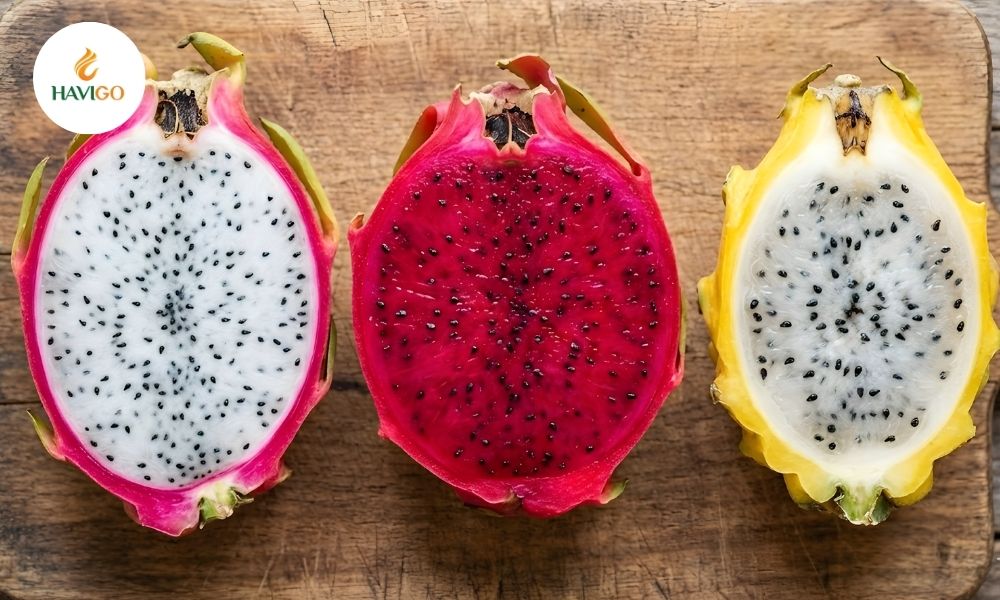
Commercial buyers usually classify dragon fruit by skin and flesh colour. These features help distinguish varieties with different flavours, applications, and market positions.
According to Vinpearl’s guide to Vietnamese dragon fruit, Vietnam produces white, red, and magenta-fleshed varieties. Yellow dragon fruit is also available, although commercial volumes may be more limited.
Buyers can explore these differences further in HAVIGO’s guide to the four main varieties of dragon fruit. The article compares red, pink, white, and yellow varieties by appearance and flavour.
| Dragon Fruit Type | Skin and Flesh | Typical Characteristics | Common B2B Applications |
|---|---|---|---|
| Red dragon fruit | Pink-red skin with red or crimson flesh | Vivid colour and generally fuller sweetness | Premium retail, smoothies, desserts, puree, and frozen products |
| White dragon fruit | Pink-red skin with white flesh | Mild sweetness and refreshing texture | Fresh retail, wholesale, foodservice, and fruit salads |
| Magenta dragon fruit | Pink skin with pink-purple flesh | Balanced sweetness and distinctive internal colour | Retail, bakery, beverages, and decorative applications |
| Yellow dragon fruit | Yellow skin with white flesh | Often smaller, aromatic, and distinctly sweet | Speciality retail and premium fruit programmes |
Vietnamese Red Dragon Fruit
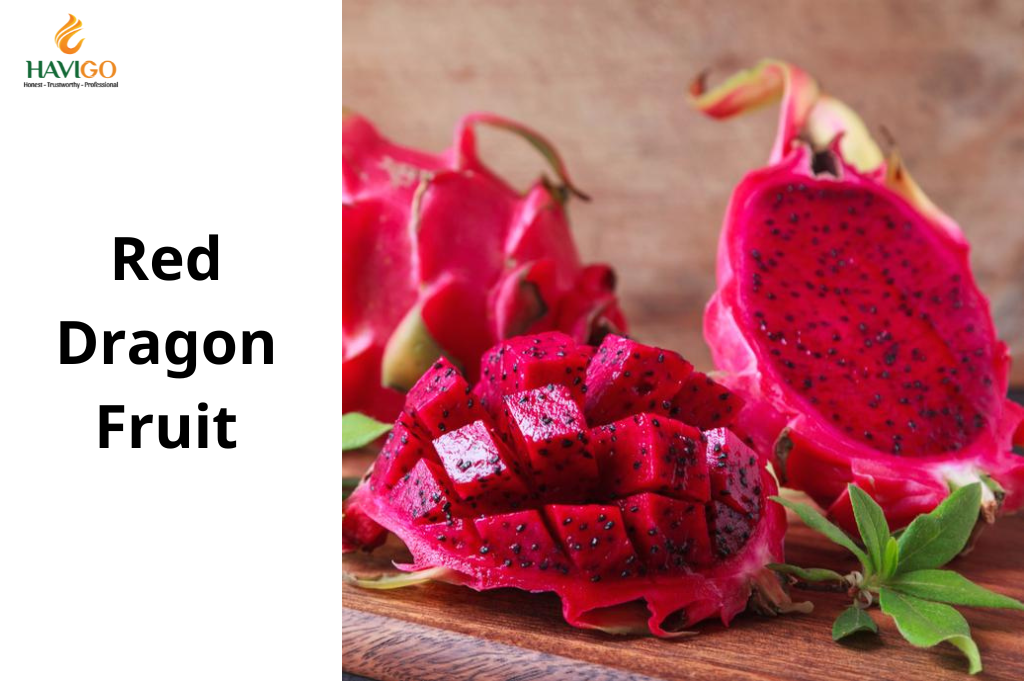
Vietnamese red dragon fruit has pink-red skin with green scales. Its flesh ranges from bright red to deep crimson.
The pulp is juicy and speckled with small black seeds. Its strong colour supports premium retail and fresh-cut presentations.
Food manufacturers also use red flesh in smoothies, juice, puree, desserts, and frozen products. However, colour stability should be tested before processing.
Vietnamese White Dragon Fruit
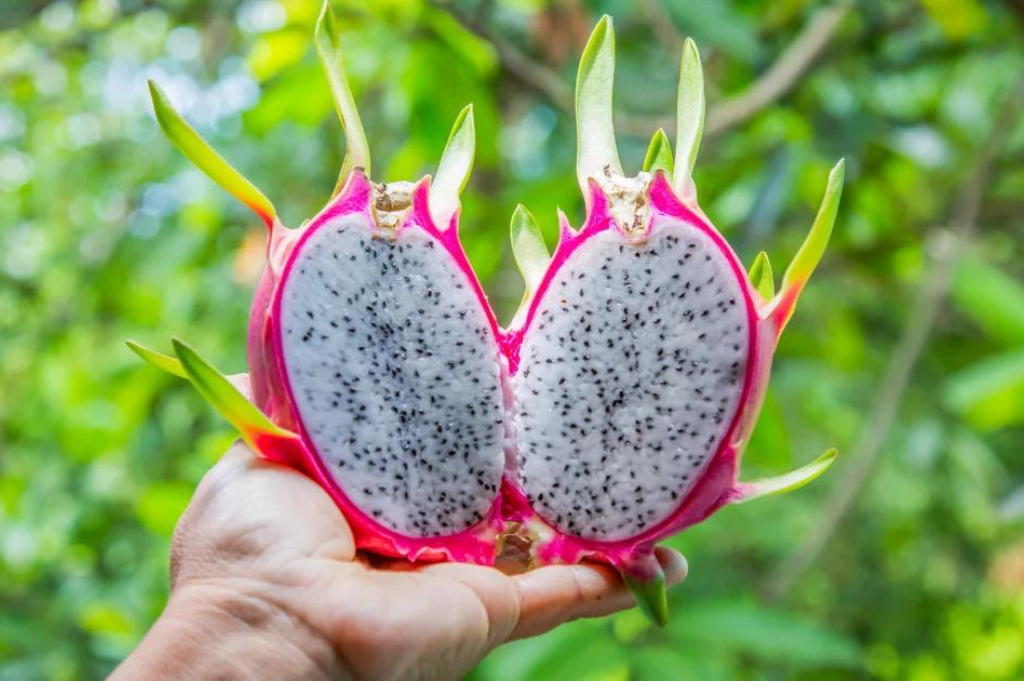
White dragon fruit has pink-red skin and white flesh. Therefore, buyers cannot identify it through skin colour alone.
Its taste is usually mild, lightly sweet, and refreshing. This profile suits fresh retail, foodservice, wholesale, and mixed-fruit applications.
White varieties often support broader distribution because their flavour appeals to different consumer groups.
Vietnamese Magenta Dragon Fruit
Magenta dragon fruit contains pink-purple flesh that can resemble red flesh. However, its colour is usually lighter and more purple.
This difference matters for retailers and food manufacturers. Buyers should use cut-fruit photographs when approving the required colour.
Its balanced flavour suits retail, beverages, bakery products, and decorative food applications.
Yellow Dragon Fruit

Yellow dragon fruit has bright yellow skin and usually contains white flesh. It is often smaller and more aromatic than common pink-skinned varieties.
Consumers frequently value it for its sweetness and distinctive appearance. Therefore, it can support speciality shops and premium fruit programmes.
However, supply volume, fruit size, and origin should be confirmed before planning regular orders.
For B2B sourcing, variety names alone are insufficient. Buyers should also confirm flesh colour, Brix, maturity, size, packing, and defect tolerances.
Is Magenta Dragon Fruit the Same as Red Dragon Fruit?
Not always. Magenta fruit usually has lighter pink-purple flesh.
However, lighting and photography can make it appear red. This difference matters for food manufacturers. A beverage producer may need consistent colour after processing.
Meanwhile, retailers may focus on cut-fruit appearance. Therefore, commercial contracts should include approved reference photographs.
Which Variety Should Importers Choose?
The suitable variety depends on the final sales channel. Red flesh usually suits premium retail and colour-focused products. White flesh supports broader fresh-fruit distribution.
Meanwhile, magenta varieties can serve retail and processing applications.
Buyers should also compare sweetness, size, shelf life, and landed cost.
Red Dragon Fruit Nutrition and Potential Health Benefits

Red dragon fruit offers more than an attractive appearance. Its pulp contains water, natural carbohydrates, fibre, vitamins, minerals, and bioactive plant compounds.
According to Vinpearl’s overview of Vietnamese dragon fruit nutrition, dragon fruit provides vitamin C, fibre, iron, magnesium, calcium, and antioxidant compounds. However, exact values vary by cultivar, maturity, origin, and storage conditions.
A scientific review published in 2023 also identifies B vitamins, vitamin C, potassium, calcium, phosphorus, iron, fibre, and betalains within pitaya. The authors note that nutritional composition differs between species and geographical locations.
| Nutrient or Compound | Role in Red Dragon Fruit | Potential Dietary Contribution |
|---|---|---|
| Water | Creates its juicy and refreshing texture | Contributes to normal daily fluid intake |
| Natural carbohydrates | Provide energy and natural sweetness | Sugar levels vary with maturity and cultivar |
| Dietary fibre | Occurs within the pulp and edible seeds | Supports normal digestive function |
| Vitamin C | Acts as an essential micronutrient and antioxidant | Supports immune function and collagen formation |
| Magnesium | One of the fruit’s naturally occurring minerals | Supports energy metabolism and muscle function |
| Potassium | Present within the fresh pulp | Supports normal nerve and muscle function |
| Calcium and iron | Present in varying concentrations | Contribute to normal bone and blood functions |
| Betalains | Create the red-purple flesh colour | Provide antioxidant activity in laboratory studies |
| Phenolic compounds | Natural bioactive compounds within the fruit | Contribute to the fruit’s antioxidant profile |
What Nutrients Does Red Dragon Fruit Provide?
The following figures represent indicative values for 100 grams of fresh Hylocereus polyrhizus pulp. They should not be treated as fixed values for every crop.
| Nutrient or Compound | Indicative Amount per 100g | Nutritional Role |
|---|---|---|
| Carbohydrates | 5.97g | Provide dietary energy |
| Total sugar | 5.60g | Contributes natural sweetness |
| Protein | 0.89g | Provides a small protein contribution |
| Dietary fibre | 1.01g | Supports normal digestive function |
| Potassium | 158.29mg | Supports normal muscle and nerve function |
| Magnesium | 33.2mg | Supports energy metabolism |
| Calcium | 31.2mg | Contributes to normal bone maintenance |
| Phosphorus | 29.2mg | Supports normal cellular functions |
| Iron | 0.78mg | Supports normal red blood cell formation |
| Vitamin C | 3.40mg | Supports normal immune function |
| Betacyanin | 28mg | Creates colour and provides antioxidant activity |
These figures come from published laboratory research. Therefore, manufacturers should conduct product-specific testing before preparing nutrition labels.
Dietary Fibre and Digestive Function
Red dragon fruit contains dietary fibre within its pulp and edible seeds. Fibre supports normal digestion and regular bowel movements.
According to a review of red pitaya composition and maturation, pitaya also contains glucose, fructose, oligosaccharides, and polysaccharides.
Researchers have examined some pitaya compounds for potential prebiotic applications. However, brands should avoid specific claims without product testing.
Vitamin C and Essential Minerals
Red dragon fruit provides vitamin C and minerals such as potassium, magnesium, calcium, phosphorus, and iron.
Vitamin C supports normal immune function and collagen formation. Meanwhile, magnesium contributes to normal energy metabolism.
Potassium supports normal nerve and muscle function. Calcium and phosphorus contribute to normal bone maintenance.
However, concentrations vary between cultivars. Dragon fruit should not be presented as a primary source without laboratory evidence.
Betalains and Antioxidant Compounds
Red dragon fruit gets its vivid colour from betalains, especially betacyanins.
According to a scientific review of dragon fruit antioxidants, betalains, carotenoids, and phenolic compounds contribute to its antioxidant profile.
Antioxidants help protect cells against oxidative stress. However, laboratory findings do not prove that dragon fruit prevents diseases.
Businesses should avoid unsupported claims concerning cancer, diabetes, heart disease, or other medical conditions.
Do the Black Seeds Have Nutritional Value?
The small black seeds are edible and create a lightly crunchy texture.
A nutritional comparison of red-purple and white pitaya identified unsaturated fatty acids within pitaya seed oil.
Linoleic and oleic acids were among the main compounds. However, seeds represent only a small portion of the fruit.
Therefore, businesses should not make omega-related claims without product-specific testing.
Is Red Dragon Fruit Low in Calories?
Fresh dragon fruit contains substantial water and relatively little fat. Therefore, it suits fresh fruit and balanced meal applications.
However, dried dragon fruit and powder contain less water. Consequently, sugars and calories become more concentrated per 100 grams.
Buyers should distinguish between fresh pulp, juice, puree, dried fruit, and powder when reviewing nutritional information.
Why Do Nutritional Values Vary?
Nutritional composition depends on species, cultivar, growing region, climate, and harvest maturity.
Post-harvest storage and processing also affect the final profile. For example, heat may reduce vitamin C and change betalain colour.
A comparative study of different dragon fruit cultivars found meaningful differences between white, yellow, and red-fleshed fruit.
Therefore, one published value cannot represent every crop or shipment.
Food manufacturers should request product-specific laboratory reports before preparing nutrition labels or health-related marketing claims.
Can Food Manufacturers Use Its Natural Colour?
Yes. Red flesh offers potential as a natural colouring ingredient. Manufacturers can use it in smoothies, yoghurt, jelly, desserts, and puree. However, colour stability depends on processing conditions. Heat, light, oxygen, and acidity can change the original colour. Therefore, manufacturers should conduct formula and shelf-life tests.
Are All Online Health Claims Reliable?
No. Some commercial articles claim dragon fruit treats diabetes, cancer, or heart disease. Current evidence does not support unrestricted medical claims. Businesses should avoid disease-related marketing without regulatory approval. Moreover, health claims must follow destination regulations.
Where Is Red Dragon Fruit Grown in Vietnam?

Vietnam has several established dragon fruit production regions.
The largest areas remain concentrated in southern and south-central Vietnam. Important regions include Lâm Đồng, Tiền Giang, Tây Ninh, and several northern areas.
Following Vietnam’s 2025 administrative restructuring, Bình Thuận became part of the expanded Lâm Đồng Province.
Therefore, recent production reports list the traditional Bình Thuận belt under Lâm Đồng.
Lâm Đồng and the Traditional Bình Thuận Production Belt
Lâm Đồng contains Vietnam’s largest dragon fruit production area.
According to Vietnam News in May 2026, the province had around 25,800 hectares. Nearly 36% of this area followed VietGAP standards. Authorities had granted 571 planting area codes. These codes covered more than 25,200 hectares. The province also had 282 packing facility codes for exports.
Lâm Đồng supplies China, Japan, South Korea, the United States, and the European Union. Other destinations include Australia, New Zealand, Southeast Asia, and the Middle East.
Tiền Giang
Tiền Giang is another major production centre. Its growing areas concentrate heavily in Chợ Gạo District.
According to Vietnam News in February 2025, the province had around 8,500 hectares. Red-fleshed varieties represented most of this production area. Annual production exceeded 255,000 tonnes.
Moreover, over 2,300 hectares met VietGAP or GlobalGAP standards. Chợ Gạo alone had about 6,600 hectares. Its annual output reached approximately 180,000 tonnes. The district also maintained 101 export growing area codes. These codes covered 5,923 hectares.
Why Does the Growing Region Matter?
Growing regions influence size, colour, sweetness, and harvest timing. Weather also affects skin condition and disease pressure. Moreover, distance to packing facilities affects pre-cooling schedules. Importers should not select fruit using only a province name. They should confirm the specific orchard and packing facility.
What Standards Should Export Growing Areas Meet?
Export growing areas need effective traceability systems. Farm records should identify the orchard, harvest date, and supplied quantity. They should also record fertiliser and pesticide applications. Some destinations require approved planting area codes. Packing and treatment facilities may need separate registration.
The International Plant Protection Convention describes Vietnam’s export control system. It includes production unit, treatment facility, and packing house codes. VietGAP supports safe production and traceability practices. Meanwhile, GlobalGAP often supports private retailer requirements. However, certification alone does not guarantee market access.
The certificate must cover the selected orchard and product. Buyers should also verify its validity period.
How Does HAVIGO Support Red Dragon Fruit Sourcing?
HAVIGO works with growers and packing partners across Vietnamese production regions. Our team discusses variety, size, maturity, Brix, packing, and shipment schedules. HAVIGO also coordinates available orchard and packing facility information.
However, certification depends on the selected supply programme.
Therefore, buyers should confirm each document before contract signing.
The HAVIGO dragon fruit product page provides current information about varieties, sizes, packing, and shipment options.
Need red dragon fruit from a suitable growing area? Share your destination, specifications, packing, volume, and shipment schedule with HAVIGO.
Discuss Your Import RequirementsRed Dragon Fruit Import and Export Markets
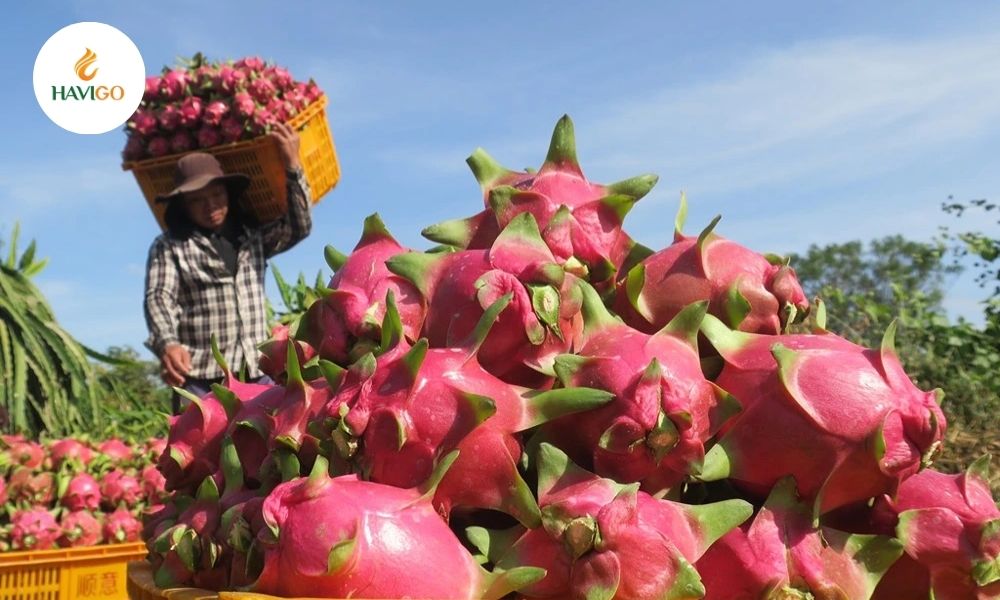
Vietnam remains a major international dragon fruit supplier. The country exports white, red, and other commercial varieties. However, public customs data usually combines all dragon fruit types. Therefore, market figures rarely represent red flesh alone.
According to VOV in January 2026, Vietnam’s dragon fruit exports reached almost USD526 million in 2025.
The sector maintained its position despite increasing global competition.
Which Countries Import Vietnamese Dragon Fruit?
China remains Vietnam’s largest dragon fruit market. However, Vietnamese exporters also serve India, Thailand, Japan, and South Korea. Other markets include Australia, New Zealand, the United States, and European countries. Middle Eastern demand has also become more relevant.
According to Vietnam Customs data reported by VOV, exports reached USD485.2 million during 2025’s first eleven months. China accounted for USD301.7 million. This value represented 62.2% of total dragon fruit exports. Meanwhile, exports to India reached nearly USD41.8 million. Exports to Thailand increased 71.1% from a smaller base.
| Market Indicator | Reported Value | Commercial Interpretation |
|---|---|---|
| Full-year exports | Almost USD526 million in 2025 | Vietnam remains an important global supplier |
| China | USD301.7 million during the first eleven months | Largest market with a 62.2% share |
| India | Nearly USD41.8 million | Growing destination with increasing local competition |
| Thailand | Export growth of 71.1% | Rapid growth from a smaller market base |
The market-level figures cover all dragon fruit varieties. They should not be presented as red dragon fruit data alone.
Why Is China Still the Largest Market?
China offers strong consumer awareness and established distribution channels. Its geographical proximity also supports shorter transit times. However, China has expanded domestic dragon fruit production. Its annual production has approached domestic consumption requirements.
Consequently, Vietnamese suppliers face stronger price competition. Shipments to China also declined 4.5% during 2025’s first eleven months.
Which Markets Offer New Opportunities?
India offers a sizeable consumer base. However, Indian farmers have also expanded local production.
The Middle East supports demand for premium imported fruit. Japan and South Korea offer higher-value programmes. However, these markets impose strict phytosanitary requirements.
Australia and New Zealand also require approved export protocols. The United States and European Union can support specialised retail programmes. Nevertheless, compliance costs remain higher in these markets.
Planning a red dragon fruit import programme? Send HAVIGO your destination port, size, packing, volume, and required delivery period.
Request Red Dragon Fruit InformationWhat Is the Difference Between Red and White Dragon Fruit?
Red dragon fruit has red or purple flesh, while white dragon fruit has white flesh. Taste and sweetness also vary by variety and maturity.
Is Red Dragon Fruit Sweeter Than White Dragon Fruit?
Red varieties are often slightly sweeter. However, Brix, harvest timing, and growing conditions also affect taste.
Is Red Pitahaya the Same as Red Dragon Fruit?
Yes. Red pitahaya and red pitaya are common alternative names for red dragon fruit.
Is Vietnam Red Dragon Fruit Available All Year?
Vietnam produces red dragon fruit during most months. However, volume, quality, size, and price vary by season.
Which Fruit Sizes Are Available for Export?
The HAVIGO dragon fruit specification lists an indicative range of 350g to 750g per fruit.
Conclusion
Red dragon fruit sourcing should be assessed through variety, flesh colour, Brix, fruit size, growing area standards, packing, and destination requirements.
China remains Vietnam’s largest dragon fruit market. However, India, Thailand, Japan, South Korea, Australia, and other premium markets also offer potential. Opportunities vary by competition, phytosanitary rules, residue limits, transit time, and cold-chain conditions.
HAVIGO supports importers with product specifications, quotations, sample arrangements, growing-area information, quality documents, and export document coordination. Contact HAVIGO to request the latest red dragon fruit quotation for your destination market.