Vietnam remains one of the leading sourcing origins for commercial dragon fruit. Importers researching where to buy dragon fruit can compare five Vietnamese suppliers by product range, packing, certifications, capacity, and export support. This guide helps buyers identify which supplier profile suits their market and purchasing model.
Finding a reliable dragon fruit supplier requires more than reviewing product photos or comparing initial prices.
Importers searching where to buy dragon fruit need verified sourcing, clear specifications, suitable packing, and export coordination. The supplier must also understand the destination market’s plant health requirements.
Vietnam supplies white-flesh, red-flesh, and yellow pitaya dragon fruit for international markets. However, each supplier differs in facilities, treatment capacity, varieties, and export experience.
This guide compares five Vietnamese suppliers serving importers, wholesalers, brokers, retailers, and fruit distributors. It also explains how buyers should evaluate each company before placing an order.
- HAVIGO supports flexible varieties, carton sizes, and export coordination for international buyers.
- Hoang Phat Fruit stands out for its packing facility and vapour heat treatment capacity.
- Hoang Hau offers a long-established dragon fruit farming and export background.
- Song Nam ITD has visible experience with irradiation and destination-specific export programs.
- The Fruit Republic focuses on structured supply programs and certified contract farming.
- This list is not an official ranking based on audited export volume.
- Buyers should verify certificates, facility approvals, and crop specifications before ordering.
How Were These Dragon Fruit Suppliers Selected?
This shortlist focuses on suppliers with visible experience in fresh dragon fruit sourcing or exporting.
The evaluation considers five practical factors:
- Dragon fruit varieties
- Farm or sourcing structure
- Packing and post-harvest capability
- Export market experience
- Information available to international buyers
The order reflects relevance for bulk sourcing. It does not represent an official export-volume ranking.
Furthermore, buyers should independently verify every supplier listed here. This requirement also applies to HAVIGO.
Company websites usually describe general capabilities. However, current certificates, farm codes, and specifications may change.
Therefore, buyers should request updated evidence before signing a contract.
Top 5 Dragon Fruit Supplier Options in Vietnam
1. HAVIGO Company Limited
HAVIGO is a Vietnamese agricultural exporter serving importers, distributors, wholesalers, and food businesses.
The company sources fresh dragon fruit from Binh Thuan, a major production area in Vietnam. Its available range includes white-flesh, red-flesh, and yellow dragon fruit.
HAVIGO’s published product range covers fruit from 350 to 750 grams. Available carton sizes include 3, 4.5, 5, 9, and 18 kilograms.
The company also supports air and sea shipments. However, final availability depends on the variety, crop, grade, and destination requirements.
Why buyers may choose HAVIGO?
HAVIGO offers a broad product range instead of focusing on one dragon fruit variety.
This approach may suit importers supplying different wholesale or retail segments. For example, one buyer may need white fruit for wholesale markets.
Another buyer may prefer red fruit for premium retailers. Meanwhile, yellow fruit can support a more specialised market segment.
HAVIGO also supports buyers with:
- Product specifications
- Packing options
- FOB and CIF quotations
- Sample arrangements
- Export documents
- Shipment coordination
- Private-label carton discussions
In export discussions, buyers often ask about price before confirming the fruit specification.
However, HAVIGO recommends confirming variety, size, grade, packing, and destination first. These details allow both parties to compare the same product.
What buyers should verify
Before confirming an order, buyers should request:
- Current crop photographs
- Written product specification
- Farm and packing-house information
- Available certificates
- Carton dimensions
- Loading plan
- Treatment requirements
- Destination-specific documents
A published product specification provides an initial reference. Nevertheless, buyers should approve a lot-specific specification before loading.
Explore HAVIGO Vietnam Dragon Fruit
View available varieties, fruit sizes, specifications, packing options, and export support details before requesting your quotation.
2. Hoang Phat Fruit Company Limited
Hoang Phat Fruit was established in 2012. The company exports dragon fruit and other tropical fruits from Vietnam.
Its public information highlights markets including Japan, Australia, Korea, the United States, and Europe.
The company operates a facility in Long An covering more than 10,000 square metres. Its website also describes vapour heat treatment technology for fresh fruit exports.
Why buyers may choose Hoang Phat Fruit?
Treatment capacity can be important for markets with strict biosecurity controls.
Some destinations require approved production areas, packing houses, and treatment facilities. Therefore, access to suitable treatment infrastructure can simplify shipment planning.
Hoang Phat Fruit may suit buyers importing into markets with established treatment protocols.
Its facility location also provides access to dragon fruit production areas in southern Vietnam.
What buyers should verify
A treatment facility does not automatically qualify for every destination.
Therefore, buyers should verify:
- Current facility approval
- Destination-specific treatment eligibility
- Available treatment schedule
- Approved farms
- Packing-house registration
- Treatment certificate format
- Maximum weekly capacity
Hoang Phat Fruit previously handled a Vietnamese dragon fruit shipment to Australia. The shipment used vapour heat treatment under stated temperature and humidity conditions.
However, import protocols can change. Buyers should confirm current requirements before production begins.
3. Hoang Hau Dragon Fruit Farm Company Limited
Hoang Hau is one of Vietnam’s long-established dragon fruit businesses.
The company states that its commercial dragon fruit activities began in 1988. It describes itself as an early large-scale grower and exporter in Vietnam.
Its operations are associated with Binh Thuan, Vietnam’s most recognised dragon fruit production region.
Why buyers may choose Hoang Hau?
Farm-linked companies can provide stronger visibility over crop development and production planning.
This structure may benefit buyers seeking:
- Seasonal supply planning
- Farm traceability
- Consistent varieties
- Long-term purchasing programs
- Direct production information
A company with farming operations may also communicate crop conditions more quickly.
For example, buyers may receive earlier updates about fruit size, weather effects, or expected harvest volume.
What buyers should verify
Historical scale does not automatically confirm current export readiness.
Therefore, buyers should request updated information covering:
- Current cultivation area
- Available varieties
- Farm certifications
- Packing-house certifications
- Monthly production capacity
- Crop calendar
- Export markets
- Cold-storage facilities
Buyers should also confirm whether supplied fruit comes from company farms or external growers.
This distinction affects traceability, certification scope, and quality-control responsibilities.
4. Song Nam ITD Company Limited

Song Nam ITD describes itself as a grower, packer, and exporter based in Vietnam.
The company supplies white and red dragon fruit from Binh Thuan. It also publishes information about irradiation programs for the United States.
Additionally, Song Nam has published packing and shipment information for the Indian market.
Its India program includes 9-kilogram cartons and several fruit count categories. The company also describes sea freight shipments to Indian ports.
Why buyers may choose Song Nam ITD?
Destination experience can reduce communication gaps during shipment preparation.
For example, Indian buyers may use different size descriptions than European retailers. Meanwhile, American shipments can require specific irradiation and facility controls.
Song Nam’s public materials show experience discussing these market differences.
The company may suit:
- Indian importers
- United States buyers
- Tropical fruit distributors
- Wholesale market suppliers
- Buyers requiring irradiation
What buyers should verify
Older shipment experience may not reflect current registrations.
Therefore, buyers should confirm:
- Current farm codes
- Current packing-house codes
- Irradiation facility arrangements
- FDA registration status
- Current India packing specifications
- Available fruit counts
- Current sea freight routes
Importers should also confirm whether the quotation includes treatment and inland transport costs.
These expenses can create significant differences between FOB offers.
5. The Fruit Republic

The Fruit Republic was founded in 2009.
The company states that it developed year-round supply programs for GlobalG.A.P.-certified dragon fruit, pomelo, and seedless lime.
Its supply model includes contract farmers and organised quality management.
The company also markets red dragon fruit and other fresh produce for international buyers.
Why buyers may choose The Fruit Republic?
Structured contract farming can support planned retail programs.
This supply model may suit buyers needing:
- GlobalG.A.P.-linked sourcing
- Regular weekly deliveries
- Retail packing
- Private-label programs
- Farm traceability
- Quality-management systems
Retailers usually require more than an attractive fruit appearance.
They may also require traceability, social compliance, residue management, and documented quality procedures.
Therefore, a structured farm network can provide commercial advantages.
What buyers should verify
Certificates must remain valid and cover the required product.
Buyers should request:
- Current GlobalG.A.P. certificate
- Covered farms
- Certificate scope
- Current packing-house audit
- Available weekly volume
- Product specifications
- Retail packing capability
- Social compliance documents
Furthermore, buyers should confirm whether the company accepts spot orders.
Some structured programs may prioritise contracted customers and planned volumes.
Quick Comparison of Five Vietnamese Suppliers
| Supplier | Product | Certifications | Packing | Published capacity |
|---|---|---|---|---|
| HAVIGO | White, red and yellow fruit | GAP and HACCP options | 3–18 kg cartons | Up to 2,560 cartons/40RF |
| Hoang Phat | White and red fruit | HACCP, GlobalG.A.P., ISO 9001 | 3, 5 and 10 kg | Over 11,000 tonnes/year |
| Hoang Hau | White, red and purple-pink | GlobalG.A.P. | Cartons and pallets | Over 20,000 tonnes/year |
| Song Nam ITD | White, red and yellow fruit | FDA registration | 4.5–20.5 kg | Not publicly stated |
| The Fruit Republic | White and red fruit | GlobalG.A.P. and HACCP | Loose and tray packs | Not publicly stated |
Published certifications and capacity should be reconfirmed before ordering.
No supplier will suit every buyer.
For example, a spot-market wholesaler may prioritise flexible volume and quick quotations. Conversely, a supermarket program may require certified farms and scheduled weekly supply.
Therefore, buyers should first define their purchasing model.
Why Buy Dragon Fruit from Vietnam?
Vietnam has an established dragon fruit farming, packing, and export ecosystem.
According to Vietnam’s Ministry of Industry and Trade , Binh Thuan, Long An, and Tien Giang dominate national dragon fruit production.
Figures refer to the three provinces combined in the cited report.
This production concentration creates several commercial advantages.
Established dragon fruit farm regions
Importers can source from specialised production areas.
These regions have farmers, collectors, packing houses, cold rooms, and transport providers serving the dragon fruit industry.
However, fruit from different farms may show different quality characteristics.
Therefore, buyers should request farm traceability for each shipment.
Several commercial varieties
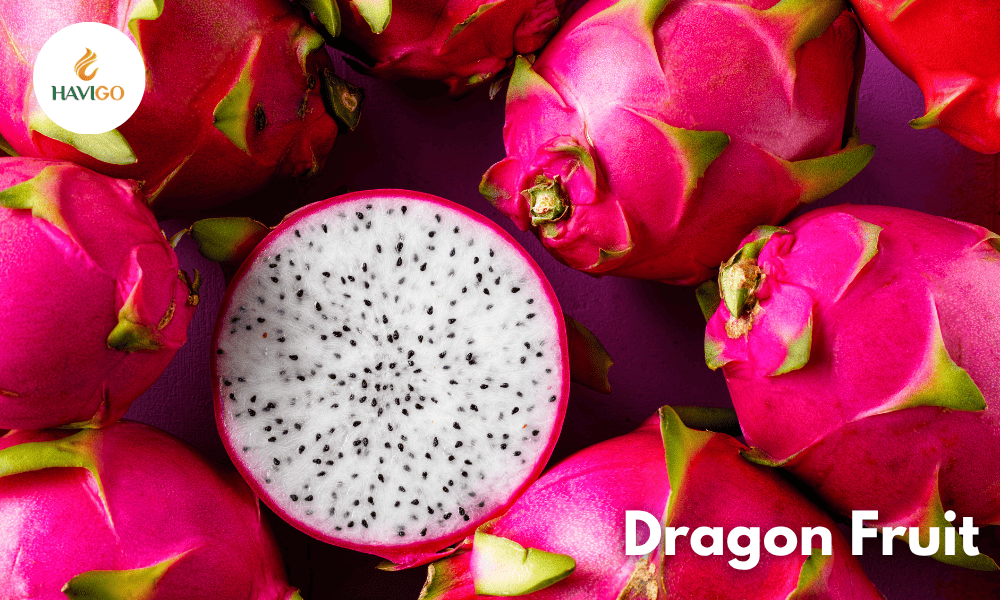
Vietnam supplies three main commercial categories:
- White-flesh dragon fruit
- Red-flesh dragon fruit
- Yellow dragon fruit
White-flesh fruit remains common in wholesale channels. Meanwhile, red-flesh fruit can support premium fresh markets and food processing.
Yellow fruit serves a more specialised segment. Therefore, its supply and pricing require separate confirmation.
Flexible packing options
Vietnamese exporters offer several carton weights and fruit count options.
Common requirements can include:
- 3-kilogram cartons
- 4.5-kilogram cartons
- 5-kilogram cartons
- 9-kilogram cartons
- 10-kilogram cartons
- 18-kilogram cartons
However, net weight does not provide enough packing information.
Buyers should also confirm carton dimensions, board strength, ventilation, liners, and protective materials.
Air and sea shipment options
Air freight supports urgent orders and smaller volumes. However, its freight cost remains significantly higher.
Sea freight suits larger commercial shipments. Nevertheless, it requires stricter maturity and cold-chain control.
Consequently, the supplier should recommend specifications based on the shipment route.
How to Choose a Reliable Dragon Fruit Supplier?
A supplier list provides a useful starting point. However, buyer verification determines the final sourcing result.
1. Confirm the supplier’s role
Ask whether the supplier operates as a grower, packer, exporter, or trading company.
Each model can work effectively. However, responsibilities must remain clear.
A trading company may coordinate several farms and packing facilities. Conversely, an integrated grower may control more production stages.
2. Approve a written specification
Terms such as “Grade A” have no universal commercial meaning.
One exporter may allow minor scars. Another exporter may reject the same appearance.
Therefore, the specification should define:
- Variety
- Fruit weight
- Fruit count
- Skin colour
- Bract condition
- Firmness
- Brix
- Cosmetic defects
- Internal defects
- Packing method
- Quality tolerances
The Codex standard classifies pitahaya dragon fruit into Extra Class, Class I, and Class II.
It also defines minimum conditions and weight-based size codes. However, buyers should create a more detailed commercial specification.
3. Check farms and packing houses
A valid certificate must cover the correct farm or facility.
Therefore, buyers should check the certificate holder, site address, product scope, and expiry date.
A farm certificate does not automatically cover the packing house.
Similarly, a packing-house certificate does not cover every supplying farm.
4. Confirm destination eligibility
Previous exports to one country do not guarantee access to another.
Import requirements may include:
- Registered production areas
- Approved packing houses
- Phytosanitary inspection
- Irradiation
- Vapour heat treatment
- Residue testing
- Specific carton labels
Buyers should confirm final requirements with their customs broker.
5. Review cold-chain procedures
Ask the supplier to explain:
- Harvest timing
- Field heat management
- Pre-cooling
- Loading temperature
- Reefer settings
- Ventilation
- Temperature monitoring
- Arrival inspection
A shelf-life statement should include defined storage conditions.
Without those conditions, buyers cannot evaluate the claim properly.
6. Define inspection and claim procedures
Both parties should agree on the inspection method before shipment.
The contract should define:
- Sampling method
- Inspection location
- Claim period
- Required photographs
- Temperature records
- Independent inspection
- Responsibility for clearance delays
Clear procedures can reduce disputes after arrival.
What Determines the Dragon Fruit Price?
There is no single fixed dragon fruit price for all export orders.
Prices vary by product, crop, packing, destination, and shipment date.
Variety
White, red, and yellow varieties have different production costs and market demand.
Therefore, buyers should compare quotations for the same variety.
Fruit size
A narrow size range requires additional grading.
Moreover, the packing house may reject more fruit during sorting. This lower usable yield can increase costs.
Grade
Retail fruit usually requires cleaner skin and tighter uniformity.
Conversely, wholesale markets may accept more cosmetic variation.
Therefore, a lower quotation may include wider defect tolerances.
Crop timing
Natural-season and off-season crops can have different production costs.
Weather can also affect fruit size, appearance, and supply.
Consequently, quotations may change between harvest periods.
Packing
Carton weight alone does not determine the packing cost.
Printed cartons, foam nets, liners, partitions, pallets, and labels add different costs.
Treatment
Irradiation or vapour heat treatment creates additional handling expenses.
The treatment facility may also sit far from the farm or packing house.
Freight
FOB prices exclude the main international freight.
CIF and CFR quotations include freight components. Therefore, these prices can change before vessel booking.
Importers should compare the same Incoterm and destination port.
What Should Buyers Include in a Quotation Request?
A complete inquiry helps the supplier provide an accurate quotation.
Buyers should include:
- Destination country
- Destination port
- White, red, or yellow variety
- Required fruit weight
- Required fruit count
- Commercial grade
- Net carton weight
- Carton design
- Pallet requirements
- Expected order volume
- Shipment month
- Transport method
- Required treatment
- Required certificates
- FOB, CFR, or CIF term
- Preferred payment terms
We often receive inquiries asking only for “the latest dragon fruit price.”
However, that request does not define the product. A useful quotation must connect price with a complete specification.
Conclusion
The right dragon fruit supplier depends on the buyer’s destination, market segment, and purchasing model.
HAVIGO offers flexible varieties, specifications, and export coordination. Hoang Phat Fruit provides visible treatment and packing infrastructure.
Meanwhile, Hoang Hau brings long-established farming experience. Song Nam ITD shows destination-specific export knowledge.
The Fruit Republic may suit structured retail and certified sourcing programs.
However, importers should not select a supplier using website claims alone.
Before ordering, verify the farm, packing house, treatment pathway, certificates, specification, and claim procedure.
Finally, compare quotations using identical varieties, grades, packing, Incoterms, and shipment dates.
Explore HAVIGO Vietnam Dragon Fruit
View available varieties, fruit sizes, specifications, packing options, and export support details before requesting your quotation.
Frequently Asked Questions
1. Who are the top dragon fruit suppliers in Vietnam?
Buyers can shortlist HAVIGO, Hoang Phat Fruit, Hoang Hau, Song Nam ITD, and The Fruit Republic.
2. Where to buy dragon fruit in bulk?
Bulk buyers can source through farms, packing-house exporters, or agricultural export companies.
3. Why buy dragon fruit from Vietnam?
Vietnam offers established farms, flexible packing, several varieties, and experienced export services.
4. Which dragon fruit varieties are available?
Vietnam mainly supplies white-flesh, red-flesh, and yellow dragon fruit.
5. What affects the dragon fruit price?
Prices depend on variety, size, grade, season, packing, treatment, and freight.
6. What documents are required for import?
Common documents include invoices, packing lists, phytosanitary certificates, certificates of origin, and shipping documents.
7. Can buyers request dragon fruit samples?
Yes. However, samples cannot fully represent the quality of an entire commercial shipment.
Sourcing Fresh Dragon Fruit from Vietnam? HAVIGO Is Here to Help
If you are looking for a reliable dragon fruit supplier in Vietnam, request a detailed quotation covering fruit variety, size, grade, packing, certifications, shipment terms, and the applicable Incoterm. Contact HAVIGO to request the latest dragon fruit price quotation and available supply options for your destination market.