
Explore HAVIGO Vietnam Desiccated Coconut now!
View available cashew grades, specifications, packing options, and export support details before requesting your quotation.
Key Takeaways
- Desiccated coconut is made from mature coconut meat that is grated or shredded and carefully dried to extend shelf life while preserving its natural flavor and texture
- The desiccated coconut production process includes harvesting, dehusking, paring, washing, shredding, drying, grading, quality inspection, and export packaging..
- Proper drying is the most critical production stage because moisture content directly affects product quality, shelf life, and mold resistance during shipment.
- Reliable manufacturers verify moisture, fat content, microbiological safety, and particle size before packaging to meet international export standards.
- Importers should evaluate suppliers based on production methods, certifications, quality consistency, and laboratory test results-not price alone.
What Is Desiccated Coconut?
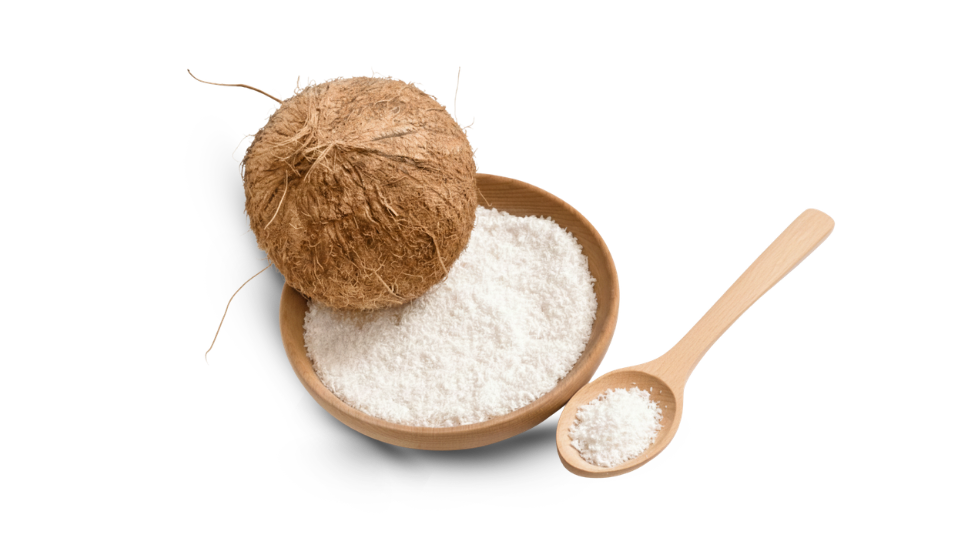
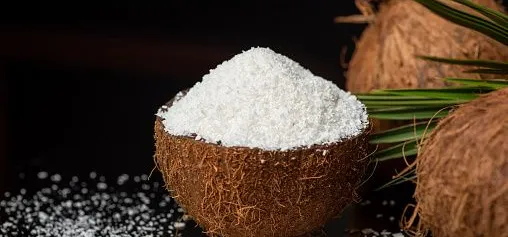
Desiccated coconut is the dried, shredded, or grated flesh of mature coconuts. Manufacturers remove moisture through controlled drying, which extends shelf life and preserves flavor. Unlike coconut powder, desiccated coconut retains a coarser texture and visible fiber structure.
Many buyers also search for questions such as “Is desiccated coconut the same as coconut rice?” or “Is desiccated coconut the same as coconut powder?” because these terms are often used interchangeably in different markets. In reality, they refer to different coconut ingredients with distinct textures, processing methods, and applications. The following sections explain these differences in detail to help buyers choose the right product for their needs.
Desiccated Coconut Production Process: Step-by-Step
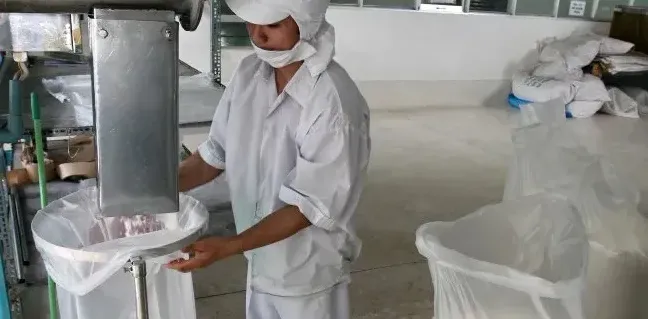
Understanding the production process helps importers ask better questions during supplier evaluation. Industry references describe the core stages as selection, dehusking, paring, washing, disintegrating, drying, sieving, and packaging (ScienceDirect Topics). Below are the core stages a reliable desiccated coconut manufacturer follows.
1. Desiccated Coconut Harvesting and Selection
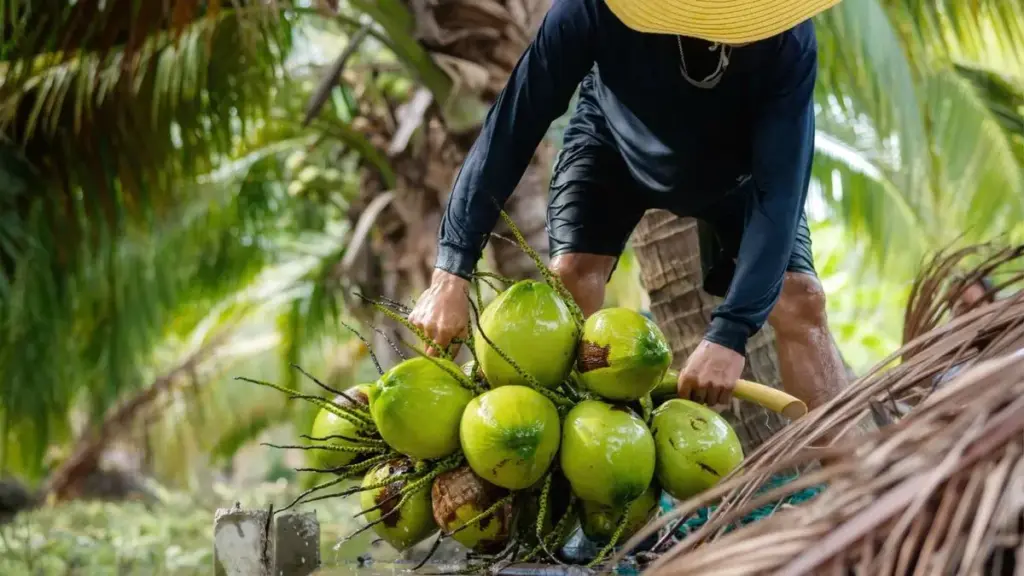
Mature coconuts, typically 11 to 12 months old, produce the best desiccated coconut. Younger coconuts contain excess water and less oil content, which affects texture after drying. Farmers select coconuts based on size, weight, and shell color. Suppliers usually source coconuts from established growing regions to maintain consistent quality year-round.
2. Desiccated Coconut Dehusking and Deshelling
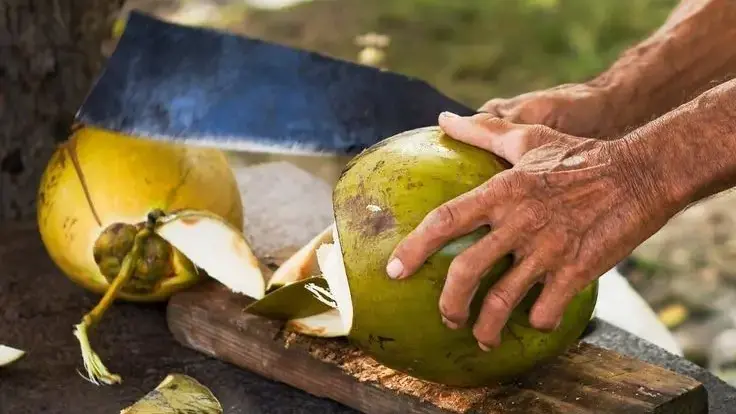
Workers remove the outer husk first, then crack the shell to extract the coconut meat. This stage requires speed, since exposed coconut meat oxidizes quickly. Factories with mechanized deshelling lines reduce contamination risk compared to manual processing.
3. Paring and Washing desiccated coconut
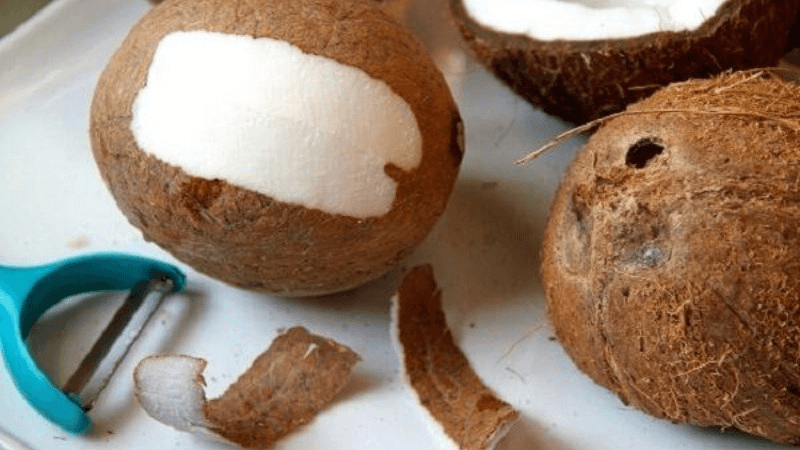
Machines pare away the brown testa layer to leave clean white coconut meat. Afterward, the meat passes through washing stations to remove residual husk fiber and dust. This step directly affects the final product’s color, since incomplete paring leaves brown specks in the finished coconut.
According to Axelum Resources, Many manufacturers then pasteurize the washed meat in steam and, for sulfite variants, treat it in a sodium metabisulfite solution as a documented critical control point before grinding
4. Cutting, Grating, or Shredding
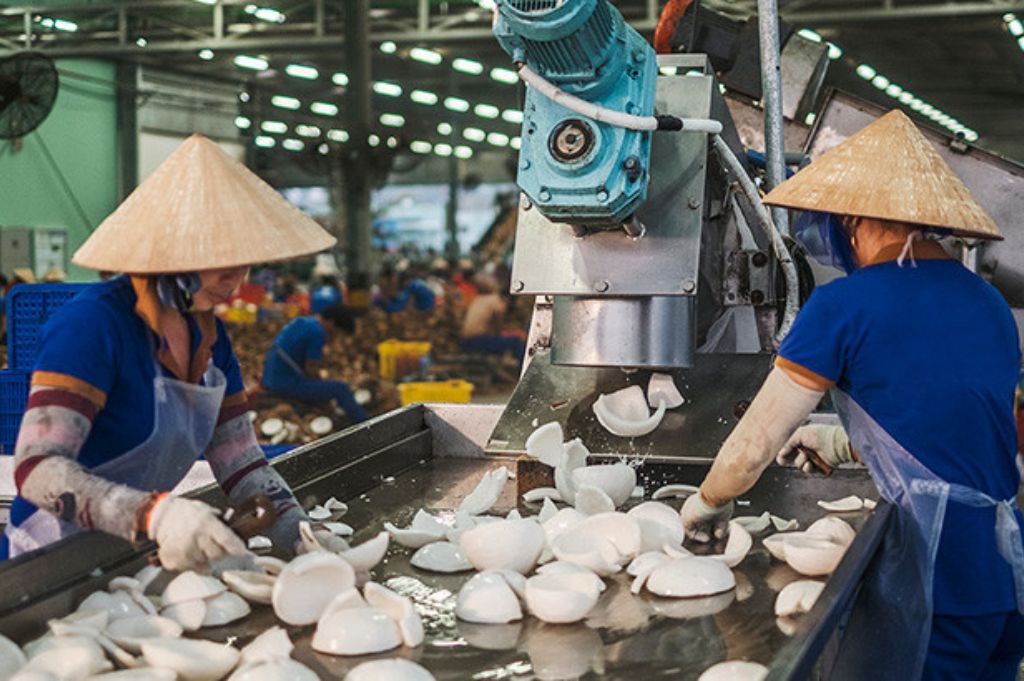
Depending on the buyer’s specification, the coconut meat is cut into chips, shredded into fine strands, or grated into medium or coarse particles. Common formats include fine, medium, chip, and flake sizes. Manufacturers adjust blade settings to match the requested particle size for each order.
Read more about our fine, medium, chip, and flake desiccated coconuts here
5. Drying Desiccated Coconut
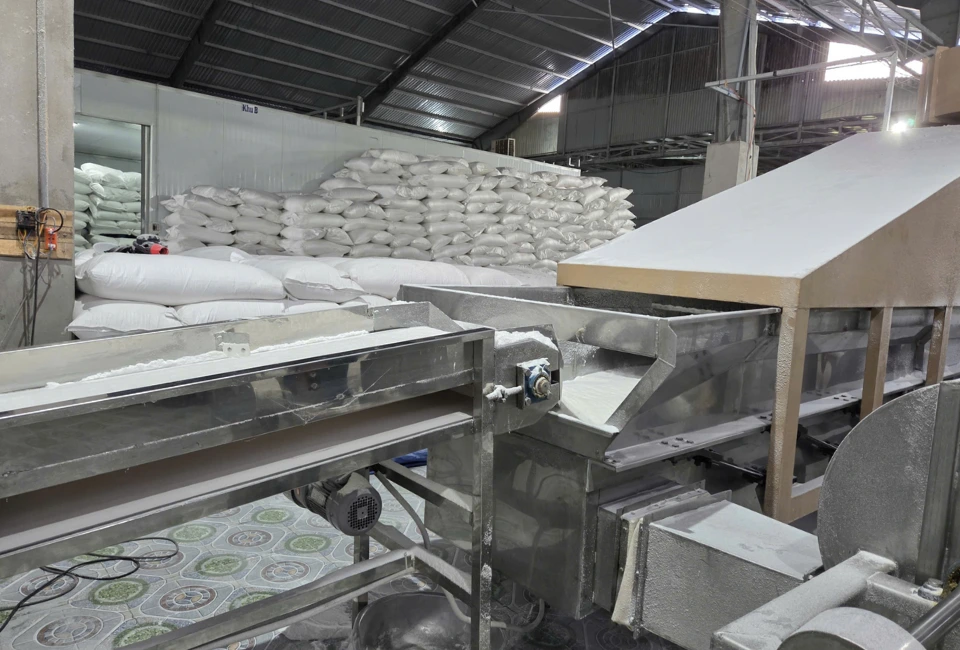
Drying is the most critical stage in desiccated coconut production. Producers commonly use oven drying, air drying, or mechanical drying to remove moisture, depending on the scale and flavor profile they target. Temperature control matters here: excessive heat can scorch the coconut and reduce shelf life, while insufficient drying leaves moisture that promotes mold growth. In our experience, buyers who compare desiccated coconut prices without checking the drying method often receive inconsistent batches later.
Drying Methods Used in the Desiccated Coconut Production Process
Three drying methods are common among desiccated coconut manufacturers.
- Oven drying places shredded coconut in ovens at roughly 50°C to 60°C for several hours, giving producers precise control over the drying curve.
- Air drying spreads shredded coconut on trays and lets it dry naturally. This traditional method takes longer but often preserves a more natural flavor.
- Mechanical drying runs shredded coconut through dedicated drying machines, which removes moisture faster and more consistently than the other two methods.
Excess heat can alter fat content and cause discoloration, while under-drying leaves residual moisture that shortens shelf life (Royce Food). Manufacturers select a method based on the buyer’s flavor, color, and shelf-life requirements.
Ideal Moisture Content After the Desiccated Coconut Production Process

According to the ScienceDirect Topics. the maximum moisture content is 3% and the minimum fat content is 55%. In practice, desiccated coconut commonly contains around 62% fat. After drying, the product is carefully controlled to achieve the appropriate moisture level based on fat content, with low-fat desiccated coconut typically dried to around 3% moisture and high-fat varieties to around 5%. Proper moisture control helps prevent mold growth, maintain quality, and ensure a longer shelf life during ocean transportation.
Grading and Packaging: How a Desiccated Coconut Exporter Ensures Qualit
After drying, the coconut passes through sieves that separate particles by size, following grading standards similar to the Codex classifications of extra-fine, fine, and medium (Codex Alimentarius / FAO).
| Quality Check | Typical Specification |
| Moisture | As specified |
| Fat Content | 62–68% |
| Free Fatty Acid (FFA) | < 0.3% |
| Microbiological Safety | Salmonella & TPC compliant |
| Appearance | Uniform color, particle size, free from shell and foreign matter |
How Is Desiccated Coconut Packaged?
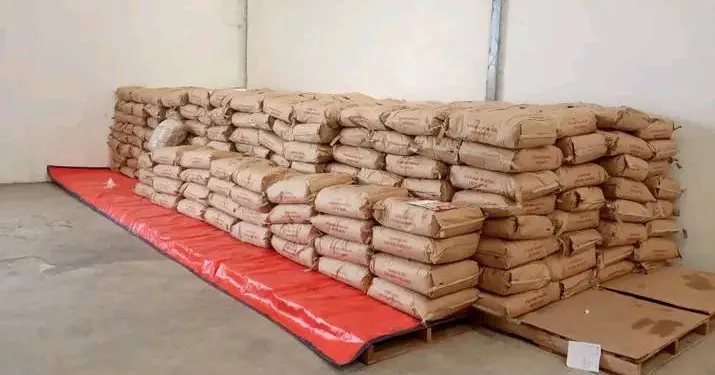
Packaging protects desiccated coconut from moisture absorption and pest contamination during transit. Standard export packing includes multi-wall craft paper bags with a polyethylene liner, typically in 25kg units. Some buyers request vacuum-sealed bags or bulk container liners for larger orders. Carton or bag specifications should match the destination country’s import documentation requirements [External source: official customs authority].
What Factors Affect Shelf Life and Quality?
Several variables determine how long desiccated coconut stays within specification after production.
- Moisture control during drying prevents early spoilage.
- Packaging integrity blocks humidity during ocean transit, which can last four to six weeks depending on the route.
- Storage conditions at the destination warehouse also matter, since heat and humidity accelerate rancidity.
- Fat oxidation naturally increases over time, so shelf life claims should always state storage temperature.
Shelf life for properly packed desiccated coconut generally ranges from 12 to 18 months, though this varies by origin, crop, and destination market. Buyers should confirm shelf life claims against the supplier’s actual testing data rather than general industry figures.
Common Mistakes Importers Make When Sourcing Desiccated Coconut
Based on recurring export conversations, a few issues come up often:
- Comparing FOB price without checking fat content or moisture specification.
- Skipping sample approval, then receiving inconsistent quality in the full container.
- Forgetting to request phytosanitary or fumigation certificates required at destination.
- Assuming one sample batch represents the entire shipment, when crop variation can shift quality slightly between production runs.
Sample approval does not always represent full container quality, especially across different production dates.
Here are the most common questions about desiccated coconut production, quality, and sourcing to help buyers make informed decisions.
What is desiccated coconut?
Desiccated coconut is dried and shredded coconut meat made from mature coconuts, commonly used in bakery, confectionery, and food processing.
How is desiccated coconut made?
Desiccated coconut is made by cleaning, shredding, drying, grading, and packaging fresh coconut meat.
What are the main steps in the desiccated coconut production process?
The main steps include harvesting, dehusking, shelling, paring, washing, shredding, drying, grading, and packaging.
How are coconuts harvested and prepared for processing?
Mature coconuts are harvested, selected, dehusked, shelled, and cleaned before processing into desiccated coconut.
What drying methods are used to produce desiccated coconut?
Hot-air drying with controlled temperature and airflow is the most common method used for producing desiccated coconut.
WHERE TO BUY DESICCATED COCONUTS IN BULK QUANTITY?
Vietnam remains a key sourcing origin for desiccated coconut, but buyers should consider quality requirements, freight costs, and market conditions before placing orders.
HAVIGO supports importers with specifications, quotations, samples, and export documentation for global markets, sample arrangement, and export document coordination. Contact HAVIGO to request the latest desiccated coconut price quotation for your destination market.