This guide compares seven commercial mango varieties from Vietnam by fruit size, Brix, shelf life, availability, and suitable buyer profile. Importers can use the comparison to select fresh mango for retail, wholesale, or long-distance distribution.
Choosing the right mango varieties requires a clear match between fruit characteristics, transit time, and customer expectations.
HAVIGO supports importers with variety selection, product specifications, packing options, cold-chain coordination, export documents, and shipment planning.
For a detailed quotation, send HAVIGO your required variety, size, grade, packing, quantity, destination port, and preferred Incoterm. Our team will check current availability and prepare an FOB or CIF offer.
Key Takeaways
- Hoa Loc and Cat Chu suit buyers prioritizing aroma, sweetness, and smooth flesh.
- Keo mango offers firm texture, moderate sweetness, and practical commercial handling.
- R2E2, Elephant, Pink, and Four Quarter provide larger sizes or longer storage potential.
- Fruit size, Brix, maturity, firmness, and shelf life vary by crop and growing area.
- Buyers should confirm packing, treatment, cold-chain conditions, and destination requirements before shipment.
- Samples can support product approval but may not represent every variation in a commercial shipment.
Why Mango Varieties Matter in International Sourcing
Mango (Mangifera indica) represent the rich diversity of one of the world’s most popular tropical fruits. Originating from South Asia more than 5,000 years ago, mango fruit has spread across Asia, Latin America, Africa, and the Middle East, becoming a global staple for fresh consumption, foodservice, and food processing industries.
Today, hundreds of mango fruit varieties are cultivated worldwide, each offering unique differences in sweetness, aroma, texture, color, and culinary use. From premium dessert mangoes with smooth, fiberless flesh to crisp green mangoes used in salads and savory dishes, understanding different types of mango helps consumers, chefs, and importers choose the right fruit for every market and purpose.
Different types of mango serve different customers. A supermarket may prefer attractive skin and uniform sizing. Meanwhile, wholesale markets may prioritize durability and competitive packing.
Brix also matters, but it should not be reviewed alone. Fruit maturity, firmness, aroma, fibre level, and expected ripening time affect the final eating quality.
We often see buyers request the sweetest option without checking transit time. However, highly mature fruit may not suit a long sea route.
Likewise, a sample carton cannot represent every fruit in a commercial shipment. Buyers should define grading tolerances and inspection checkpoints before loading.
According to the Codex Standard for Mangoes, export fruit should be whole, sound, clean, and sufficiently firm. It should also be free from decay and serious defects affecting consumption.
Comparison of Seven Vietnamese Mango Varieties
| Mango variety | Fruit size | Brix | Indicative shelf life | Availability | Suitable buyer profile |
|---|---|---|---|---|---|
| Hoa Loc | 200–650 g | 20–22°Bx | 7–10 days | April–May and July–August | Premium retail and gifting |
| Cat Chu | 250–700 g | 18–20°Bx | 7–10 days | Year-round options | Retail, wholesale, fresh consumption |
| Keo | 300–600 g | 15–19°Bx | 10–15 days | Year-round options | Wholesale and regional distribution |
| R2E2 | 610–1,100 g | 10–15°Bx | 25–30 days | Year-round options | Premium retail and longer routes |
| Elephant | 500–1,000 g | Confirm by crop | 25–30 days | Year-round options | Bulk buyers and specialty markets |
| Pink | 600–1,100 g | 10–15°Bx | Up to 30 days | Year-round options | Modern retail and display-focused sales |
| Four Quarter | 300–700 g | 10–15°Bx | 25–30 days | Year-round options | Wholesale and flexible import programs |
These figures are commercial references. Final values depend on crop, maturity, farm, packing facility, and shipment plan.
1. Hoa Loc Mango – Premium Vietnamese Mango for Export
Hoa Loc mango is one of Vietnam’s most prestigious varieties, widely recognized in premium export markets. Farmers in Tien Giang, Dong Thap, and Ben Tre cultivate this mango fruit variety under controlled growing conditions.
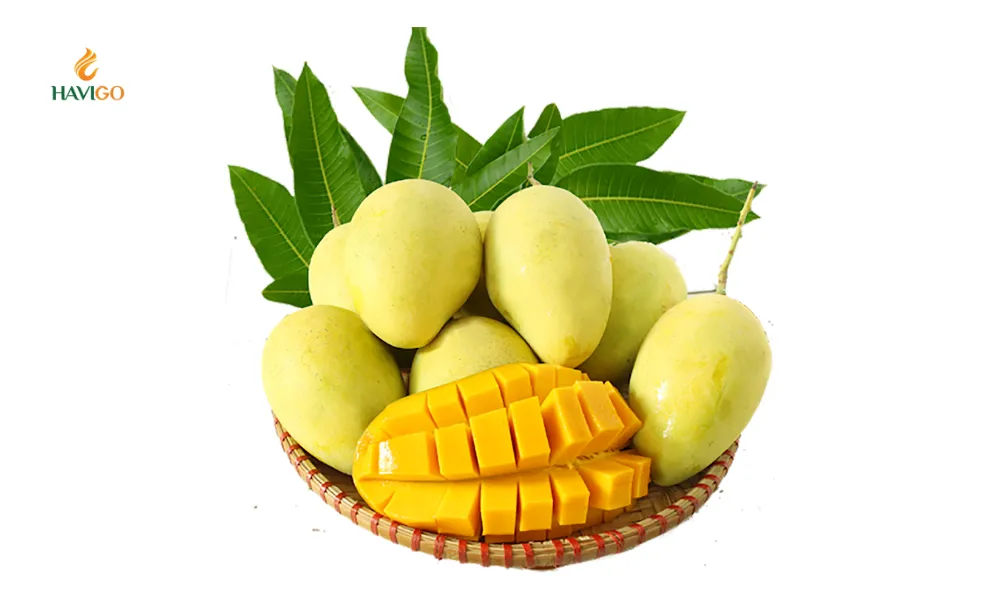
Each fruit weighs 250–700g and reaches 20–22 Brix, delivering rich sweetness and an aromatic flavor profile. With proper cold storage, Hoa Loc mango maintains a 7–10 day shelf life and is commonly packed in 4kg, 5kg, or 18kg export cartons.
Peak harvest runs from April to May, with additional crops in July–August and December–January, allowing exporters to supply premium markets multiple times per year.
According to VietnamPlus in 2025, Hoa Loc mango had reached markets including France, Canada, Australia, Japan, Singapore, Taiwan, and China. Its strong aroma, smooth flesh, and high sweetness support premium retail and specialty fruit programs.
👉 View Hoa Loc mango product details
Explore HAVIGO Fresh Mango from Vietnam
View available mango varieties, fruit sizes, specifications, packing options, and export support details before requesting your quotation.
2. Cat Chu Mango: Sweet, Smooth, and Low in Fibre
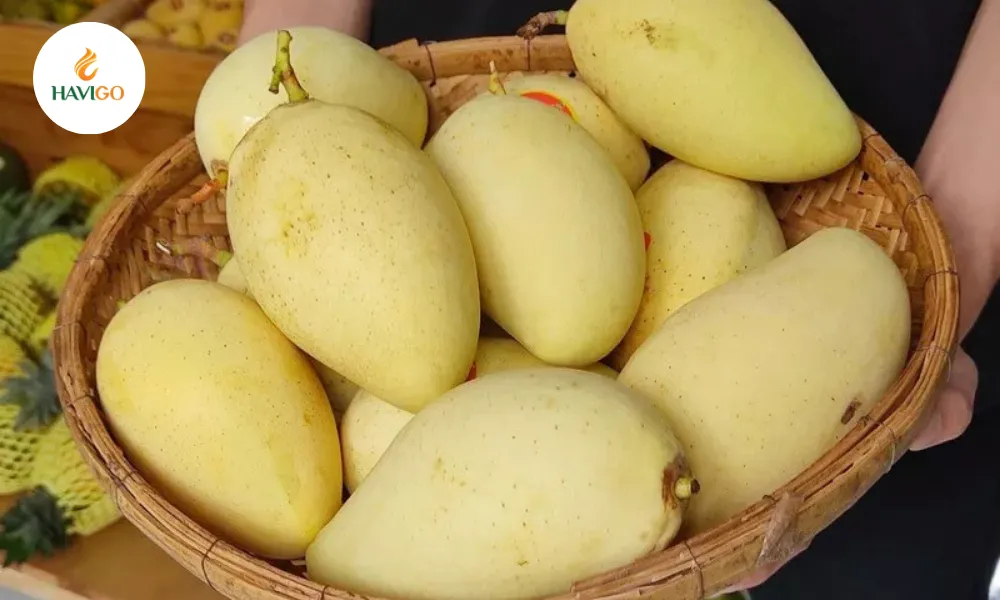
Cat Chu mango is a well-known Vietnamese mango trusted by global importers for its smooth texture and balanced sweetness. Farmers in Dong Thap, Ben Tre, and Tien Giang grow this mango fruit variety using standardized cultivation methods.
Each fruit weighs 200–650g and reaches 18–20 Brix, offering a naturally sweet flavor with low fiber, making it ideal for fresh consumption. With cold storage, Cat Chu mango maintains a 7–10 day shelf life and is packed in 4kg, 5kg, or 18kg export cartons.
Thanks to staggered planting, Cat Chu mango is available almost year-round, with main harvest seasons from March to May and October to December. Its consistent quality and export performance make it one of the most popular varieties from Vietnam.
According to the Embassy of Vietnam in Japan , the first commercial Cat Chu mango shipment to Japan reached approximately 3.5 tonnes.
First commercial Cat Chu mango shipment to Japan
Planned retail distribution across Japan
The shipment marked an important commercial milestone for Vietnamese Cat Chu mango in Japan’s modern retail market.
👉 Explore Cat Chu mango for export
3. Keo Mango: Practical for Commercial Distribution
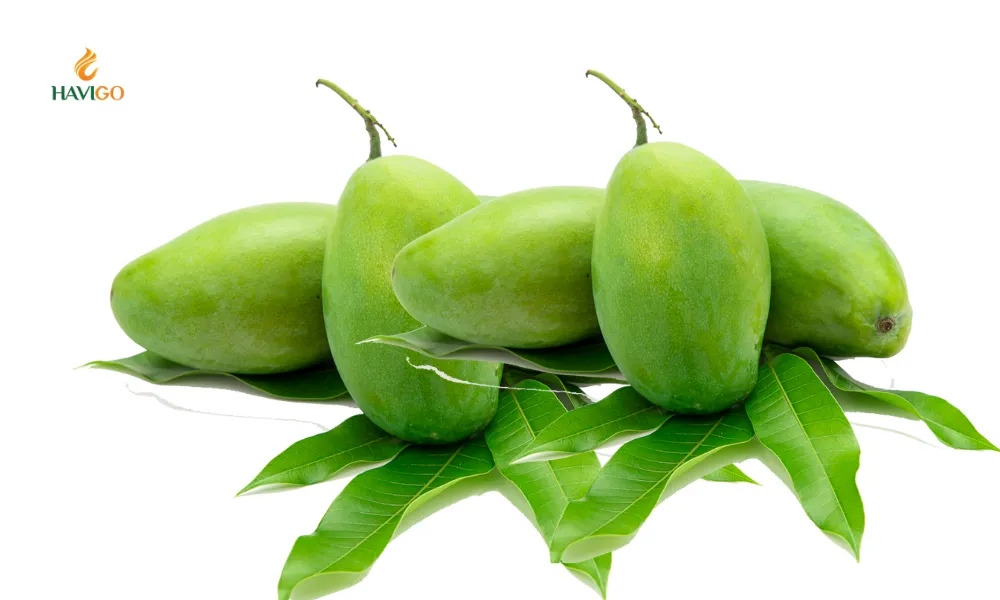
Keo mango is valued as a long shelf life mango variety, suitable for both fresh markets and extended export routes. This mango fruit variety is cultivated mainly in Dong Thap, Ben Tre, and Tien Giang.
Each fruit weighs 300–600g with a sweetness level of 15–19 Brix, delivering a mild, refreshing flavor. Under controlled cold-chain conditions, Keo mango can last 10–15 days, supporting stable logistics for overseas shipments.
Available year-round, with a main season from October to December, Keo mango is a flexible choice for importers seeking reliable supply and durable mango varieties.
👉 Learn more about Keo mango
4. R2E2 Mango: Large Size for Premium Presentation
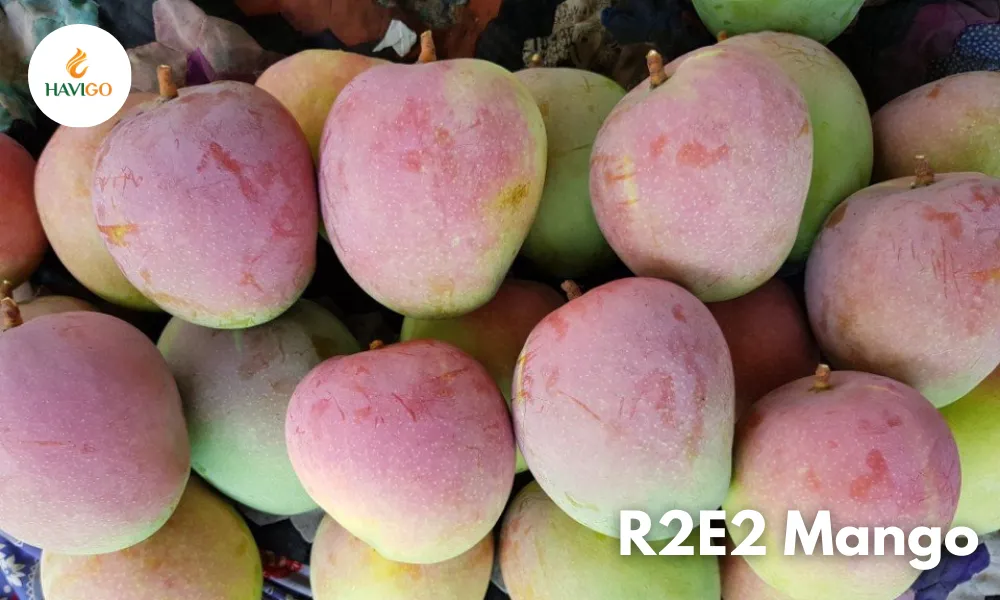
R2E2 mango is a premium large-size mango variety originally from Australia and now successfully cultivated in Vietnam. Farmers grow this mango fruit variety in Khanh Hoa, Tien Giang, Vinh Long, and Dong Thap.
Each fruit weighs 610–1,100g and reaches 10–15 Brix, offering mild sweetness and a firm texture. Thanks to its 25–30 day shelf life, R2E2 mango handles long-distance transport exceptionally well.
Available year-round, this visually impressive mango variety is popular in premium retail and export-focused markets.
👉 Check R2E2 mango availability
5. Elephant Mango: Large Fruit for Bulk Trade
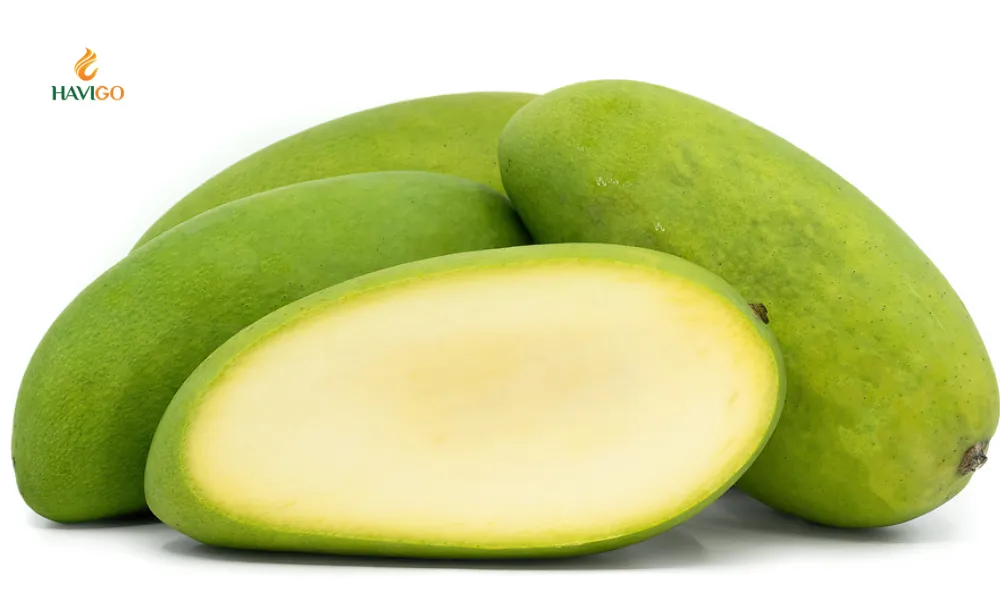
Elephant mango is a distinctive large-size variety, recognized for its firm texture and impressive appearance. Each fruit weighs 500–1,000g, making it suitable for bulk trade and specialty markets.
With proper cold storage, Elephant mango offers an extended 25–30 day shelf life, allowing it to perform exceptionally well in long-distance sea freight shipments. This mango fruit variety is available year-round, ensuring consistent supply for international buyers.
Due to its size, durability, and export stability, Elephant mango is often chosen by traders targeting wholesale and premium segments.
👉 See Elephant mango specifications
6. Pink Mango: Attractive Colour for Modern Retail
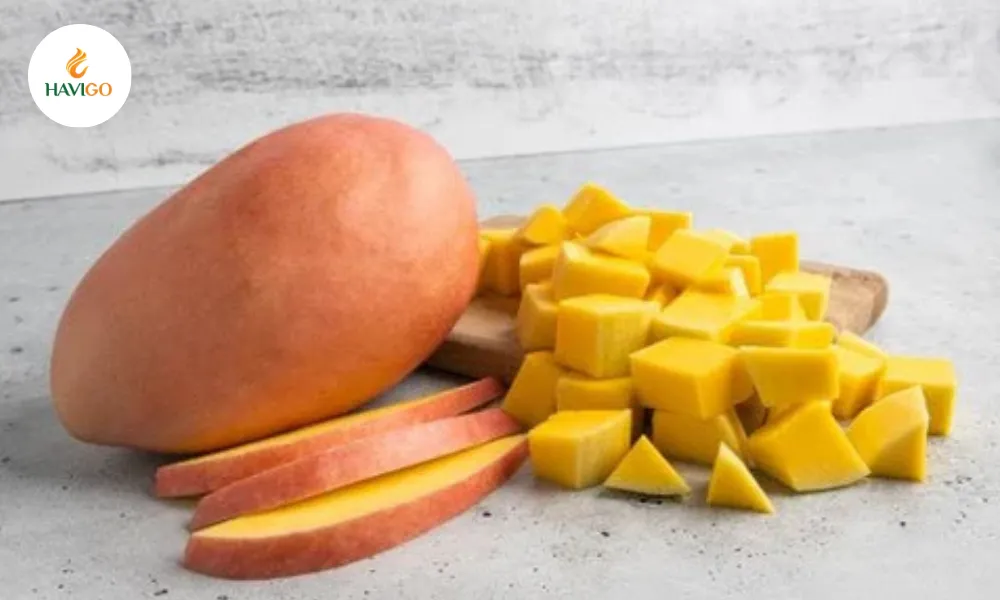
Pink mango is a retail-friendly mango variety known for its eye-catching pink-blushed skin and tender flesh. It is grown in Tien Giang, Vinh Long, and Dong Thap, regions well known for export-quality mango fruit.
Each fruit weighs 600–1,100g and reaches 10–15 Brix, offering a mild sweetness suitable for a wide range of consumers. With cold storage, Pink mango maintains freshness for up to 30 days and is shipped in 4kg, 5kg, or 18kg cartons.
Its visual appeal and long shelf life make Pink mango an excellent option for supermarkets and modern retail chains.
👉 Discover Pink mango
7. Four Quarter Mango: Flexible for Retail and Wholesale
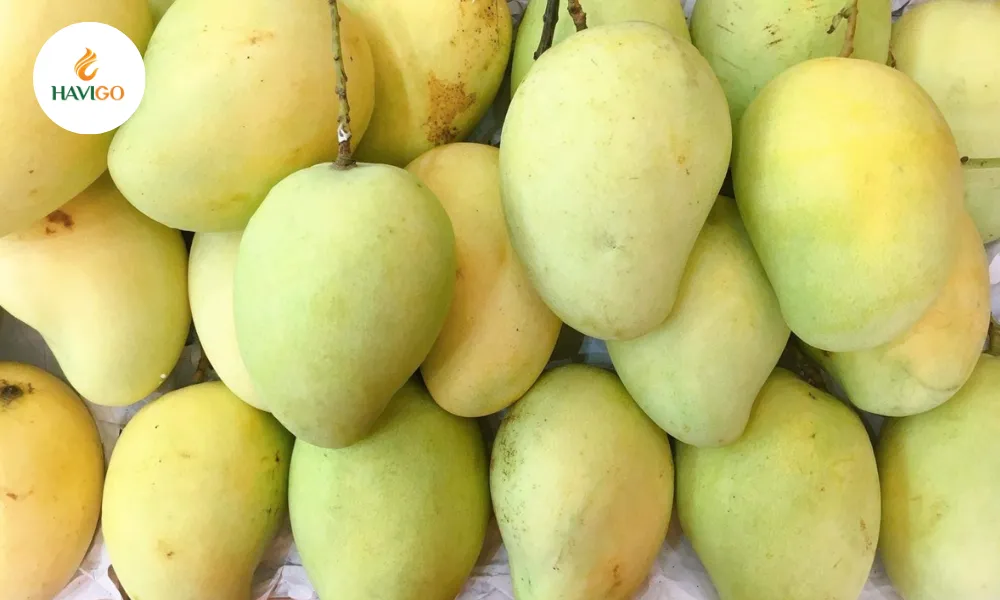
Four Quarters mango is a versatile mango fruit variety cultivated in Tien Giang, Vinh Long, and Dong Thap. Each fruit weighs 300–700g, reaches 10–15 Brix, and offers a crisp texture preferred in both ripe and semi-ripe stages.
This mango variety has a shelf life of 25–30 days and can be shipped efficiently by air or sea freight. Because farmers harvest it year-round, Four Quarters mango provides excellent flexibility for importers managing diverse market demands.
Its adaptability makes it a practical choice among Vietnamese mango varieties for international trade.
👉 View Four Quarters mango
Explore HAVIGO Fresh Mango from Vietnam
View available mango varieties, fruit sizes, specifications, packing options, and export support details before requesting your quotation.
How to Select the Right Mango Variety
The right variety depends on your commercial objective.
Choose Hoa Loc or Cat Chu when aroma, sweetness, and smooth flesh are priorities. These varieties suit premium fresh consumption and shorter distribution cycles.
Keo may fit buyers needing moderate sweetness and firmer commercial handling. It is practical for wholesale channels and flexible eating stages.
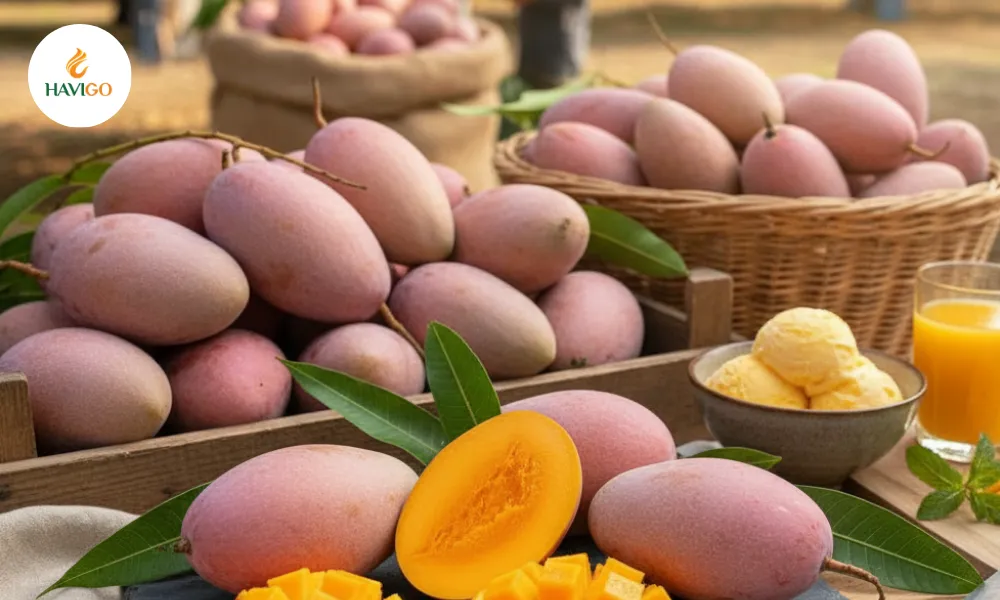
R2E2, Elephant, and Pink mango suit programs requiring large fruit and stronger visual presentation. Four Quarter offers broader flexibility across retail and wholesale segments.
Before confirming an order, buyers should provide:
- Required variety and fruit size
- Target Brix or maturity stage
- Acceptable skin and appearance tolerances
- Carton weight and fruit count
- Destination port and transit time
- Required treatment and documents
- Preferred arrival and ripening condition
Quality Points to Confirm Before Shipment
Export mangoes should be inspected for firmness, maturity, latex staining, bruising, decay, pest damage, and skin defects.
Uniformity also matters. Significant differences in size or maturity can create claims, even when individual fruit remains acceptable.
Packing should protect the fruit without restricting airflow. Depending on the program, buyers may request trays, foam nets, liners, partitions, or customised labels.
According to UC Davis, mango storage performance depends on cultivar and maturity. At around 13°C, postharvest potential may range from two to four weeks in normal air.
Therefore, shelf-life figures should remain indicative. Actual performance depends on harvest maturity, pre-cooling, route, temperature stability, and destination handling.
Packing and Loading Options
HAVIGO can discuss 4 kg, 5 kg, and 18 kg cartons for fresh mango orders. Final formats depend on the variety and buyer requirements.
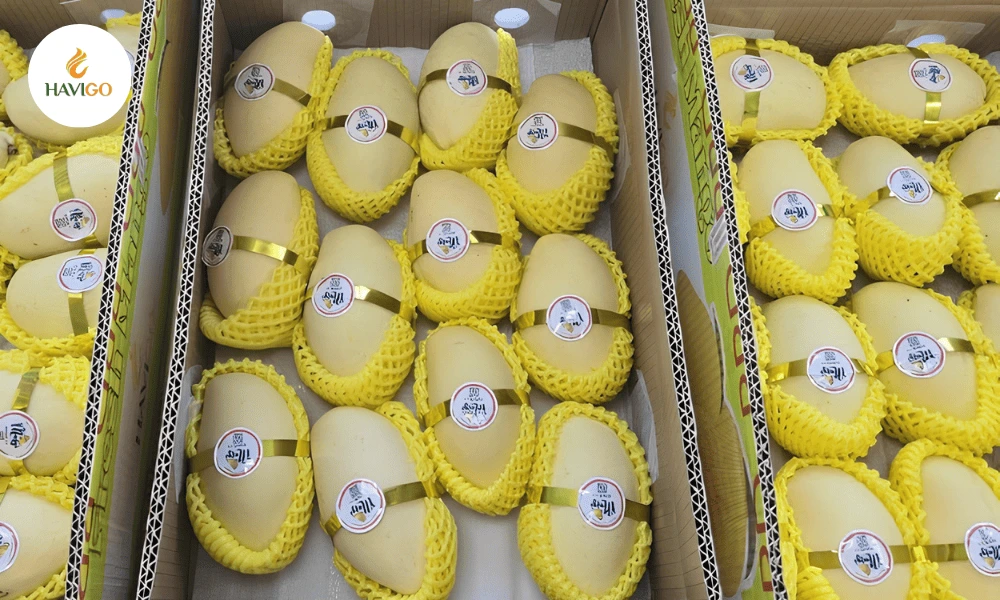
A 4 kg carton suits premium fruit, air shipments, and retail programs. A 5 kg carton supports standard commercial distribution.
The 18 kg format may fit wholesale markets and repacking operations. However, heavier cartons require careful internal protection and stacking control.
Loading references should only be confirmed after carton dimensions and pallet plans are finalised. Small packaging changes can affect total container capacity.
What Affects Fresh Mango Prices?
Fresh mango prices depend on variety, size, grade, season, maturity, packing, and treatment requirements.
Premium varieties usually command higher prices during limited harvest periods. Larger fruit may also carry different pricing than standard commercial sizes.
FOB and CIF quotations can change when freight rates, treatment costs, or destination charges move. Therefore, buyers should compare offers using the same specification and Incoterm.
A cheaper offer may use a different size range, maturity level, carton quality, or inspection standard.
Our team normally recommends confirming the full specification before comparing prices.
Where to Source Vietnamese Mango Varieties
Importers can source mango through farms, packing houses, trading companies, or agricultural exporters.
Direct farm purchasing may offer origin access. However, buyers still need packing, treatment, documents, cold-chain coordination, and shipment management.
An export partner can coordinate these steps across farms and facilities. This structure may suit buyers requiring several varieties or flexible shipment programs.
HAVIGO supports importers with variety selection, specification confirmation, packing coordination, export documents, and FOB or CIF quotations.
Buyers can review available sizes, packing options, and shipment support on the HAVIGO fresh mango product.
Explore HAVIGO Fresh Mango from Vietnam
View available mango varieties, fruit sizes, specifications, packing options, and export support details before requesting your quotation.
FAQs
What are the main Vietnamese mango varieties?
Commercial options include Hoa Loc, Cat Chu, Keo, R2E2, Elephant, Pink, and Four Quarter mango.
Which mango variety is the sweetest?
Hoa Loc commonly reaches 20–22°Bx. Cat Chu generally reaches 18–20°Bx.
Which varieties may suit longer transport routes?
R2E2, Elephant, Pink, and Four Quarter may offer longer storage potential under suitable cold-chain conditions.
Which mango suits premium retail?
Hoa Loc, Cat Chu, R2E2, and Pink mango can suit premium retail. The final choice depends on consumer preferences.
Can HAVIGO supply mango throughout the year?
Year-round options may be available through different farms and crops. Final availability must be checked before each order.
What packing formats are available?
Common options include 4 kg, 5 kg, and 18 kg cartons. Customised packing can be discussed.
What documents are commonly required?
Common documents include the Commercial Invoice, Packing List, transport document, Certificate of Origin, and Phytosanitary Certificate.
Can samples represent full-container quality?
Samples help confirm appearance and eating quality. However, they cannot represent every variation within a commercial shipment.
Conclusion
From premium dessert mangoes to versatile green mangoes, mango varieties showcase the remarkable diversity of this iconic tropical fruit. Understanding different types of mango not only enhances culinary experiences but also supports smarter sourcing decisions in global trade.
As demand for high-quality tropical fruits continues to grow, Vietnamese mango varieties are becoming a trusted choice for international markets seeking flavor consistency, export reliability, and competitive value.
Sourcing Vietnamese Mango Varieties? HAVIGO Is Here to Help
If you are looking for reliable Vietnamese mango varieties, request a detailed quotation covering variety, fruit size, Brix, grade, packing, shelf life, shipment terms, and the applicable Incoterm. Contact HAVIGO to request the latest fresh mango price quotation and available supply options for your destination market.