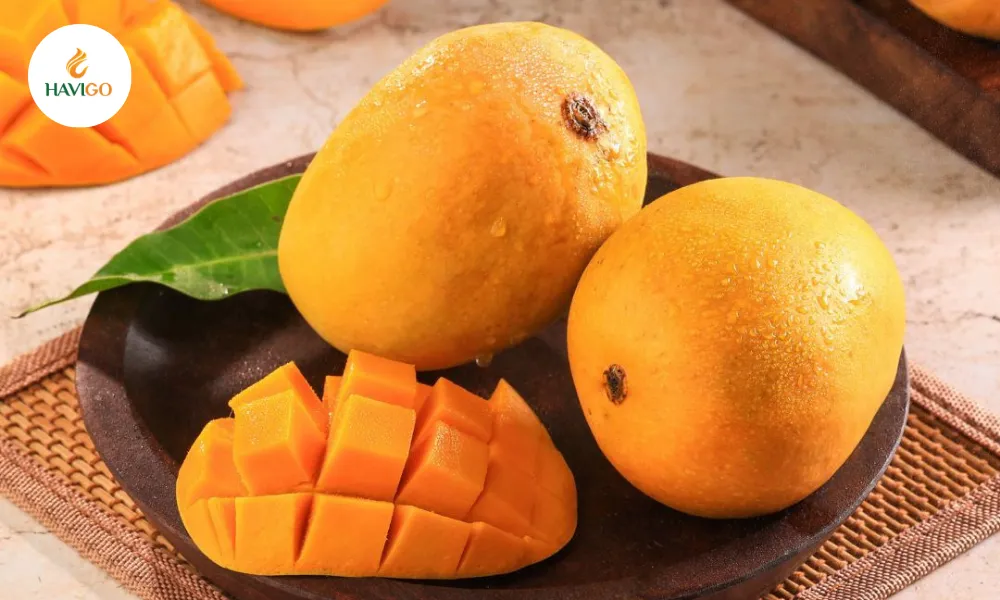
Finding a reliable fresh mango supplier involves more than comparing photos and asking for the lowest price.
Overview
Vietnam is an established sourcing origin for commercial fresh mangoes. Importers researching where to buy fresh mango in bulk can compare five Vietnamese suppliers by varieties, sourcing, certifications, packing, capacity, and export support. This guide helps buyers identify which supplier profile best fits their market and purchasing model.
Bulk buyers must confirm the mango variety, maturity, fruit size, Brix, cosmetic tolerance, treatment method, packing, cold-chain plan, and destination-market eligibility. These factors determine whether the fruit can arrive with the required appearance, firmness, and remaining shelf life.
Vietnam supplies several commercial mango varieties for international buyers, including Cat Chu, Keo, Hoa Loc, R2E2, Elephant, Pink, and Four Quarter mangoes. However, suppliers differ in product range, sourcing structure, packing facilities, certifications, treatment access, and export-market experience.
Key Takeaways
- HAVIGO offers multiple mango varieties, flexible carton options, and FOB/CIF shipment coordination.
- Chanh Thu publishes detailed specifications for Cat Chu, Thai/Tu Quy, and Ngoc Van mangoes.
- Vina T&T combines mango sourcing areas with published mango-specific daily packing capacity.
- Hoang Phat Fruit offers several mango varieties together with VHT and cold-storage facilities.
- Song Nam ITD focuses on fresh Keo mango with same-day packing and cold handling.
- This shortlist is not an official ranking based on audited mango export volume.
- Buyers should verify current certificates, farm and packing-house codes, specifications, treatment eligibility, and capacity before ordering.
This guide compares five fresh mango suppliers in Vietnam for importers, wholesalers, distributors, retailers, and food-service buyers planning bulk purchases in 2026.
How Were These Fresh Mango Suppliers Selected?
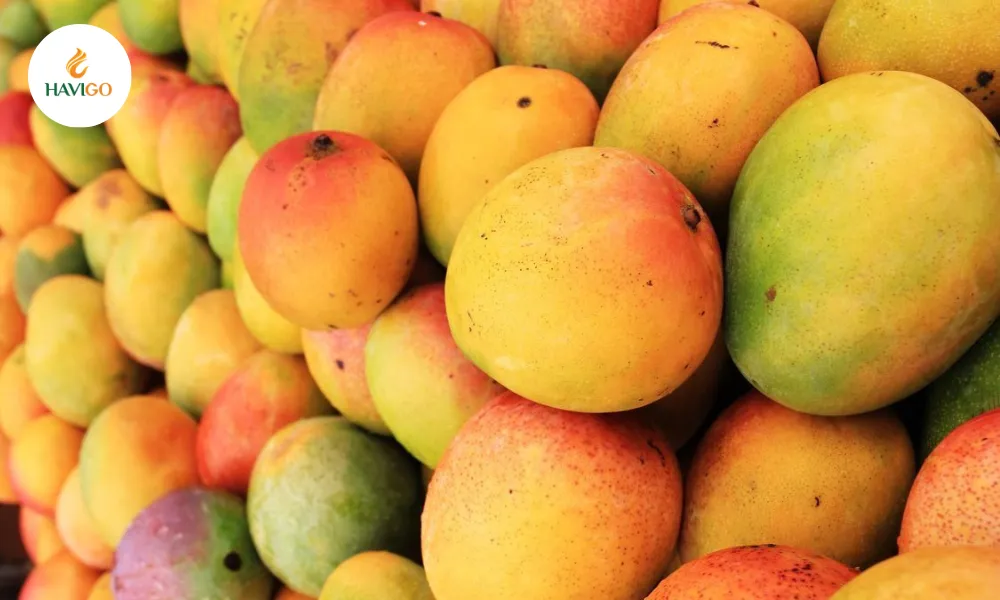
This shortlist focuses on Vietnamese companies with visible experience in fresh mango sourcing, packing, or export.
The evaluation considers six practical factors:
- Available mango varieties
- Farm or sourcing structure
- Packing and post-harvest capability
- Treatment and cold-chain support
- Export-market experience
- Information available to international buyers
The order reflects relevance for commercial sourcing. It does not represent an official ranking by audited export volume, revenue, or production capacity.
Buyers should independently verify every company listed in this guide, including HAVIGO. Company websites provide useful initial references, but certificates, approved facilities, farm codes, crop conditions, and packing specifications can change.
Therefore, buyers should request current documents and shipment-specific confirmation before signing a contract.
Top 5 Fresh Mango Supplier Options in Vietnam
1. HAVIGO Company Limited
HAVIGO is a Vietnamese agricultural exporter serving importers, wholesalers, distributors, retailers, and food businesses.
Its published fresh mango range includes Cat Chu, Keo, Hoa Loc, R2E2, Elephant, Pink, and Four Quarter mangoes. This variety selection allows buyers to compare premium sweet mangoes, commercial green mangoes, and larger fruit for different market segments.
Published fruit weights range from approximately 250 to 1,100 grams, depending on variety and grade. The stated Brix range is approximately 10–22°Bx, while shelf-life references range from 7 to 30 days under suitable handling conditions.
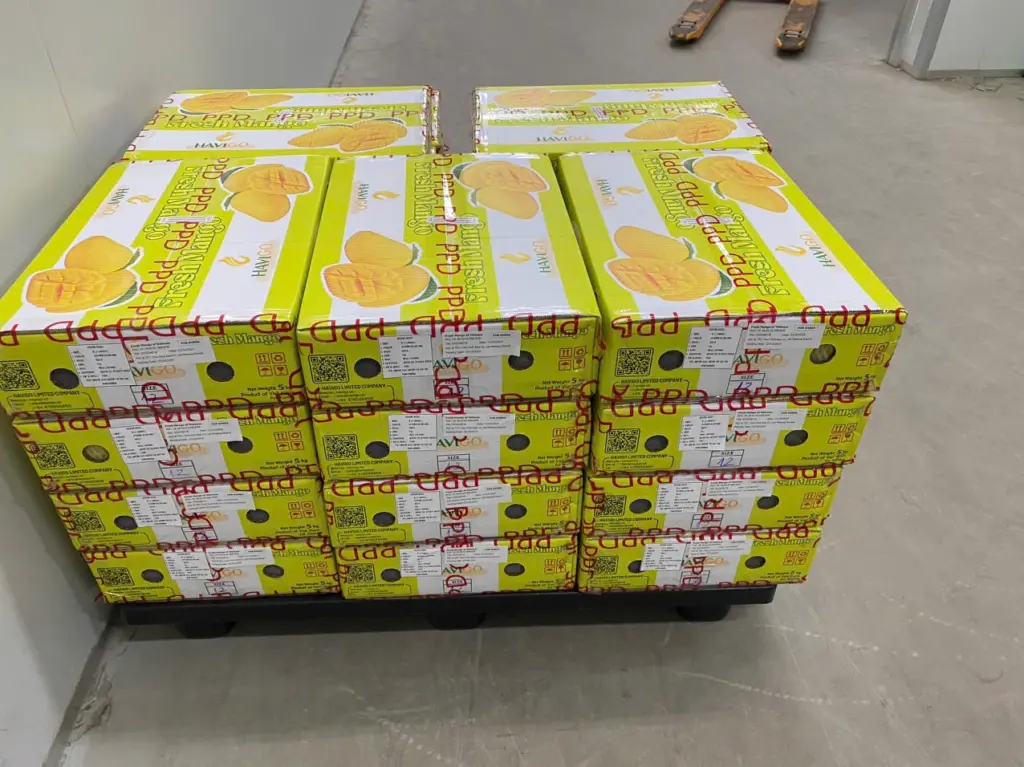
HAVIGO publishes 4 kg, 5 kg, and 18 kg export cartons. Customized packing, carton printing, labels, internal protection, and pallet configurations can be discussed for individual programs.
The company supports air freight and refrigerated sea shipments. Final transport conditions depend on the variety, maturity, transit time, treatment protocol, and arrival requirements.
Why buyers may choose HAVIGO
HAVIGO offers one of the broadest published mango selections in this comparison.
This range may suit buyers serving several sales channels. For example, Hoa Loc or Cat Chu can support premium retail programs, while Keo mango may be appropriate for wholesale distribution. Larger R2E2, Elephant, Pink, and Four Quarter mangoes can serve buyers seeking different visual presentation, handling performance, or fruit-weight ranges.
HAVIGO also supports buyers with:
- Product specifications
- Current crop and packing information
- FOB and CIF quotations
- Air- and sea-freight planning
- Export documentation
- Phytosanitary coordination
- Treatment discussions
- Customized packing and private-label cartons
The company recommends confirming the variety, grade, size, maturity, packing, quantity, treatment, destination, and shipment date before requesting a final price.
What buyers should verify
Before confirming an order, buyers should request:
- Current crop photographs or videos
- A written, variety-specific product specification
- Farm and packing-house information
- Current certificates and their applicable scope
- Carton dimensions and internal protection
- Pallet and container-loading plans
- Pre-cooling and storage procedures
- Destination-specific treatment requirements
- Required export documents
HAVIGO’s published specification provides a useful starting point. However, the final specification should be approved for the selected crop, packing facility, and shipment.
Product Page: Explore HAVIGO Vietnamese Fresh Mango to review varieties, specifications, packing options, loading references, and export support.
Explore HAVIGO Vietnamese Fresh Mango
Compare mango varieties, fruit sizes, Brix levels, packing options, cold-chain information, and export support before requesting your quotation.
7 Mango Varieties 4–18 kg Cartons FOB & CIF SupportView Fresh Mango Details →
2. Chanh Thu Fruit Export–Import Group
Chanh Thu is a Vietnamese fresh-fruit exporter with long-standing experience in international markets.
Its published mango portfolio includes Cat Chu, Thai/Tu Quy, and Ngoc Van mangoes. The company’s mango page lists fruit weights of 250–650 grams for Cat Chu and Thai/Tu Quy mangoes, and 610–1,100 grams for Ngoc Van mangoes.
Chanh Thu publishes Brix references of 15–19% for Cat Chu mango and 10–15% for Thai/Tu Quy and Ngoc Van mangoes. Its website also lists year-round availability, although commercial volume still needs to be confirmed for the requested shipment period.
At company level, Chanh Thu publicly lists HACCP, FSSC 22000, and Halal certifications. Buyers should request current certificates and verify whether the relevant mango packing facility and activity fall within their scope.
Why buyers may choose Chanh Thu
Chanh Thu may suit buyers who need a company with a long fresh-fruit export background and published variety-level specifications.
The company’s information allows buyers to compare smaller, sweeter Cat Chu mangoes with larger Ngoc Van fruit and more commercially flexible Thai/Tu Quy mangoes.
Chanh Thu also states that it was the first Vietnamese company to officially export mangoes to the United States. This history may be relevant to buyers that prioritize experience with destination-specific plant-health protocols.
What buyers should verify
Published company experience does not automatically confirm readiness for every market or order. Buyers should verify:
- Available mango variety and crop volume
- Current orchard and packing-house codes
- Applicable certificates and expiry dates
- Packing format and fruit count
- Treatment facility and approval status
- Weekly packing capacity
- Pre-cooling and storage settings
- Shipment route and expected remaining shelf life
Chanh Thu publishes product-level information, but mango-specific packing capacity is not clearly stated on the reviewed product page. It should therefore be reconfirmed directly for each inquiry.
3. Vina T&T Group
Vina T&T Group is a Vietnamese fresh-fruit exporter with sourcing areas and packing operations across several regions.
Its published fresh mango selection includes Green Elephant, Hoa Loc, and Cat Chu mangoes. The company associates its mango sourcing with areas including Son La and Khanh Hoa, while its wider agricultural network extends across Vietnam.
Vina T&T states that representative VietGAP- and GlobalG.A.P.-certified areas covering dragon fruit, mango, longan, and rambutan total approximately 200 hectares. Its Kim Thanh facility publishes ISO 9001:2015 and HACCP standards and states that it undergoes annual FDA and APHIS assessments for United States packing-house approval.
The company publishes a mango handling capacity of 10 tonnes per day. At group level, its website also states total fruit exports of approximately 1,500 tonnes per month across all products.
Why buyers may choose Vina T&T
Vina T&T may suit buyers seeking visible packing infrastructure and a supplier with published mango-specific daily capacity.
The company’s combination of sourcing areas, packing operations, food-safety systems, and experience with United States-related packing-house requirements may support structured import programs.
Its mango portfolio also covers different commercial positions:
- Cat Chu for sweet, low-fibre fresh-fruit programs
- Hoa Loc for premium retail channels
- Green Elephant mango for larger-fruit and green-mango demand
What buyers should verify
The published 10-tonne daily capacity is a factory reference, not a guarantee of immediate availability for a particular variety.
Buyers should confirm:
- Available daily and weekly volume for the selected mango
- Whether the fruit comes from a certified or registered production area
- Packing-house code and destination approval
- Applicable farm and facility certificates
- Fruit size and maturity range
- Packing configuration and carton dimensions
- Treatment slot and export schedule
- Cold-storage and shipment plan
The published 1,500-tonne monthly figure covers all exported fruits and should not be interpreted as mango-only capacity.
4. Hoang Phat Fruit Company Limited
Hoang Phat Fruit was established in 2012 and exports several Vietnamese fresh fruits.
Its mango portfolio includes Keo, Cat Chu, Elephant, and R2E2 mangoes. The company’s product pages publish a 5 kg carton for Keo, Cat Chu, and Elephant mangoes.
Hoang Phat operates a facility in Long An covering more than 10,000 square metres. The company publishes total fresh-fruit production capacity of more than 11,000 tonnes per year, together with cold storage and vapour heat treatment technology.
Its website also states that the farm sourcing system applies VietGAP, GlobalG.A.P., and ISO 9001 standards. The scope and validity of the relevant certificates should be checked for the selected mango program.
In 2024, the company published an 18-tonne shipment of Keo mango and a 13-tonne shipment of flat-seeded mango from An Giang to South Korea.
Why buyers may choose Hoang Phat Fruit
Hoang Phat Fruit may suit buyers who prioritize packing infrastructure, cold storage, and access to vapour heat treatment.
These capabilities can be important where a destination protocol requires an approved treatment pathway. Its published work with mango cooperatives in An Giang may also support sourcing from established production areas.
The 5 kg packing format is relevant for retail, wholesale, and air- or sea-freight programs, subject to final carton specifications.
What buyers should verify
A treatment system is not automatically approved for every product and destination.
Before ordering, buyers should verify:
- Current VHT facility approval for the destination
- Mango varieties covered by the applicable protocol
- Approved farms and packing-house registration
- Current certificate scope and validity
- Available treatment and packing schedule
- Mango-specific weekly capacity
- Carton design and fruit count
- Cooling plan after treatment
- Temperature monitoring and export documents
The published capacity of more than 11,000 tonnes per year covers the company’s overall fresh-fruit operation and is not stated as mango-only capacity.
5. Song Nam ITD Company Limited

Song Nam ITD describes itself as a Vietnamese grower, packer, and exporter of tropical fruit.
Its visible mango offer focuses on fresh Keo mango. The company states that Keo mango is grown in southern and southwestern Vietnam and publishes year-round mango availability as a general reference.
Song Nam’s product information recommends harvesting and packing on the same day. It describes packing the fruit in cartons or plastic baskets, followed by cold handling. Paper wrapping and protective foam can be used to reduce surface damage during transport.
Why buyers may choose Song Nam ITD
Song Nam may suit buyers specifically looking for Keo mango rather than a broad multi-variety program.
Keo mango is commercially relevant for markets that accept green skin, firm texture, balanced sweet-sour flavour, and consumption at different maturity stages. A focused product offer can make technical discussions more direct when the buyer already knows the target variety.
The company’s emphasis on same-day packing and cold handling is also relevant for managing field heat and fruit condition.
What buyers should verify
The reviewed public information does not clearly state mango-specific certificates or monthly capacity.
Buyers should therefore request:
- Current farm and packing-house codes
- Applicable certificates
- Available weekly volume
- Fruit weight and count range
- Maturity and Brix targets
- Carton net weight and dimensions
- Internal protective materials
- Pre-cooling and storage procedure
- Export history for the destination market
These details should appear in the approved specification or sales contract rather than remaining as general email statements.
Quick Comparison of Five Vietnamese Suppliers
| Supplier | Main Fresh Mango Offer | Published Certifications or Sourcing References | Published Packing | Published Capacity Reference |
|---|---|---|---|---|
| HAVIGO | Cat Chu, Keo, Hoa Loc, R2E2, Elephant, Pink, Four Quarter | GAP-linked farms and HACCP-related facility options, subject to selected program | 4 kg, 5 kg, or 18 kg cartons | 5 kg: 1,008 cartons/20RF or 2,380 cartons/40RF; 4 kg: 1,152 cartons/20RF or 2,720 cartons/40RF |
| Chanh Thu | Cat Chu, Thai/Tu Quy, Ngoc Van | HACCP, FSSC 22000, and Halal published at company level | Reconfirm for each mango order | Mango-specific capacity not publicly stated |
| Vina T&T Group | Green Elephant, Hoa Loc, Cat Chu | VietGAP/GlobalG.A.P.-linked areas; ISO 9001:2015 and HACCP at published facility | Reconfirm for each mango order | 10 tonnes/day for mango; 1,500 tonnes/month for all exported fruits |
| Hoang Phat Fruit | Keo, Cat Chu, Elephant, R2E2 | VietGAP, GlobalG.A.P., and ISO 9001 references; VHT and cold storage | 5 kg cartons published for selected mangoes | More than 11,000 tonnes/year across fresh-fruit operations |
| Song Nam ITD | Fresh Keo mango | Current certificate scope should be requested | Cartons or plastic baskets; protective paper/foam referenced | Not publicly stated for mango |
Published certifications, approvals, specifications, packing, and capacity should be reconfirmed before ordering. Company-wide capacity should not be interpreted as guaranteed mango availability.
No supplier will suit every buyer.
A spot-market wholesaler may prioritize flexible volume, commercial packing, and fast quotations. A supermarket program may require certified farms, registered packing houses, strict residue control, retail packing, and scheduled weekly deliveries.
Buyers should therefore define their market, technical requirements, and purchasing model before selecting a supplier.
Explore HAVIGO Vietnamese Fresh Mango
Compare mango varieties, fruit sizes, Brix levels, packing options, cold-chain information, and export support before requesting your quotation.
Why Buy Fresh Mango from Vietnam?
Vietnam has diverse mango production areas, several commercial varieties, and an established fresh-fruit export ecosystem.
According to Vietnam’s Industry and Trade Magazine, mango exports reached USD 212 million in the first five months of 2025, increasing 10.5% year on year. Mango remained among Vietnam’s ten largest fruit and vegetable export products.
This commercial base gives international buyers access to experienced growers, cooperatives, packing houses, treatment providers, cold-storage operators, and export companies.
Established mango-growing regions
Vietnamese mangoes are grown across the Mekong Delta, the southeast, the south-central coast, and northern production areas.
Important sourcing regions include:
- Dong Thap for Cat Chu and other commercial mangoes
- An Giang for Keo, green-skinned, and flat-seeded mangoes
- Tien Giang for Hoa Loc mango
- Khanh Hoa for R2E2 or Australian-type mangoes
- Son La for northern mango supply
VietnamPlus reported that Dong Thap had more than 8,200 hectares of registered mango cultivation zones with 296 codes, nine registered packing facilities, and 353 hectares of VietGAP mango managed by 33 organizations and individuals.
Meanwhile, an earlier VietnamPlus report on An Giang stated that the province had approximately 12,633 hectares of mango with annual output of about 225,000 tonnes.
These regional references demonstrate commercial scale. However, buyers still need lot-level traceability because not every orchard is certified or approved for every export market.
Several commercial mango varieties
Vietnam offers different varieties for different market positions:
- Cat Chu mango: fragrant, sweet, low in fibre, and suitable for premium fresh retail
- Keo mango: firm, commercially resilient, and consumed green or ripe
- Hoa Loc mango: aromatic and sweet, generally positioned for high-value channels
- R2E2 mango: large fruit with strong visual appeal and longer-distance potential
- Elephant mango: large, firm fruit for wholesale and food-service demand
- Pink mango: large fruit with attractive skin colour for display-oriented retail
- Four Quarter mango: flexible commercial size with year-round supply potential
Variety names alone do not define quality. The buyer should still approve the size, maturity, Brix, firmness, skin appearance, and defect tolerances.
Air- and sea-freight options
Air freight supports premium orders, urgent delivery, and varieties with shorter shelf-life windows. It provides faster transit but significantly increases logistics cost.
Refrigerated sea freight is more suitable for container-scale orders. However, successful sea shipment requires precise maturity selection, pre-cooling, temperature control, ventilation, packing strength, and transit-time planning.
The supplier should recommend a shipment method only after reviewing the variety and destination.
Access to regulated export markets
Vietnam maintains registered production areas and packing houses for different destination markets.
For example, the Plant Production and Protection Department publishes lists of approved mango production areas and packing facilities for markets such as Japan and Thailand.
These lists are destination-specific. Approval for one country does not automatically qualify a farm, packing house, or treatment facility for another.
How to Choose a Reliable Fresh Mango Supplier
A supplier list provides a starting point. Buyer verification determines the final sourcing result.
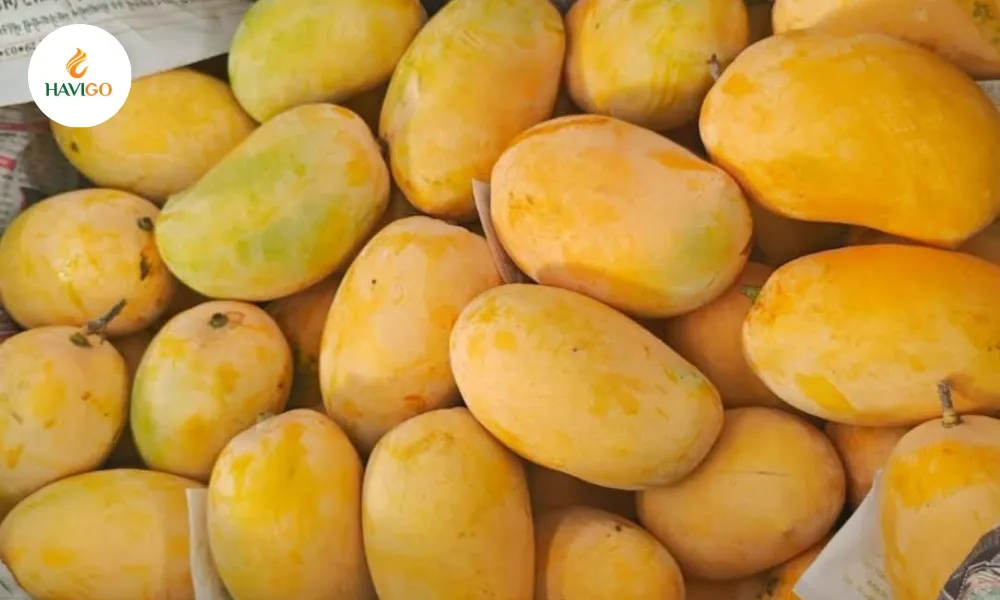
1. Confirm the supplier’s role
Ask whether the company operates as a grower, contract-farming coordinator, packer, exporter, or trading company.
Each model can work effectively, but responsibilities should be clear. A trading exporter may coordinate several farms and packing facilities, while an integrated grower-packer may directly control more production stages.
2. Select the right variety for the market
The sweetest or most expensive mango is not automatically the right commercial choice.
Buyers should consider:
- Consumer preference for green or ripe mango
- Expected fruit size and retail price point
- Required sweetness and fibre level
- Shelf-life requirement
- Air- or sea-freight route
- Treatment tolerance
- Ripening facilities after arrival
A variety suitable for a nearby wholesale market may not perform equally well on a long sea route.
3. Approve a written product specification
Terms such as “Grade A” or “premium mango” do not have one universal commercial meaning.
The specification should define:
- Variety
- Fruit weight and count
- Maturity index
- Skin colour
- Brix target
- Firmness
- Latex and sap staining tolerance
- Cosmetic defects
- Pest and disease tolerance
- Internal defects
- Stem length
- Packing method
- Quality and weight tolerances
The Codex Standard for Mangoes CXS 184-1993 provides international reference classes and minimum requirements. However, buyers should create a more detailed commercial specification for their market and route.
4. Check farms, packing houses, and certificates
A certificate must cover the correct holder, site, activity, and product scope.
Buyers should check:
- Certificate holder
- Farm or facility address
- Covered crop
- Scope of activity
- Certificate number
- Issue and expiry dates
- Certification body’s verification method
A farm certificate does not automatically cover the packing house. Likewise, a packing-house certification does not prove that every supplying farm is certified.
5. Confirm destination eligibility and treatment
Mango import conditions vary by country.
Requirements may include:
- Registered production areas
- Approved packing houses
- Phytosanitary inspection
- Vapour heat treatment
- Hot-water treatment
- Irradiation
- Pest monitoring
- Pesticide-residue testing
- Specific carton marking
The buyer should confirm current requirements with the competent authority or customs and plant-quarantine agent in the destination country.
6. Review cold-chain procedures
Fresh mango is sensitive to both excessive heat and chilling injury.
Ask the supplier to explain:
- Harvest time and maturity selection
- Field-heat management
- Sap and latex control
- Washing and optional waxing
- Treatment sequence
- Pre-cooling
- Storage temperature and humidity
- Loading temperature
- Reefer ventilation
- Temperature monitoring
- Arrival inspection and ripening plan
A shelf-life claim has limited value unless it is linked to a defined variety, maturity level, treatment method, temperature, and route.
7. Define inspection and claims procedures
Both parties should agree on quality inspection before shipment and after arrival.
The contract should define:
- Sampling method
- Inspection location
- Independent inspection, if required
- Quality acceptance criteria
- Temperature-record requirements
- Claim-notification period
- Required photographs and videos
- Treatment of clearance or quarantine delays
- Method for calculating any accepted claim
Clear procedures reduce disputes and prevent isolated fruit photographs from being treated as representative of an entire shipment.
What Determines the Fresh Mango Price?
There is no single fixed fresh mango price for all export orders.
Prices vary by variety, grade, fruit size, maturity, crop period, packing, treatment, shipment method, and destination.
Variety
Cat Chu, Keo, Hoa Loc, R2E2, Elephant, Pink, and Four Quarter mangoes have different farm costs, yields, demand, and post-harvest characteristics.
Buyers should compare quotations for the same variety.
Fruit size and count
A narrow fruit-weight range requires more sorting and may reduce packing yield.
Larger fruit is not always more expensive. Market demand, variety, and available crop distribution also influence the price.
Grade and appearance
Premium retail programs generally require cleaner skin, tighter uniformity, and lower cosmetic-defect tolerances.
Wholesale or food-service programs may accept broader appearance tolerances. Price comparisons are only meaningful when both quotations use the same written grade specification.
Maturity and Brix
Mangoes must be mature enough to ripen correctly but firm enough to survive handling and transit.
Different maturity and Brix targets may change sorting yield, shelf life, and suitable transport methods.
Crop timing
Peak and off-season production can have different costs and available volumes.
Rain, heat, flowering conditions, pest pressure, and crop concentration can also affect size, appearance, quality, and farm-gate prices.
Packing
Packing costs depend on more than net carton weight.
Cost items may include:
- Printed export cartons
- Foam nets
- Trays or partitions
- Absorbent materials
- Liners
- Labels
- Pallets
- Corner protection
- Strapping and wrapping
Treatment and testing
VHT, hot-water treatment, irradiation, residue testing, and destination-specific inspection create additional handling and logistics costs.
Treatment facilities may also be located away from the farm or packing house, increasing inland transport and coordination requirements.
Freight and Incoterm
FOB prices exclude main international freight. CFR and CIF quotations include freight components, while CIF also includes insurance under the agreed terms.
Air-freight rates and refrigerated-container charges can change quickly. Buyers should compare quotations using the same Incoterm, port, route, and validity period.
Explore HAVIGO Vietnamese Fresh Mango
Compare mango varieties, fruit sizes, Brix levels, packing options, cold-chain information, and export support before requesting your quotation.
What Should Buyers Include in a Fresh Mango Quotation Request?
A complete inquiry helps the supplier quote the correct product and avoid unnecessary back-and-forth.
Buyers should include:
- Destination country
- Destination port or airport
- Required mango variety
- Fruit weight or count
- Commercial grade
- Maturity and Brix target
- Net carton weight
- Carton design and marking
- Internal protective materials
- Pallet requirements
- Expected order volume
- Shipment month
- Air- or sea-freight preference
- Required treatment
- Required certificates and laboratory tests
- FOB, CFR, or CIF term
- Preferred payment terms
An inquiry asking only for “the latest fresh mango price” does not define the product.
A useful quotation must connect the price to an agreed variety, specification, packing format, treatment, destination, volume, Incoterm, and shipment period.
Conclusion
The right fresh mango supplier depends on the buyer’s market, preferred variety, shipment route, compliance requirements, and purchasing model.
HAVIGO offers a broad mango portfolio, multiple packing formats, and flexible export coordination. Chanh Thu provides a long export background and detailed specifications for several varieties. Vina T&T publishes mango-specific daily packing capacity and structured sourcing references. Hoang Phat Fruit offers visible packing, cold-storage, and VHT infrastructure. Song Nam ITD may suit buyers focusing specifically on Keo mango.
However, buyers should not select a supplier using website claims alone.
Before ordering, verify the farm, packing house, certificate scope, treatment pathway, written specification, cold-chain plan, inspection method, and claim procedure.
Finally, compare quotations using identical varieties, grades, size ranges, packing, treatments, Incoterms, destinations, and shipment dates.
Product Page
Explore HAVIGO Vietnamese Fresh Mango
View available varieties, fruit sizes, Brix references, packing options, loading plans, and export support before requesting your quotation.
Frequently Asked Questions
1. Who are the top fresh mango suppliers in Vietnam?
Bulk buyers can shortlist HAVIGO, Chanh Thu, Vina T&T Group, Hoang Phat Fruit, and Song Nam ITD. This is a sourcing shortlist, not an official audited export-volume ranking.
2. Where can buyers purchase fresh mango in bulk?
Buyers can source through grower-exporters, packing-house operators, cooperatives, or agricultural export companies. The appropriate model depends on variety, volume, destination, certification, and logistics requirements.
3. Which Vietnamese mango varieties are available for export?
Common commercial options include Cat Chu, Keo, Hoa Loc, R2E2, Elephant, Pink, Four Quarter, Thai/Tu Quy, and other regional varieties.
4. What packing options does HAVIGO offer?
HAVIGO publishes 4 kg, 5 kg, and 18 kg export cartons. Fruit count, internal protection, labels, carton printing, and pallet configuration are confirmed according to variety and buyer requirements.
5. What affects the fresh mango price?
Prices depend on variety, grade, fruit size, maturity, Brix, season, packing, treatment, testing, order volume, freight, destination, and Incoterm.
6. Can Vietnamese fresh mango be shipped by sea?
Yes, selected varieties and maturity stages can be shipped in refrigerated containers when the transit time and cold-chain plan are suitable. Shorter shelf-life or premium programs may require air freight.
7. What documents are commonly required for fresh mango imports?
Common documents include the commercial invoice, packing list, bill of lading or air waybill, certificate of origin, phytosanitary certificate, and any required treatment, quality, or laboratory documents.
8. Should buyers request samples?
Samples can help evaluate a variety, packing concept, and initial quality. However, a small air-shipped sample cannot fully represent a commercial crop or refrigerated-container shipment.
Sourcing Fresh Mango from Vietnam? HAVIGO Is Here to Help
If you are looking for a reliable fresh mango supplier in Vietnam, request a detailed quotation covering variety, size, grade, maturity, Brix, packing, certifications, treatment, shipment terms, and the applicable Incoterm.
Contact HAVIGO to request the latest fresh mango price quotation and available supply options for your destination market.
Main References
- HAVIGO – Fresh Mango Supplier from Vietnam
- Chanh Thu – Mango Product Information
- Chanh Thu – Company and Certification Information
- Chanh Thu – Fresh Mango Export History
- Vina T&T – Fresh Mango Products
- Vina T&T – Production Facilities and Capacity
- Vina T&T – Sourcing Areas
- Hoang Phat Fruit – Mango Products
- Hoang Phat Fruit – Factory and Technology
- Hoang Phat Fruit – Mango Export to South Korea
- Song Nam ITD – Fresh Keo Mango
- Vietnam Industry and Trade Magazine – Mango Export Update
- VietnamPlus – Vietnamese Mango in Premium Markets
- Plant Production and Protection Department – Registered Growing Areas and Packing Houses
- FAO/WHO Codex Alimentarius – Standard for Mangoes CXS 184-1993