Overview
Vietnam is an important sourcing origin for commercial fresh coconuts. Importers researching where to buy fresh coconut in bulk can compare five Vietnamese suppliers by coconut type, packing, certifications, capacity, and export support. This guide helps buyers identify which supplier profile best suits their destination market and purchasing model.
Finding reliable fresh coconut suppliers in Vietnam requires more than reviewing product photos or comparing the first quoted price.
Importers searching for where to buy fresh coconut in bulk need a supplier that can control maturity, Brix, fruit weight, trimming, packing, cold storage, and export documents. The supplier must also understand the plant-health and food-safety requirements of the destination market.
Vietnam supplies fresh young coconut, green coconut, diamond cut coconut, easy-open coconut, peeled coconut, and mature coconut for international buyers. However, suppliers differ in sourcing structure, packing capability, certificates, product formats, and export-market experience.
This guide compares five Vietnamese coconut suppliers serving importers, wholesalers, supermarkets, beverage distributors, food-service businesses, and processors. It also explains what buyers should verify before placing a bulk order.
- HAVIGO supports multiple fresh coconut formats, flexible packing, and FOB/CIF shipment coordination.
- Vina T&T Group has documented experience exporting fresh Ben Tre coconuts to the United States and Europe.
- The Fruit Republic focuses on structured farm programs, certified sourcing, and retail-oriented coconut formats.
- Song Nam ITD publishes detailed fresh young coconut grades, packing, cold-storage, and container-loading references.
- S.Fresh offers Ben Tre young coconut in peeled-top, diamond, and polished formats with a published monthly supply reference
Key Takeaways
- HAVIGO supports multiple fresh coconut types, flexible packing, and FOB/CIF shipment coordination.
- Vina T&T Group has experience exporting fresh Ben Tre coconuts to the United States and Europe.
- The Fruit Republic focuses on certified sourcing and structured retail supply programs.
- Song Nam ITD publishes detailed fresh coconut specifications, packing, and loading information.
- S.Fresh offers peeled-top, diamond-shaped, and polished young coconuts.
- This list is not an official ranking based on audited export volume.
- Buyers should verify certificates, specifications, and available capacity before ordering.
This list is not an official ranking based on audited coconut export volume. Buyers should independently verify current certificates, farm and packing-house eligibility, product specifications, and available capacity before ordering.
How Were These Fresh Coconut Suppliers Selected?
This shortlist focuses on companies with visible experience in fresh coconut sourcing, packing, or exporting.
The evaluation considers five practical factors:
- Available coconut types and cutting styles
- Farm or sourcing structure
- Packing and post-harvest capability
- Export-market experience
- Information available to international buyers
The order reflects relevance for bulk sourcing. It does not represent an official export-volume ranking.
Furthermore, buyers should independently verify every supplier listed here. This requirement also applies to HAVIGO.
Company websites generally describe overall capabilities. Current certificates, farm codes, packing-house registrations, specifications, and shipment capacity may change. Therefore, buyers should request updated evidence before signing a contract.
Top 5 Fresh Coconut Supplier Options in Vietnam
1. HAVIGO Company Limited
HAVIGO is a Vietnamese agricultural exporter serving importers, distributors, wholesalers, supermarkets, food-service businesses, beverage companies, and food processors.
The company sources fresh coconut from Ben Tre and coordinates different product formats according to the buyer’s intended channel. Its published fresh range includes green coconut, mature coconut, semi- or fully husked coconut, diamond cut coconut, and push press coconut.
HAVIGO’s current product page gives reference packing options of 6, 9, 12, 16, or 20 pieces per carton. Published weight references start from approximately 800 grams for diamond cut and push press coconut and 1.2 kilograms for green coconut. Final specifications depend on the selected coconut type, crop, grade, and destination requirements.
The company supports refrigerated sea shipments for container orders and air freight for suitable urgent programs. FOB and CIF quotations are prepared after confirming the product, packing, quantity, destination port, and shipment schedule.
Explore HAVIGO Vietnamese Fresh Coconut
View available coconut types, product specifications, packing options, cold-chain information, and export support before requesting your quotation.
Why buyers may choose HAVIGO
HAVIGO offers several coconut formats instead of focusing on a single cutting style.
This approach may suit importers serving different channels. For example, diamond cut and push press coconut can support supermarkets, convenience stores, hotels, restaurants, and cafes. Green coconut may suit traditional fresh-produce and beverage channels. Mature or husked coconut can serve wholesalers and food processors.
HAVIGO also supports buyers with:
- Written product specifications
- Carton and private-label discussions
- FOB and CIF quotations
- Sample arrangements
- Pre-shipment photographs and quality checks
- Export documents
- Cold-chain and shipment coordination
- Destination-specific requirement checking
In export discussions, buyers often request “the latest coconut price” before defining the product. However, a green whole coconut and an 800-gram diamond cut coconut are not directly comparable.
HAVIGO recommends confirming coconut type, fruit weight, Brix, trimming style, packing, quantity, and destination before comparing quotations.
What buyers should verify
Before confirming an order, buyers should request:
- Current product and crop photographs
- Written lot specification
- Coconut origin and harvest area
- Farm and packing-house information
- Current certificates and their scope
- Fruit weight and size tolerances
- Minimum Brix and sampling method
- Carton dimensions and gross weight
- Cold-storage and reefer settings
- Loading plan
- Destination-specific documents or treatment requirements
HAVIGO’s published product information is an initial reference. Buyers should approve a shipment-specific specification and packing plan before loading.
Explore HAVIGO Vietnamese Fresh Coconut
View HAVIGO’s available coconut types, weight references, packing options, cold-chain information, and export support before requesting a quotation.
Explore HAVIGO Fresh Coconut Products
2. Vina T&T Group
Vina T&T Group is an established Vietnamese fresh-fruit exporter with documented experience supplying coconuts and other fruits to overseas markets.
The company states that it brought Ben Tre coconut to the United States in 2017. In 2020, it shipped 20,000 fresh coconuts to the United Kingdom as part of an early Vietnamese agricultural shipment under the EU–Vietnam Free Trade Agreement. Vietnam’s Ministry of Industry and Trade also reported that the shipment used traceable produce and internationally recognised farm and packing systems.
Vina T&T publicly describes five packing and production facilities and an overall fruit-export capacity of 1,500 tonnes per month. However, buyers should request the current coconut-specific capacity rather than applying the group’s total fruit volume to coconut alone.
Why buyers may choose Vina T&T Group
Visible experience in regulated markets can be useful for importers that require documented procedures, traceability, and organised packing.
Vina T&T may suit buyers seeking:
- Ben Tre fresh coconut
- Experience with United States and European shipments
- Supermarket or distribution programs
- Traceable growing areas
- Established packing infrastructure
- Regular container planning
Its history of exporting fresh coconut to distant markets also provides a relevant reference for sea-freight and treatment discussions.
What buyers should verify
Historical export experience does not automatically confirm current eligibility for every destination. Buyers should verify:
- Current coconut farm codes
- Current packing-house codes
- Product treatment pathway where required
- Available coconut format and weight range
- Brix specification
- Current certificates and expiry dates
- Coconut-specific weekly or monthly capacity
- Carton format and private-label capability
- Reefer settings and expected shelf life
- Current shipment routes
Buyers should also confirm which Vina T&T legal entity will sign the contract and appear on the commercial and shipping documents.
3. The Fruit Republic

The Fruit Republic was founded in 2009 and operates as a fresh-produce company serving international and domestic markets.
The company works with GAP-certified contract farmers and states that agronomists and quality-assurance staff support farm management and compliance. Its public product portfolio includes both young and mature coconut.
The Fruit Republic has marketed diamond cut coconut, shaved young drinking coconut, and shaved mature coconut under its Wildboi export brand. Its published availability information shows young and mature coconut supply across the year.
Why buyers may choose The Fruit Republic
A structured contract-farming and quality-management model may suit buyers planning regular retail or supermarket programs.
The Fruit Republic may be relevant for buyers needing:
- GAP-linked coconut sourcing
- Young drinking coconut
- Mature coconut
- Diamond cut and shaved formats
- Retail-oriented presentation
- Branded export programs
- Farm traceability
- Planned weekly arrivals
Its easy-drink format may also interest European retailers and food-service customers seeking a more convenient alternative to a traditional coconut that requires a knife.
What buyers should verify
Certificates must remain valid and cover the relevant farm, product, and handling activity. Buyers should request:
- Current GLOBALG.A.P. or other farm certificate
- Covered coconut farms
- Packing-house audit and certificate scope
- Available young and mature coconut specifications
- Weekly volume
- Carton configuration
- Brand or private-label options
- Residue-control program
- Social-compliance documents where required
- Cold-chain procedure
Furthermore, buyers should confirm whether the company accepts spot container orders or prioritises contracted seasonal programs.
4. Song Nam ITD Company Limited

Song Nam ITD describes itself as a Vietnamese grower, packer, and exporter of fresh young coconut, husked coconut, semi-husked coconut, and other coconut products.
Its published fresh young coconut specification includes 400–500 gram and 500–700 gram sizes for one grade, Brix of 6–8 degrees, storage at approximately 2°C, and a stated shelf-life reference of 70 days. Another published product overview describes 700–1,200 gram coconut packed mainly 9 or 12 pieces per carton.
The company also publishes container-loading references for different products and packing formats. These figures provide a useful starting point, but buyers must reconfirm which specification applies to the quoted shipment.
Why buyers may choose Song Nam ITD
Detailed public specifications can help buyers begin a technical discussion before requesting a firm quotation.
Song Nam may suit buyers seeking:
- Fresh young coconut
- Green Siamese coconut
- Diamond cut coconut
- Husked or semi-husked mature coconut
- Multiple size grades
- Carton or container-based bulk orders
- Published cold-storage references
- Shipment support for several international regions
The company’s coconut-focused website also gives buyers access to more product-specific information than a general agricultural trading page.
What buyers should verify
Some published Song Nam pages use different weights, carton counts, temperatures, and loading references. Therefore, buyers should confirm:
- Exact grade and product photo
- Coconut weight before or after trimming
- Net and gross carton weight
- Number of pieces per carton
- Brix testing method
- Permitted appearance defects
- Storage and reefer temperature
- Ventilation and humidity settings
- Final container quantity
- Current export registrations and certificates
The approved specification should be attached to the sales contract so that the supplier, inspection team, and buyer evaluate the same product.
5. S.Fresh – Seiko Production Trading Joint Stock Company

S.Fresh is the fresh-produce brand of Seiko Production Trading Joint Stock Company. The company supplies several Vietnamese fruits and agricultural products, including fresh young coconut from Ben Tre.
Its published peeled-top young coconut specification lists a weight of 800–1,200 grams per piece, approximately 250–300 millilitres of water, diamond or polished shapes, a Brix reference of 8.5, and packing of 9 pieces per carton.
S.Fresh also publishes a supply reference of 80,000 coconuts per month for this product. As with any supplier-published capacity, buyers should reconfirm current availability for the planned shipment month.
Why buyers may choose S.Fresh
S.Fresh may suit buyers looking for a clearly defined retail or food-service fresh coconut program.
Its published offer covers:
- Ben Tre fresh young coconut
- Peeled-top coconut
- Diamond shape
- Polished shape
- 9-piece carton packing
- GlobalG.A.P.-linked sourcing information
- A published monthly supply reference
The available product details can help importers compare fruit weight, water volume, sweetness, and packing with competing offers.
What buyers should verify
Before ordering, buyers should request:
- Current farm certificate
- Certificate number, scope, and expiry date
- Current product photographs
- Confirmed monthly volume
- Weight tolerance per coconut
- Water-volume tolerance
- Brix acceptance range
- Carton dimensions and board strength
- Cold-storage procedure
- Current destination-market experience
Buyers should not treat a single Brix figure as a guarantee for every coconut. The contract should define a realistic acceptance range, sampling method, and tolerance.
Quick Comparison of Five Vietnamese Suppliers
| Supplier | Fresh Coconut Offer | Certifications | Packing | Published Capacity |
|---|---|---|---|---|
| HAVIGO | Green, mature, husked, diamond cut and push press coconut | VietGAP, GLOBALG.A.P. and HACCP options | 6, 9, 12, 16 or 20 pieces/carton | Approx. 1,200–2,100 boxes or bags/40RF |
| Vina T&T Group | Fresh Ben Tre coconut | VietGAP, GLOBALG.A.P., ISO and HACCP | Confirm for each order | 1,500 tonnes/month for all exported fruits |
| The Fruit Republic | Young drinking, diamond cut and mature coconut | GAP-certified contract-farming model | Retail packs, bags or bins | Not publicly stated |
| Song Nam ITD | Young, Siamese, diamond cut and husked coconut | FDA registration published by supplier | Usually 9 or 12 pieces/carton | Varies by grade and packing |
| S.Fresh | Peeled-top, diamond and polished young coconut | GLOBALG.A.P.-linked sourcing | 9 pieces/carton | 80,000 pieces/month for peeled-top coconut |
Published certifications, specifications and capacity should be reconfirmed before ordering.
No supplier will suit every bulk buyer. A spot-market wholesaler may prioritise flexible specifications and quick quotation. A supermarket program may require certified farms, branded cartons, strict weight tolerances, and scheduled weekly shipments.
Therefore, buyers should define the purchasing model before selecting a supplier.
Why Buy Fresh Coconut from Vietnam?
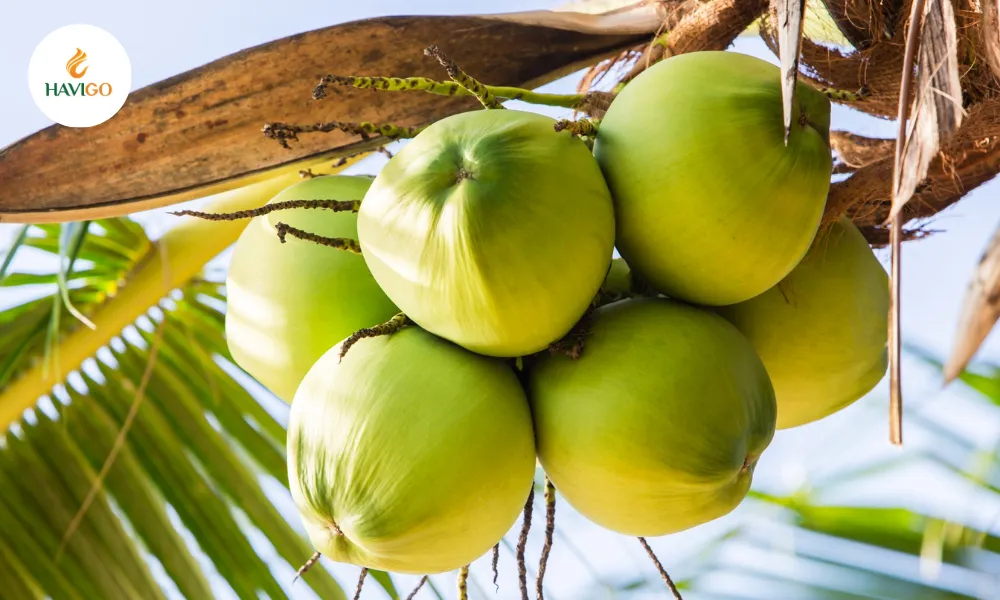
Vietnam has an established coconut-growing, packing, processing, and export ecosystem.
According to Vietnam’s Ministry of Agriculture and Environment, fresh coconut exports reached USD 390 million in 2024 and accounted for 31% of the country’s total coconut export turnover. The ministry also noted that both the United States and China had opened their markets to fresh Vietnamese coconuts.
However, the same source identifies fragmented production as a challenge. Coconuts are grown across multiple provinces, often in intercropping systems, which can make uniform variety, size, and quality harder to control.
This creates both opportunity and responsibility for importers. Vietnam offers substantial supply potential, but buyers still need traceable farms, written specifications, and controlled packing.
Established coconut-growing regions
Ben Tre is Vietnam’s best-known coconut production area. Fresh coconut is also sourced from other Mekong Delta locations, including Tien Giang and neighbouring provinces.
These areas have farmers, cooperatives, collectors, trimming and packing teams, cold-storage facilities, and logistics providers serving the coconut industry.
Nevertheless, coconuts from different farms may vary in variety, age, water volume, Brix, shell condition, and size. Buyers should request traceability for each shipment rather than relying only on the province name.
Several commercial coconut formats
Vietnamese suppliers can offer:
- Whole green coconut
- Fresh young drinking coconut
- Diamond cut coconut
- Conical coconut
- Peeled or polished coconut
- Easy-open or push press coconut
- Semi-husked coconut
- Fully husked mature coconut
Each format serves a different market. Retailers may prefer compact diamond cut or easy-open products. Traditional wholesalers may need whole green coconut. Food processors may prioritise mature coconut and usable flesh.
Year-round supply potential
Coconut is generally available throughout the year in southern Vietnam. This can support ongoing import programs rather than a short seasonal window.
However, year-round availability does not mean identical quality or price every month. Rainfall, dry periods, farm practices, harvest maturity, domestic demand, and export orders can affect fruit size, sweetness, and purchasing cost.
Expanding market access
Vietnam’s market access for fresh coconut has expanded. The Plant Production and Protection Department maintains an official list of growing areas and packing facilities approved for fresh coconut exports to China.
This does not mean that every Vietnamese farm or exporter is eligible. Buyers supplying China or another regulated market should verify the specific farm, packing house, registration, treatment, labelling, and phytosanitary pathway for the shipment.
Flexible packing and branding
Common fresh coconut programs use cartons containing 6, 9, 12, 16, or 20 pieces. Other formats may use bags, bins, pallets, or higher-count cartons.
However, the piece count alone is insufficient. Buyers should also confirm:
- Coconut weight range
- Carton net and gross weight
- Carton dimensions
- Board strength and ventilation
- Shrink wrapping
- Foam net or protective materials
- Straw, pull tab, or opening tool
- Retail label and barcode
- Pallet pattern
- Floor-loaded or palletised container plan
Explore HAVIGO Vietnamese Fresh Coconut
View available coconut types, product specifications, packing options, cold-chain information, and export support before requesting your quotation.
How to Choose a Reliable Fresh Coconut Supplier
A supplier list provides a useful starting point. Buyer verification determines the final sourcing result.
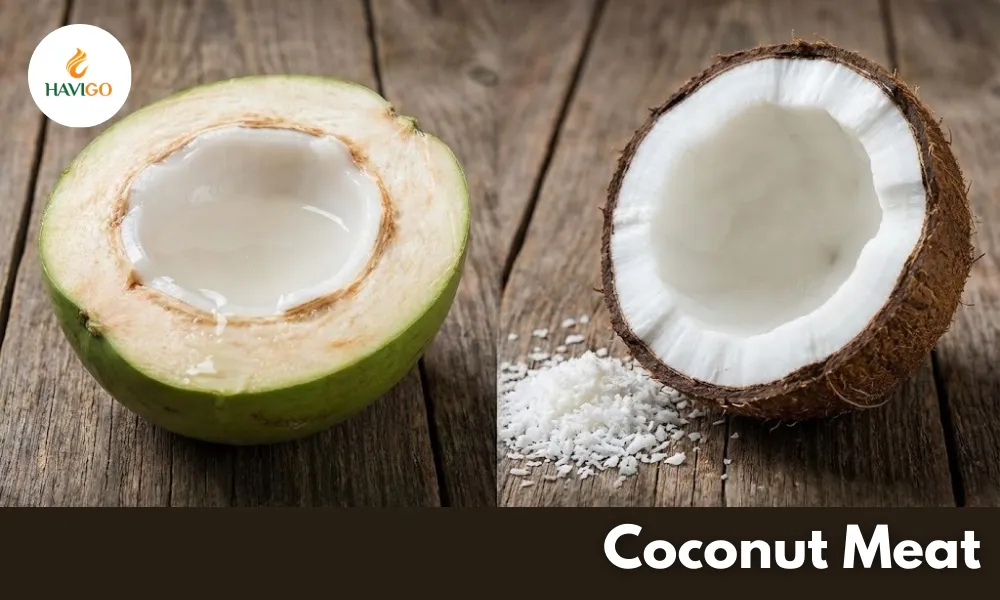
1. Confirm the supplier’s role
Ask whether the supplier operates as a grower, cooperative, packing house, exporter, or trading company.
Each model can work effectively. However, responsibilities must remain clear.
A trading exporter may coordinate several farms and packing facilities, providing flexible supply. An integrated grower-packer may offer stronger direct control over fewer production stages and locations. Buyers should understand who controls farming, trimming, treatment, cold storage, inspection, documentation, and container loading.
2. Approve a written specification
Terms such as “Grade A” or “export quality” do not have one universal commercial meaning.
The specification should define:
- Coconut type and variety
- Harvest age or maturity reference
- Shape and trimming style
- Individual fruit weight
- Weight tolerance
- Water volume, if required
- Brix range
- Shell and husk colour
- Permitted cracks, stains, mould, deformation, or mechanical damage
- Opening mechanism
- Preservative or post-harvest treatment declaration
- Packing method
- Quality tolerance and sampling plan
Photos can support the specification but should not replace measurable acceptance criteria.
3. Verify farms, packing houses, and certificates
A valid certificate must cover the correct operation and product.
Buyers should check the certificate holder, site address, product scope, certificate number, and expiry date. A farm certificate does not automatically cover a packing house. A packing-house food-safety certificate does not prove that every supplying farm is certified.
For market-specific programs, confirm that the farm and packing facility are approved for the actual destination.
4. Confirm destination eligibility
Previous exports to one country do not guarantee access to another.
Requirements may include:
- Registered growing areas
- Approved packing facilities
- Phytosanitary inspection
- Treatment or irradiation where applicable
- Maximum residue compliance
- Traceability labels
- Specific carton marks
- Import permits
- FDA-related requirements for the United States
- Market-specific food-safety declarations
Importers should verify the final requirements with the relevant authority or customs broker before production begins.
5. Review post-harvest and cold-chain procedures
Fresh coconut quality can decline because of incorrect maturity, slow cooling, temperature fluctuation, mould, or poor trimming hygiene.
Ask the supplier to explain:
- Harvest timing
- Time from harvest to processing
- Washing and sanitation
- Trimming and shaping controls
- Surface treatment, if used
- Drying before wrapping
- Pre-cooling
- Cold-room temperature
- Reefer temperature and ventilation
- Loading supervision
- Temperature monitoring
- Expected arrival condition
A shelf-life statement should always be linked to defined product, treatment, packing, and storage conditions.
6. Define inspection and claim procedures
Both parties should agree on the inspection method before shipment.
The contract should define:
- Sampling method
- Pre-shipment inspection location
- Quality tolerance
- Claim period after arrival
- Required photographs and videos
- Temperature records
- Independent survey procedure
- Responsibility for customs or clearance delays
- Method for calculating accepted losses
Clear procedures can reduce disputes after the container arrives.
What Determines the Vietnam Coconut Price?
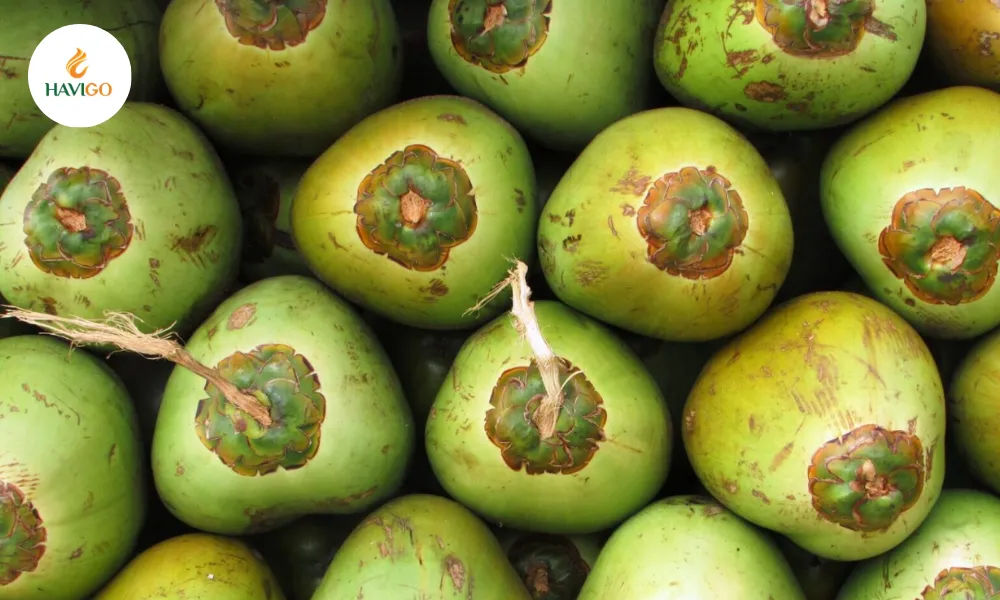
There is no single fixed Vietnam coconut price for every bulk order.
Prices vary according to coconut type, maturity, size, trimming, packing, season, quantity, destination, treatment, and shipment date.
Coconut type
Whole green coconut, diamond cut coconut, easy-open coconut, and mature husked coconut require different harvesting and handling processes.
Buyers should compare quotations for the same type and specification.
Fruit size and weight
A narrow weight range requires additional sorting and may reduce the packing house’s usable yield.
Clarify whether the quoted weight is measured before trimming, after trimming, or as packed. This difference can materially change the number of coconuts and total net weight in a container.
Brix and maturity
Young drinking coconut must balance water volume, sweetness, soft flesh, and shipment durability.
A higher or narrower Brix requirement may reduce the available crop. Harvest maturity can also affect taste and shelf life.
Cutting and processing style
Diamond cutting, polishing, conical trimming, push-button opening, pull-ring systems, shrink wrapping, and straw insertion create different labour and material costs.
The buyer should specify the exact finished appearance and opening mechanism.
Packing and private label
Printed cartons, retail labels, barcodes, shrink film, foam nets, straws, opening tools, and pallets add different costs.
Private-label quotations should state printing plate or mould charges, minimum print quantity, and responsibility for artwork approval.
Certification and testing
Certified farms, residue testing, microbiological testing, third-party inspection, and destination-specific registration can affect the final price.
Buyers should check whether these costs are included or quoted separately.
Freight and Incoterm
FOB prices exclude the main international freight. CFR and CIF prices include freight components, while CIF also includes marine insurance under the applicable Incoterm.
Reefer freight, equipment availability, port congestion, transit time, and seasonal surcharges can change before booking. Importers should compare offers using the same destination port, container type, Incoterm, and shipment window.
What Should Buyers Include in a Quotation Request?
A complete inquiry helps the supplier provide an accurate quotation.
Buyers should include:
- Destination country
- Port of discharge
- Coconut type
- Whole, diamond cut, conical, polished, peeled, or easy-open format
- Required individual weight
- Required Brix range
- Water volume requirement, if applicable
- Commercial grade and defect tolerance
- Pieces per carton
- Carton design and marking
- Shrink wrap, net, straw, or opening accessory
- Pallet requirements
- Expected order volume
- Trial order or regular program
- Shipment month
- Required certificates
- Required treatment or testing
- FOB, CFR, or CIF term
- Preferred payment terms
Suppliers often receive inquiries asking only for “the best fresh coconut price.” However, that request does not define the product.
A useful quotation must connect price with a complete specification, packing method, loading quantity, Incoterm, and shipment period.
Explore HAVIGO Vietnamese Fresh Coconut
View available coconut types, product specifications, packing options, cold-chain information, and export support before requesting your quotation.
Conclusion
The right fresh coconut supplier depends on the buyer’s destination, sales channel, product format, and purchasing model.
HAVIGO offers multiple coconut types, flexible specifications, and export coordination. Vina T&T Group provides documented experience with fresh coconut shipments to regulated and long-distance markets.
The Fruit Republic may suit structured retail and certified farm programs. Song Nam ITD provides detailed coconut-focused product and loading information. S.Fresh may be relevant for buyers seeking a defined peeled-top or diamond young coconut program.
However, importers should not select a supplier using website claims alone.
Before ordering, verify the farm, packing house, certificates, destination eligibility, product specification, cold-chain plan, inspection method, and claim procedure.
Finally, compare quotations using identical coconut types, weight ranges, Brix requirements, packing, Incoterms, destinations, and shipment dates.
Explore HAVIGO Vietnamese Fresh Coconut
View available coconut types, product specifications, packing options, and export support before requesting your quotation.
View HAVIGO Fresh Coconut Specifications
Frequently Asked Questions
Who are five fresh coconut suppliers in Vietnam for bulk buyers?
Buyers can shortlist HAVIGO, Vina T&T Group, The Fruit Republic, Song Nam ITD, and S.Fresh. This is a practical sourcing shortlist, not an official audited export-volume ranking.
Where can importers buy fresh coconut in bulk from Vietnam?
Importers can source through coconut farms, cooperatives, packing-house exporters, or agricultural export companies. The right model depends on required volume, certification, packing, destination, and level of export coordination.
Why do bulk buyers source fresh coconut from Vietnam?
Vietnam offers established coconut-growing regions, several fresh coconut formats, year-round supply potential, packing expertise, and growing access to international markets.
What fresh coconut types can Vietnamese suppliers offer?
Common options include whole green coconut, young drinking coconut, diamond cut coconut, conical coconut, peeled or polished coconut, easy-open coconut, semi-husked coconut, and mature coconut.
How much does fresh coconut from Vietnam cost?
The price depends on coconut type, fruit weight, Brix, maturity, trimming style, packing, certification, testing, order volume, freight, Incoterm, and shipment date. Buyers need a complete specification to receive a comparable quotation.
What documents are commonly required for fresh coconut exports?
Typical documents can include the Commercial Invoice, Packing List, Bill of Lading or Air Waybill, Certificate of Origin, and Phytosanitary Certificate. Treatment, health, quality, residue, or market-registration documents depend on the destination.
Can buyers request fresh coconut samples before a container order?
Yes, subject to supplier availability and destination import rules. However, a small sample cannot fully represent the quality distribution of a commercial container. Buyers should also use a written specification and pre-shipment inspection.
Sourcing Fresh Coconut from Vietnam? HAVIGO Is Here to Help
If you are looking for reliable fresh coconut suppliers in Vietnam, request a detailed quotation covering coconut type, weight, Brix, trimming style, packing, certifications, order volume, destination port, shipment terms, and the applicable Incoterm.
Contact HAVIGO to request the latest fresh coconut quotation and available supply options for your destination market.