A Vietnam cashew supplier South Korea importers can rely on must manage more than the basic cashew grade. Korean buyers also need stable kernel appearance, controlled moisture, strong vacuum packaging, accurate Korean labels, traceable production lots, and consistent import documents.
This anonymized case study explains how HAVIGO prepared a quality and packaging program for a South Korean distributor purchasing Vietnamese cashew kernels.
The project included product specification approval, kernel grading, moisture control, vacuum-bag inspection, carton protection, label preparation, traceability, and pre-shipment loading verification.
Customer names, order values, and commercially sensitive information have been removed. However, the workflow reflects the practical controls required when supplying Vietnamese cashews to the Korean market.
The South Korean Buyer’s Requirements
The customer planned to distribute cashew kernels through wholesale and retail channels in South Korea.
Its main requirements included:
- Uniform whole kernels
- Natural and consistent color
- Controlled moisture
- Low broken-kernel percentage
- Stable quality between production lots
- Vacuum packing
- Strong export cartons
- Accurate product labels
- Clear batch identification
- Pre-shipment photographs
- Export and quality documents
- Support for Korean import procedures
The buyer was not purchasing only a grade name such as W240 or W320.
It needed a commercially presentable product that could remain stable throughout:
- Factory handling
- Vacuum packing
- Inland transportation
- Sea freight
- Korean import inspection
- Warehousing
- Repacking
- Wholesale and retail distribution
HAVIGO therefore developed a multi-stage control process instead of relying on one final visual inspection.
How a Vietnam Cashew Supplier South Korea Program Was Controlled
The supply program was divided into eight main quality controls:
- Written product specification
- Kernel grade and appearance inspection
- Moisture and defect control
- Vacuum-packing inspection
- Export-carton protection
- Korean label and import-information preparation
- Traceability and document alignment
- Container and pre-shipment verification
This structure allowed the customer to evaluate the complete shipment rather than assessing quality only from a product photograph or sample.
1. Approving a Written Product Specification
The first step was agreeing on a written specification.
Commercial grade names are important, but they do not describe every quality parameter.
Two shipments labeled W320 may still differ in:
- Kernel-count range
- Size uniformity
- Natural color
- Surface condition
- Broken-kernel percentage
- Moisture
- Foreign materials
- Odor
- Packing condition
- Overall lot consistency
HAVIGO therefore prepared a product specification covering:
- Commercial grade
- Product description
- Kernel size
- Color
- Moisture limit
- Broken percentage
- Defect tolerance
- Foreign-material limit
- Packing method
- Net weight
- Shelf life
- Storage conditions
- Label information
- Testing requirements
- Inspection procedure
The specification became the main acceptance reference for both the factory and the customer.
This reduced the risk of disputes caused by general descriptions such as:
- Premium cashews
- Export quality
- Korean standard
- Best grade
- High-quality kernels
These phrases may be useful in marketing, but they are not measurable quality criteria.
Buyers can review HAVIGO’s whole, broken, salted, and flavored cashew products on the HAVIGO Vietnamese Cashew Nuts page.
2. Checking Kernel Grade and Appearance
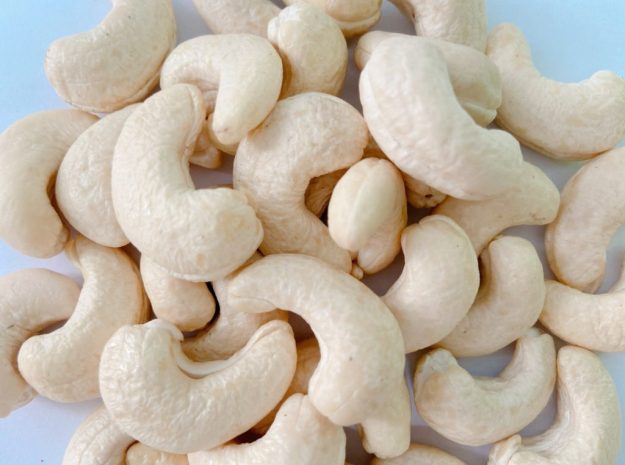
The second control involved confirming that the commercial production lot matched the agreed grade.
HAVIGO coordinated checks covering:
- Kernel size
- Whole-kernel integrity
- Color uniformity
- Surface blemishes
- Visible defects
- Broken and split kernels
- Foreign materials
- Product odor
- General appearance
Appearance was particularly important because the buyer planned to supply retail and wholesale customers.
A shipment may remain technically usable while still creating commercial problems if the kernels have:
- Wide color variation
- Excessive surface marks
- Too many broken pieces
- Inconsistent sizing
- Visible foreign material
- Poor presentation after opening
The factory therefore needed to compare the commercial lot with the agreed specification and reference sample.
Whole Cashew Grades Considered
Depending on the buyer’s sales program, the products could include:
- W180 for premium and gift segments
- W240 for premium retail
- W320 for mainstream wholesale and retail
- W450 for price-sensitive programs
- Scorched or blemished grades for processing
- WWS, LP, LWP, SP, or BB for ingredient applications
- Salted or flavored cashews for ready-to-eat distribution
The correct grade depends on the target customer and selling price.
A professional cashew nuts exporter to Korea should therefore ask about the intended application before recommending a product.
3. Controlling Moisture, Breakage, and Defects
Moisture control affects kernel texture, product stability, packing performance, and storage condition.
HAVIGO reviewed the moisture requirement stated in the buyer-approved specification.
The parties also needed to agree on:
- Sampling method
- Test method
- Testing frequency
- Responsible laboratory
- Product lot
- Acceptance limit
- Reporting format
The International Nut and Dried Fruit Council’s technical guidance states that cashew kernels should be protected under dry, ventilated storage conditions and identifies moisture control as an important quality parameter. Its technical reference also discusses GMP, HACCP, chemical parameters, and microbiological considerations for cashew handling.
Technical reference:
INC Technical Information – Cashews
In addition to moisture, HAVIGO reviewed:
- Broken-kernel tolerance
- Surface defects
- Insect damage
- Foreign materials
- Unusual odor
- Product discoloration
- Overall lot consistency
The final acceptance limit was based on the signed product specification rather than a generic online standard.
This distinction is important because different buyers may require different commercial tolerances depending on:
- Retail positioning
- Further processing
- Packing format
- Target price
- Contract requirements
4. Inspecting Vacuum-Packed Cashews
The buyer required vacuum packing to help protect the kernels during storage and sea transportation.
However, placing cashews in a vacuum bag does not automatically guarantee stable packaging.
A vacuum pack may fail because of:
- Weak sealing
- Bag punctures
- Sharp carton surfaces
- Excessive compression
- Poor bag material
- Incorrect packing arrangement
- Rough handling
- Product fragments near the seal
HAVIGO inspected:
- Bag condition
- Vacuum level
- Seal continuity
- Visible leakage
- Bag corners
- Packing weight
- Number of bags per carton
- Lot information
- Production information
- Internal carton arrangement
Why Vacuum Pressure Must Be Controlled
The bag should protect the product without compressing the kernels excessively.
Too little vacuum may reduce the protective effect. Excessive pressure or an unsuitable packing arrangement may increase breakage.
The INC technical guide states that transport packaging should protect the contents from external pressure while holding them firmly but not excessively tightly. It also recommends compatibility with standard pallet and container dimensions.
HAVIGO therefore reviewed the vacuum bag together with the outer carton rather than treating them as separate components.
5. Strengthening the Export Cartons
Even a properly sealed vacuum bag can be damaged if the outer carton is unsuitable.
The carton review covered:
- Carton dimensions
- Material strength
- Gross weight
- Closure method
- Internal arrangement
- Sharp internal edges
- Compression resistance
- Shipping marks
- Production and lot coding
The team also checked whether the cartons could be stacked without placing excessive pressure on the lower layers.
Potential carton-related risks included:
- Crushed corners
- Carton deformation
- Vacuum-bag punctures
- Unstable stacking
- Movement inside the container
- Damage during loading and unloading
HAVIGO checked the finished carton condition before container loading and recorded the quantity loaded.
For palletized shipments, the buyer and seller also needed to agree on:
- Pallet material
- Pallet dimensions
- Number of cartons per pallet
- Stretch wrapping
- Corner protection
- Total pallet height
- Pallet marking
- Treatment or certification where applicable
6. Preparing for Korean Import and Labeling Requirements
South Korea’s imported-food safety system is administered by the Ministry of Food and Drug Safety.
MFDS states that its imported-food control system is based on the Special Act on Imported Food Safety Control and covers safety management before importation, during customs clearance, and after distribution. Border controls may include document review, field inspection, detailed inspection, and random sampling.
Official reference:
The MFDS framework also states that a person intending to import food or an operator establishing and operating a foreign food facility must register the prescribed facility information.
Foreign-facility registration applications are managed through the official Imported Food Information Maru system.
Official registration portal:
Imported Food Information Maru
The South Korean importer remained responsible for confirming:
- Importer eligibility
- Foreign facility registration
- Import declaration
- Product classification
- Inspection requirements
- Korean labeling
- Applicable laboratory testing
- Customs clearance
- Duties and destination charges
HAVIGO’s role was to provide accurate factory, product, production, and shipment information.
Korean Label Information
MFDS explains that food-labeling requirements can cover information such as:
- Product name
- Food type
- Ingredients
- Ingredient quantities where applicable
- Manufacturing or date information
- Expiration or quality-retention information
- Net contents
- Business identity and address
- Country of origin
- Storage instructions
- Safety warnings
- Nutrition information where applicable
Official reference:
HAVIGO prepared exporter-side information including:
- English product name
- Cashew grade
- Ingredient statement
- Country of origin
- Net weight
- Production date
- Shelf-life information
- Storage conditions
- Lot number
- Manufacturer or exporter details
- Packing format
The Korean importer or its regulatory adviser should approve the final Korean-language label before printing or shipment.
MFDS specifically notes that its English translation of the food-labeling standard is provided for international reference and that the Korean version remains controlling if discrepancies arise.
7. Aligning Traceability and Shipment Documents
Traceability was built around one consistent lot reference.
The lot number connected:
- Production records
- Packing records
- Quality-control results
- Certificate of Analysis
- Vacuum-bag markings
- Carton markings
- Packing List
- Internal shipment file
This allowed both the importer and HAVIGO to identify the correct production batch if a quality or packing concern arose after arrival.
Export Documents
The proposed shipment file included:
- Commercial Invoice
- Packing List
- Bill of Lading instructions
- Certificate of Origin when required
- Product specification
- Certificate of Analysis
- Ingredient list where applicable
- Manufacturing-process information where required
- Factory certifications when requested
- Packing photographs
- Loading photographs
- Lot and production information
MFDS-related import guidance identifies overseas facility registration, product-standard review, label review, document preparation, food inspection, customs clearance, and goods release as key stages in the Korean import process. The guidance also lists documents such as the invoice, Packing List, Bill of Lading, ingredient information, and manufacturing-process information among materials that may be relevant to import preparation.
Official reference:
MFDS Korea Import Preparation Guide
The following information needed to remain consistent across the documents:
- Product name
- Cashew grade
- Ingredient statement
- Packing format
- Number of cartons
- Net weight
- Gross weight
- Production lot
- Shipper
- Consignee
- Country of origin
- Destination
Document inconsistencies can create delays in importer review, customs filing, food inspection, or payment processing.
8. Completing Container and Pre-Shipment Verification
Before loading, HAVIGO checked the container and shipment condition.
The inspection covered:
- Container cleanliness
- Container dryness
- Unusual odor
- Floor condition
- Wall and roof condition
- Door operation
- Visible holes or damage
- Previous cargo residues
- Carton quantity
- Loading arrangement
- Empty-space management
- Container seal number
The team also recorded:
- Product photographs
- Vacuum-pack photographs
- Carton markings
- Container condition
- Loading process
- Final loaded quantity
- Sealed container
This created an evidence file that could support later investigation if the buyer reported:
- Damaged cartons
- Lost vacuum
- Water exposure
- Quantity differences
- Incorrect markings
- Excessive kernel breakage
Pre-shipment photographs do not replace formal inspection or laboratory testing. However, they provide useful evidence of the visible product, packing, and loading condition before departure.
Results of the South Korea Cashew Project
The customer received a structured quality and export plan rather than only a price quotation.
The buyer could review:
- Product specification
- Cashew grade
- Kernel appearance
- Moisture requirements
- Broken-kernel tolerance
- Vacuum packing
- Carton protection
- Korean label information
- Traceability
- Export documents
- Container condition
- Loading evidence
The process reduced the risk of:
- Differences between the approved sample and commercial shipment
- Incorrect cashew grade
- Excessive moisture
- Weak vacuum seals
- Crushed cartons
- Inaccurate Korean labels
- Untraceable quality reports
- Inconsistent shipment documents
- Unclear responsibility after arrival
Why Korean Buyers Source Cashews from Vietnam
Vietnamese suppliers can provide a broad range of products for Korean importers, including:
- Whole white cashew kernels
- Scorched whole grades
- Blemished whole kernels
- WWS
- LP and LWP
- SP and BB
- Roasted salted cashews
- Flavored cashews
- Vacuum packing
- Bulk packing
- OEM and private-label packing
HAVIGO’s current cashew range includes whole, broken, and flavored products for importers, distributors, and manufacturers.
However, buyers should not select a supplier solely by grade and price.
A reliable Vietnamese cashew exporter for Korea should be able to demonstrate:
- Written specifications
- Factory quality controls
- Suitable packaging
- Accurate label information
- Lot traceability
- Export-document capability
- Importer coordination
- Pre-shipment verification
- Claim-investigation procedures
Can HAVIGO supply vacuum-packed cashews to South Korea?
Yes. Vacuum-bag size, net weight, carton configuration, and outer packaging can be developed according to the buyer’s requirements and order volume.
Can HAVIGO prepare Korean labels?
HAVIGO can coordinate label production based on buyer-approved artwork and content. The Korean importer should approve the final regulatory text.
Does HAVIGO register the Korean importer?
No. The Korean importer is responsible for its own local business and import requirements. HAVIGO can provide information needed for foreign-facility registration and import documentation.
Does every shipment receive the same MFDS inspection?
No. The inspection pathway may vary according to the product, facility, importer history, previous compliance results, and current MFDS controls. MFDS describes document, field, detailed, and random inspection as elements of its imported-food border system.
Can the buyer request a Certificate of Analysis?
Yes. The agreed COA may include quality or food-safety parameters according to the product specification, test plan, and commercial agreement.
Can the buyer request loading photographs and videos?
Yes. Product, packing, label, container, loading, and seal evidence can be included in the agreed pre-shipment verification process.
Can HAVIGO provide OEM cashew packaging?
OEM or private-label packing may be available depending on the product, minimum volume, packaging material, artwork, and production requirements.
Request a Cashew Quotation for South Korea
A professional Vietnam cashew supplier South Korea buyers work with should combine stable product quality, packaging control, traceability, Korean import support, and accurate export documentation.
Send HAVIGO:
- Required cashew grade
- Order quantity
- Product specification
- Vacuum or bulk packing requirements
- Korean label requirements
- Destination port
- Required certificates
- Testing requirements
- Target shipment period
- Preferred Incoterm
HAVIGO will review the product, packaging, documents, and logistics requirements before preparing a commercial proposal.
View HAVIGO’s Vietnamese Cashew Products
Reviewed by: HAVIGO Export and Quality Team
Last updated: July 2026