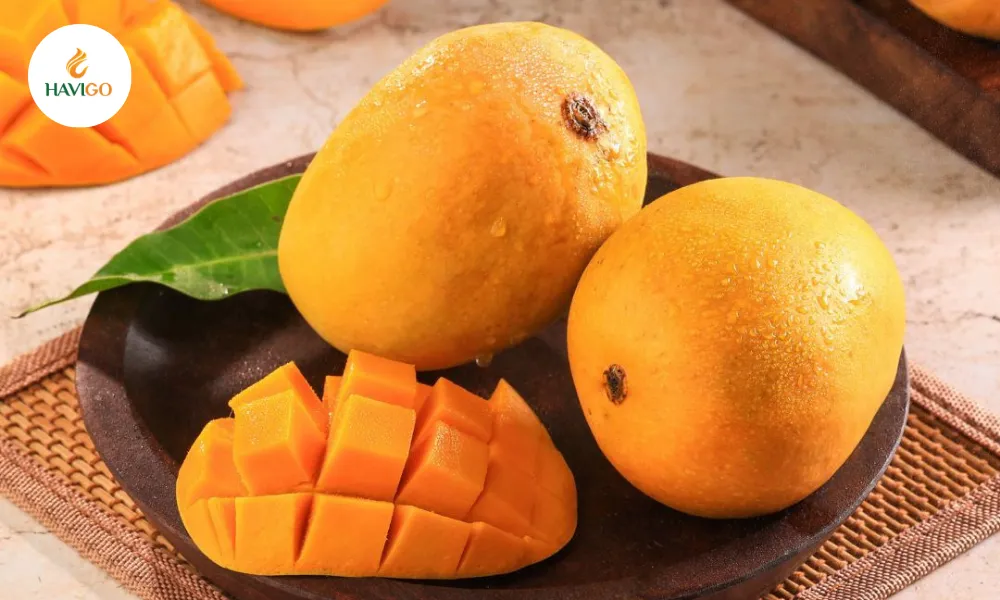
At first glance, many buyers are surprised when they compare the price of soft dried mango with fresh mango. Fresh mango looks natural, juicy, and familiar—so why does a processed product often cost more?
In reality, dried mango is not simply “dried fruit.” It is a value-added mango product that requires strict raw material selection, advanced processing, food safety compliance, and longer production cycles. When evaluated from a B2B and supply-chain perspective, the higher price reflects added value, lower risk, and higher consistency, not just processing cost.
This article explains clearly why soft dried mango is more expensive than fresh mango, and why many importers still choose it as a strategic product.
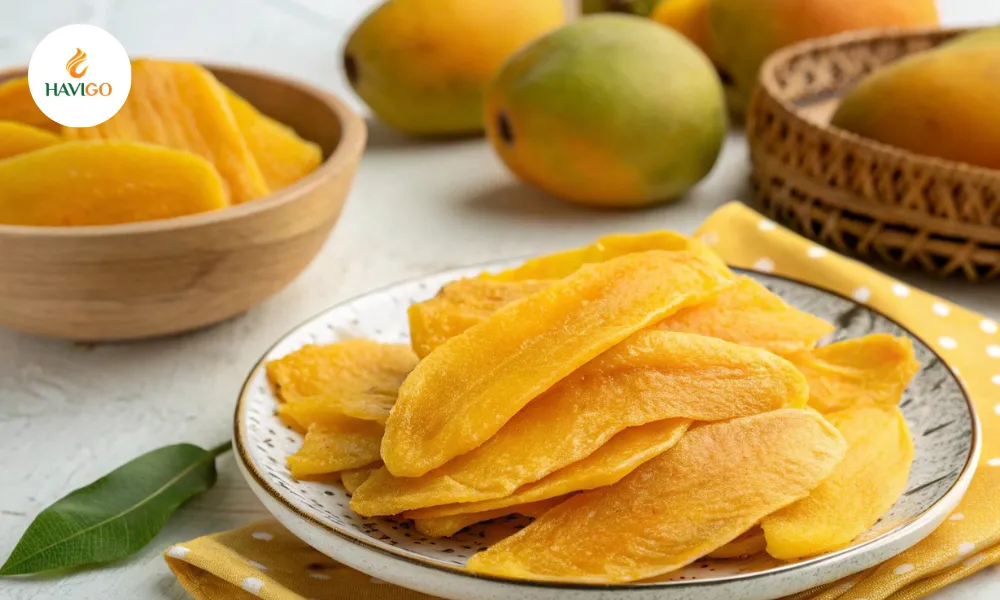
Table of Contents
1. Raw Material Loss Makes Dried Mango Costlier
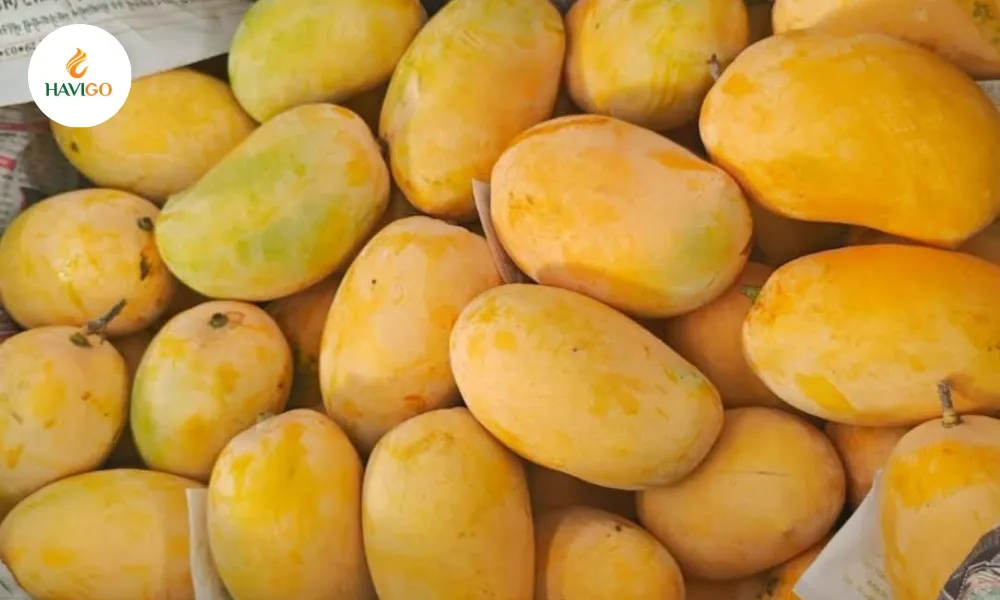
One of the biggest cost drivers of soft dried mango is raw material yield.
To produce 1 kg of finished soft dried mango:
- 6–8 kg of fresh mango are typically required
- Peels, seeds, and excess moisture are removed
- Only high-quality flesh is usable
By contrast, fresh mango is sold as-is, without yield loss. This means:
- Higher raw mango consumption per unit
- Higher cost per kilogram of final product
This raw material loss alone explains a significant part of the price gap between soft dried mango vs fresh mango.
>>> View the soft dried mango production process here
2. Dried Mango Requires Advanced Processing Technology
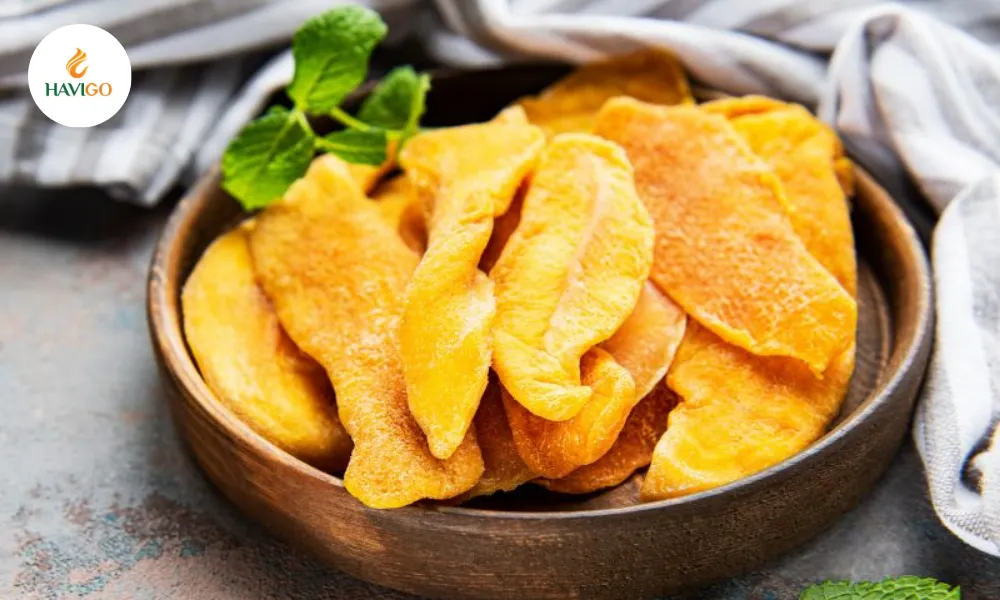
Unlike traditional dried mango, soft dried mango uses controlled low-temperature drying to preserve:
- Natural sweetness
- Bright color
- Soft, chewy texture
- Nutritional value
Key processing steps include:
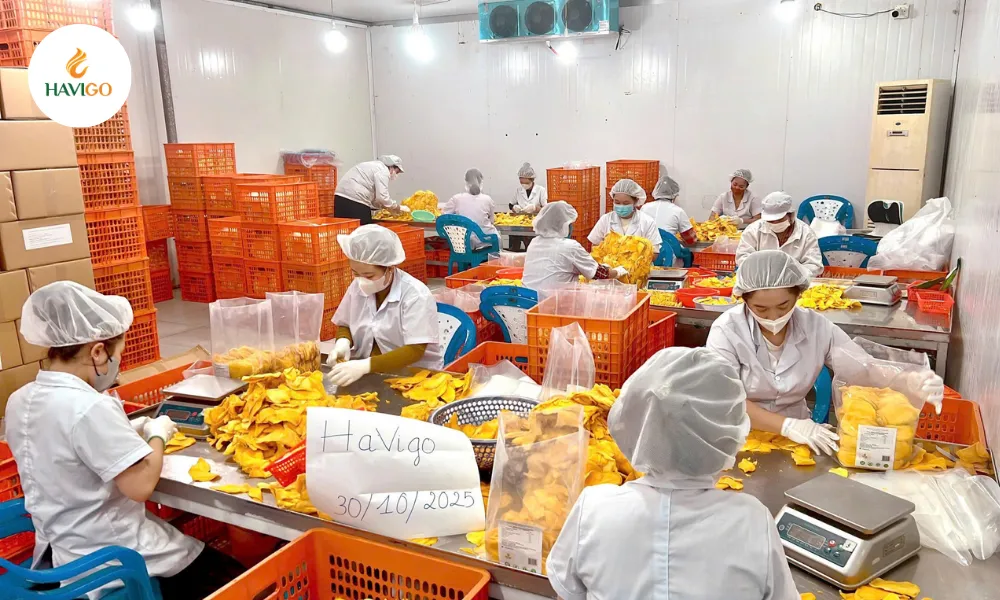
- Sorting & trimming premium mango flesh
- Moisture-level control
- Slow drying at precise temperatures
- Texture stabilization and cooling
This process is time-consuming, energy-intensive, and equipment-dependent, which adds cost compared to selling fresh mango directly after harvest.
>>> View the soft dried mango production process here
3. Different Compliance Layers, Not Lower Standards
It is important to clarify that fresh mango for export also meets very strict international standards. Export-grade fresh mango must comply with GlobalG.A.P certification, phytosanitary regulations, residue limits, and mandatory treatments such as VHT or irradiation, depending on the destination market.
However, the key difference is not the level of standards, but the number of compliance layers involved.
Fresh mango export compliance focuses on:
- Orchard certification (GlobalG.A.P / VietGAP)
- Phytosanitary treatment (VHT, irradiation, or hot water)
- Cold-chain management during transport
- Visual grading and size uniformity
These controls are applied primarily up to the point of shipment.
Dried mango compliance extends across the entire processing chain:
- Certified raw mango sourcing plus yield control
- HACCP / ISO food safety systems at factory level
- Moisture control, texture consistency, and microbial stability
- Batch traceability after processing
- Retail-ready food labeling and packaging regulations
- Shelf-life validation and food safety testing
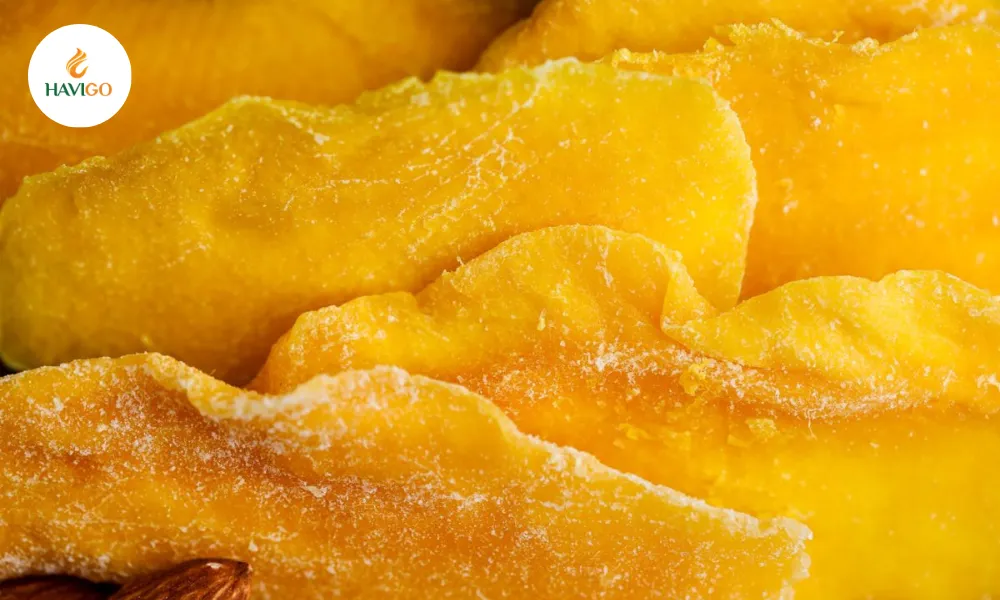
In other words, soft dried mango is regulated not only as fresh fruit, but also as a processed food product. Each additional processing step introduces new control points, inspections, and compliance costs.
This expanded compliance scope—rather than higher or lower standards—is a key reason why soft dried mango carries a higher cost than fresh mango, even though both products meet export-grade requirements.
4. Longer Shelf Life Adds Commercial Value
Fresh mango typically has:
- 7–14 days of shelf life
- High spoilage risk
- Strong dependence on cold-chain logistics
In contrast, soft dried mango offers:
- 9–12 months shelf life
- Minimal spoilage
- Easier storage and inventory planning
- Lower logistics risk for importers
From a buyer’s perspective, this extended shelf life reduces losses and improves margin stability—making the higher upfront price commercially justified.
Read more >>> Soft dried mango shelf life
5. Soft Dried Mango Is a Value-Added Product, Not a Commodity
Fresh mango is largely a commodity product, subject to:
- Seasonal price swings
- Weather impact
- Short selling windows
Soft dried mango, however, is:
- Processed
- Branded
- Standardized
- Ready for retail or foodservice use
It delivers functional value, not just fruit. This positions soft dried mango in a higher price segment—similar to how frozen fruit or fruit purée is priced above raw produce.
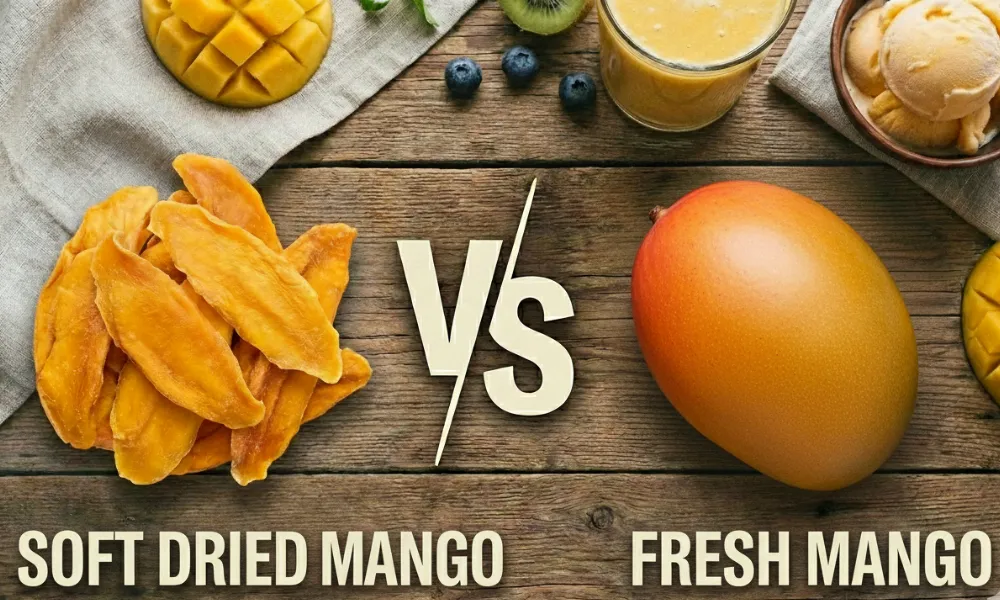
6. Cost Comparison: Soft Dried Mango vs Fresh Mango
| Factor | Fresh Mango | Soft Dried Mango |
|---|---|---|
| Raw material efficiency | High | Low (6–8:1 ratio) |
| Processing cost | Minimal | High |
| Shelf life | Short | Long |
| Spoilage risk | High | Very low |
| Logistics complexity | High | Moderate |
| Market positioning | Commodity | Value-added |
Conclusion: While fresh mango appears cheaper, soft dried mango delivers better cost control and profitability over time, especially for importers and brands.
7. When Does Soft Dried Mango Make More Sense?
Soft dried mango is especially suitable for buyers who:
- Import long-distance
- Sell packaged snacks
- Need stable year-round supply
- Want consistent quality and margins
Fresh mango may still work for:
- Local or regional markets
- Short-term retail promotions
- High-risk, fast-turnover models
8. FAQs
1. Why is dried mango more expensive than fresh mango?
Soft dried mango requires 6–8 kg of fresh mango per 1 kg finished product, plus advanced drying technology, food safety compliance, and longer production cycles.
2. Is it healthier than fresh mango?
Soft dried mango retains most nutrients and natural sweetness, but the main advantage is stability, consistency, and longer shelf life—not replacing fresh mango nutritionally.
3. Does fresh mango have lower export standards than dried mango?
No. Export-grade fresh mango also meets strict standards. The difference is that soft dried mango must comply with additional food processing and packaging regulations.
4. How long is the shelf life of dried mango?
Soft dried mango typically has a shelf life of 9–12 months when stored properly, compared to 7–14 days for fresh mango.
5. Who should choose dried mango instead of fresh mango?
Soft dried mango is ideal for long-distance importers, packaged snack brands, and buyers who need stable supply, consistent quality, and lower spoilage risk.
Conclusion
The higher price of soft dried mango is not a disadvantage—it reflects processing value, quality assurance, longer shelf life, and reduced commercial risk. For many global buyers, soft dried mango is not competing with fresh mango on appearance, but on reliability, scalability, and profitability.
Understanding this difference allows importers and brands to choose the right mango format based on business strategy—not just price per kilogram.
Stay Connected with Havigo: Your Source for High-Quality Mango
Havigo Company Limited is your reliable agricultural export partner in Vietnam. We specialize in supplying and delivering high-quality Vietnamese agricultural products, including spices, rice, beans, and fruits, to the global market.
We aim to build long-lasting partnerships by guaranteeing the following core elements:
- Superior Quality Assurance: We are confident in our ability to consistently deliver products that meet the highest international quality standards required by the global market.
- The Best Competitive Pricing: We provide high-quality goods at the most competitive prices in the market, helping to optimize the profitability of your import operations.
- Prompt & Dedicated Support: Our team is committed to offering fast, enthusiastic, and professional customer support throughout our entire partnership journey.
If you are interested in importing mango from Vietnam, please contact us immediately for the best support!
Contact Us Today:
To receive a quotation and detailed assistance, please reach out directly via WhatsApp: +84 979 58 58 56 or LinkedIn: HAVIGO COMPANY LIMITED. We look forward to partnering with you!