
Are you a buyer in the food, beverage, or retail industry looking to source the best tropical fruit? Choosing between purple passion fruits and yellow passion fruits can be challenging. While both varieties offer intense flavor, their appearance, passion fruit taste, and ideal uses differ significantly.
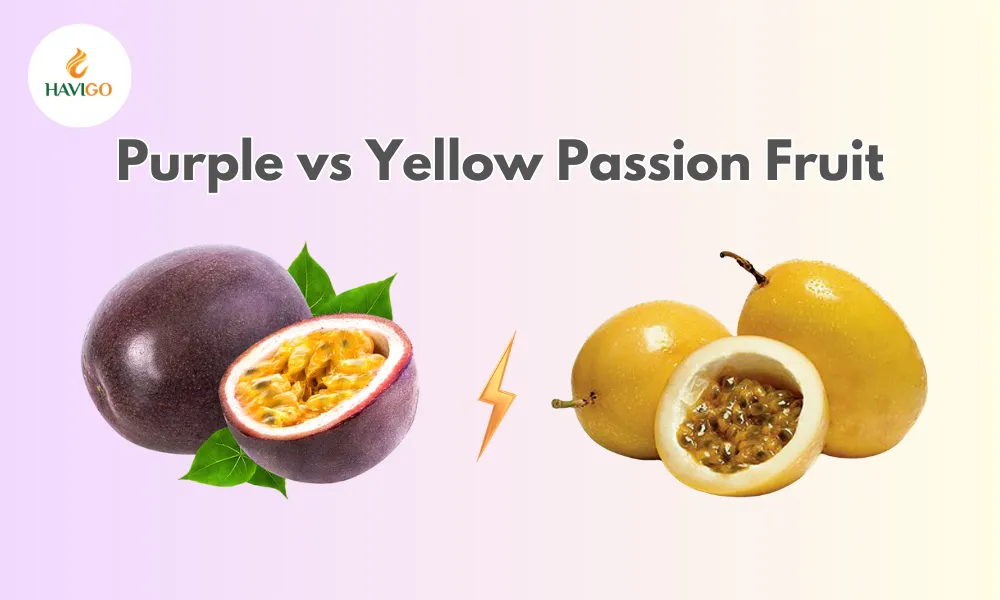
This comprehensive guide dives deep into the world of fruits passion fruit, comparing these two dominant types. We will explore their unique characteristics, nutritional profiles, and help you determine which “queen” best fits your market needs.
A Deeper Look at the Purple Passion Fruits Variety
The purple passion fruit carries the scientific name Passiflora edulis. Historically, it originated in the subtropical regions of South America. This area spans from southern Brazil through Paraguay into northern Argentina. Consequently, the fruit’s distinct, delicious flavor led to widespread cultivation globally. Especially, it thrives in areas with cooler climates. Therefore, many consider this the classic and original passion fruit variety. It delivers the most concentrated and essential passion fruit taste.
Key Characteristics
- Appearance: This passion fruit features a deep purple, oval skin when ripe. Significantly, the skin wrinkles slightly as the fruit reaches peak sweetness, signaling it is ready to eat.
- Size: Generally, the purple variety is smaller than its yellow counterpart. It typically measures about 1.5 to 3 inches in length.
- Flavor Profile: The purple passion fruit taste is typically more intense and aromatic. Furthermore, it offers a concentrated, complex balance of tartness and sweetness. This intense flavor makes it ideal for high-end desserts and confectionery.
- Climate: It prefers cooler, subtropical climates and often enjoys better cold tolerance than the yellow variety.
Yellow Passion Fruits: Its Larger and More Popular “Sibling”
The yellow passion fruit holds the scientific name Passiflora edulis f. flavicarpa. Essentially, it represents a distinct form or cultivar within the Passiflora edulis species. Experts believe this variety originated in Brazil’s Amazon region. Furthermore, it boasts better heat tolerance and stronger disease resistance. This characteristic, coupled with its higher yield, makes it ideal for industrial production. Consequently, the yellow passion fruit is the more common cultivar in large-scale agriculture, particularly across hot and humid tropical zones.
Key Characteristics
- Appearance: This passion fruit variety features smooth, vibrant yellow or light orange skin. It remains smooth even when fully ripe.
- Size: The yellow passion fruit is noticeably larger than the purple one. This feature makes it highly desirable for industrial processing.
- Flavor Profile: The yellow passion fruit taste tends to be slightly more acidic and less sweet than the purple variety. Therefore, it works perfectly in juices, sauces, and drinks where a strong, tangy punch is required.
- Climate: It prefers true tropical, hot, and humid environments.
Putting it on the Scale: The Main Differences Between Purple and Yellow Passion Fruits
While both are excellent sources of passion fruit nutrition, including Vitamin C and fiber, their commercial differences are paramount for importers and processors.
| Feature | Purple Passion Fruit (P. edulis) | Yellow Passion Fruit (P. flavicarpa) |
| Size | Smaller, generally 1.5 – 3 inches | Larger, often 3 – 4 inches |
| Skin Texture | Wrinkled when ripe | Smooth when ripe |
| Acidity | Lower acidity, more balanced sweetness | Higher acidity, more tart |
| Aroma Intensity | Stronger, richer aroma | Milder aroma, bright tang |
| Processing Use | Ideal for fresh consumption, gourmet desserts | Preferred for juice extraction (due to size) |
| Seed Color | Darker (often black or dark brown) | Lighter (often yellow or brown) |
Passion Fruits Nutrition and Best Harvesting Season
Both varieties share similar harvesting periods in major growing regions like Vietnam, though the yellow passion fruit often yields larger volumes. The main passion fruit season typically runs from late spring through early autumn, but reliable coconut exporters in Vietnam can often source quality product year-round due to overlapping microclimates.
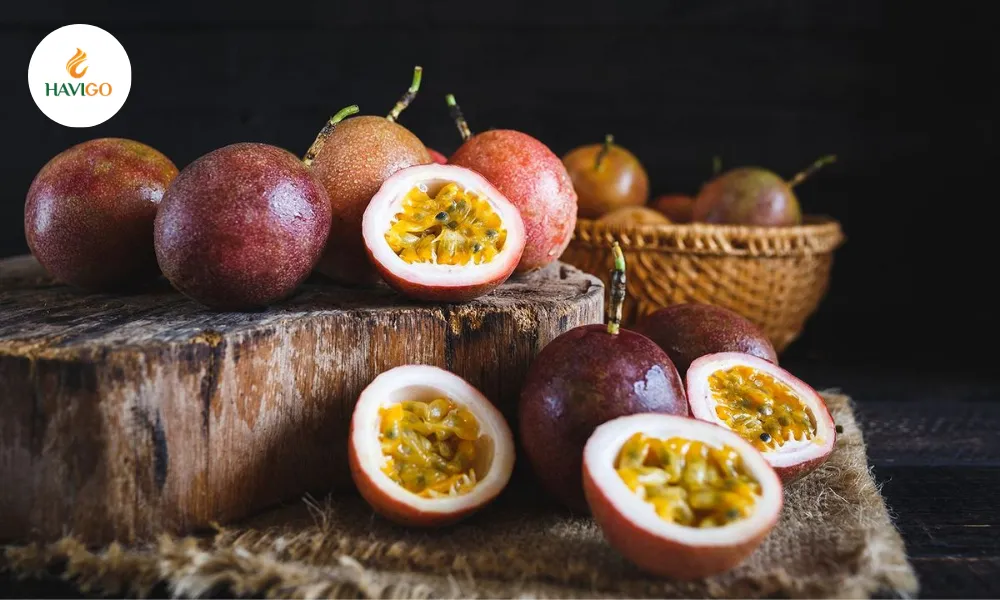
In terms of nutrition, both offer fantastic health benefits. Specifically, high levels of Vitamin C support the immune system, and their significant fiber content promotes excellent digestive health. Furthermore, they are rich in antioxidants, helping combat oxidative stress.
Which Passion Fruits Variety Should Importers Choose?
No single answer determines which passion fruit variety is superior, as the choice depends entirely on your target market and industrial application.
- Choose Purple Passion Fruit if: You target high-end retail or specialty markets that demand superior, complex flavor. Furthermore, the intense passion fruit taste of the purple variety justifies a higher price point for gourmet desserts, premium confectionery, or concentrated flavor bases.
- Choose Yellow Passion Fruit if: You require high volumes for large-scale industrial processing, such as making juice, pulp concentrate, or flavor additives. Therefore, the yellow variety is the most economical choice. Its pronounced tartness and larger size make it highly efficient for bulk blending and processing applications requiring a strong, bright sour profile.
Sourcing Both Purple and Yellow Passion Fruit with Havigo
Regardless of whether your business demands the intense sweetness of Vietnamese purple passion fruit or the high yield of Vietnamese yellow passion fruit, securing a stable, high-quality source remains paramount.
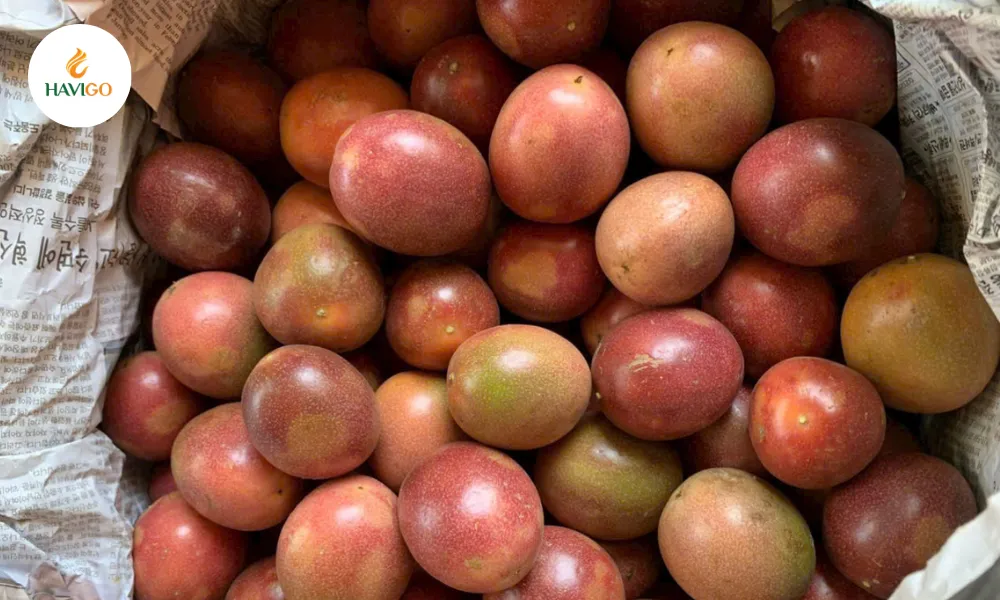
As a leading specialty fruits passion fruits supplier in Vietnam, Havigo provides both premium passion fruit varieties year-round. We understand that maximizing profitability requires consistent quality and dependable logistics. Therefore, partner with us to receive certified passion fruit tailored exactly to your industrial or retail specifications.
Conclusion
Both purple passion fruit and yellow passion fruit represent nature’s wonderful gifts, each variety offers its own unique appeal. Specifically, purple passion fruit captivates consumers with its concentrated sweetness and rich flavor. Conversely, yellow passion fruit wins fans with its refreshing, clean tanginess. Understanding the differences between these two types allows you to maximize profitability and serve your customers with greater precision.
Now, which of these key flavor profiles best matches your market’s current needs?
Stay Connected with Havigo: Your Source for High-Quality Passion Fruit
Havigo Company Limited is your reliable agricultural export partner in Vietnam. We specialize in supplying and delivering high-quality Vietnamese agricultural products, including spices, rice, beans, and fruits, to the global market.
We aim to build long-lasting partnerships by guaranteeing the following core elements:
- Superior Quality Assurance: We are confident in our ability to consistently deliver products that meet the highest international quality standards required by the global market.
- The Best Competitive Pricing: We provide high-quality goods at the most competitive prices in the market, helping to optimize the profitability of your import operations.
- Prompt & Dedicated Support: Our team is committed to offering fast, enthusiastic, and professional customer support throughout our entire partnership journey.
If you are interested in importing mango from Vietnam, please contact us immediately for the best support!
Contact Us Today:
To receive a quotation and detailed assistance, please reach out directly via WhatsApp: +84 979 58 58 56 or LinkedIn: HAVIGO COMPANY LIMITED. We look forward to partnering with you!